

INSIGHT
As democracies fall silent, dictatorships broadcast
24 November 2026
As democracies slash funding for their media outlets, authoritarian regimes are investing heavily in their propaganda channels. Where is our voice in all this, asks SWI swissinfo.ch’s head of foreign affairs?

This piece was originally published by SWI Swissinfo.ch.
By Giannis Mavris, Head of Foreign Affairs & Focal Points at SWI swissinfo.ch
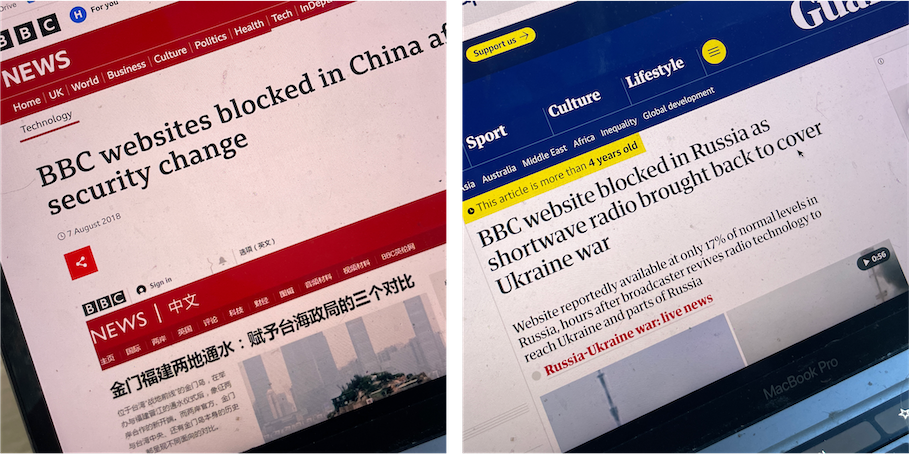
Swissinfo’s budget is being halved, and its workforce drastically reduced. TVSvizzera is being shut down, while 3sat and TV5monde are also facing painful cuts. In recent years, many comparable media outlets have suffered a similar fate: Deutsche Welle, BBC World Service, Radio Free Europe, Radio Free Asia, and Voice of America have all faced cuts and layoffs.
Many private media outlets are also struggling. For the Swiss media sector, this autumn will go down in history as a particularly bleak one. A Polish journalist who knows Switzerland well recently wrote to me, saying that, from an outside perspective, it was shocking to see what wealthy Switzerland was doing to its media, or what it is allowing to happen.
Read more: How & why authoritarian states seek to exert influence through the media in Africa
While private media outlets are suffering primarily for economic reasons, the cuts affecting the outlets mentioned above are politically driven. Publicly funded media do not operate in a vacuum; they enter into agreements with governments. And those governments have decided, for various reasons, to weaken their international media services.
Others are faring much better.
State propaganda outlets that take their instructions directly from government headquarters are enjoying steadily growing budgets. This year, for example, nearly $400 million (CHF335 million) from the Russian Federation’s budget is flowing to Russia Today, which is expanding its operations worldwide. Hundreds of millions more are being allocated to other broadcasters.
In China, the state news agency Xinhua News is also benefiting from a sharply rising budget, which has now reached $900 million.

Xinhua has expanded its network not only in African and Asian countries but also, for example, in Geneva. At the Palais des Nations, Xinhua News is steadily increasing its staff, which now numbers in the double digits. We at Swissinfo are one of the few Swiss newsrooms that still maintain an office there. We have exactly one colleague on site.
Russia Today and Xinhua News welcome news of cuts in democratic countries. The field is clearing in their favour. And they can look forward to more company: authoritarian regimes around the world have no problem investing additional money in their propaganda broadcasters. That is because they understand how important they are.
Much as many people would like to believe otherwise, Switzerland is not an island. Isolation does not make problems disappear. Turning inward does not make the world a better place. Nor does it mean being left undisturbed. Anyone who believes that neutrality and standing on the sidelines will see Switzerland safely through stormy weather has yet to understand just how much the global climate has changed.
Around the world, democracies are becoming fewer in number and weaker. Propaganda and disinformation are becoming ever easier to generate and disseminate. The dominance of technology giants is entrenching inequalities and hollowing out societies from within.
Journalism and free media are no magic bullet against these developments. But they are, at the very least, a bulwark. When they disappear, societies are weakened, and so is democracy as a whole.
Where is our voice in all this? As Switzerland and as Europe? Do we expect others to stand up for us? Do we want to enter into new relationships of dependence? Do we want to stand on the sidelines while the future is being shaped?
Switzerland must face these questions, and we need to debate them. The coming months and years will be decisive for Swiss journalism.
About the author

Giannis Mavris is Head of Foreign Affairs & Focal Points at SWI swissinfo.ch. His work focuses on current and possible future developments of Switzerland’s place in the world.
Listen to our podcasts on the global environment for international media
Related Posts

How Western governments are failing to support international public service media
Funding uncertainty clouds UK, Swiss…
Sign petition to defend Swissinfo against cuts!
Join PMA in signing a petition…

How China and Russia exert influence through media in Africa
Beverly Ochieng decrypts the growing…

Swissinfo director on their potential defunding
As political stranglehold on…