

The PMA Briefing
Financial crisis, clarity on reforms, and strikes called off
27 January 2026
BHRT is mired in a financial hole and on the brink of collapse; the Netherland’s incoming minority government says it will reduce the number of public broadcasters from 11 to four; and Gabon’s state media workers have called off a strike. Plus: the arguments are put forward for the Swiss public media funding referendum, and Bolivia’s state telecommunications authority blocks teleSUR and RT.
Bosnia & Herzegovina: BHRT’s financial crisis deepens
The financial accounts of the Bosnian public broadcaster were blocked this week, leaving the BHRT on the brink of collapse and workers unsure if they’ll be paid. Debt collectors have moved in on the public broadcaster, with another deadline to resolve its €11 million debt to the EBU approaching in February. BHRT has been hampered by financial difficulties for years, primarily because the broadcaster responsible for the country’s Serbian population has withheld its legally-required share of the licence fee.
The Bosnian parliamentary committee responsible for BHRT met to discuss possible options, according to the Sarajevo Times, including a special loan or some other financial lifeline. However, the situation remains in a political deadlock.
The Media Freedom Rapid Response (MFRR) group has called for the Office of the High Representative – the international body which oversees the Bosnia peace deal – to intervene in the dispute, “in the absence of institutional response and political will within the BiH institutions”.

Netherlands: 11 down to four – incoming government stakes position on PSM reform
The incoming minority government wants to reduce the number of public broadcasters from 11 to four. Currently, the Dutch public media system is made of eleven independent broadcasters which cater to different audience groups, with NPO as an umbrella company. Major reforms to this structure have been promised for some time, both to save money and reduce duplicate roles. However, there has been disagreement over which broadcasters should be merged, and how many should remain.
Three parties – D66, VVD and CDA – are still negotiating a coalition agreement. However, they confirmed their position on public media with representatives saying they were frustrated at the lack of movement on reforms.
“More than a hundred discussions have been held, and there’s still no agreed-upon model,” said CDA member Harmen Krul. They said the system should be condensed into four broadcasters, which would also see NOS and NTR – the only two broadcasters with responsibilities for news and educational programming – combined into a single entity.
However, a potential area of disagreement is over €160 million worth of cuts to public media. While VVD is in favour, CDA have expressed concern.

Gabon: State media strikes called off
State media workers in Gabon have “temporarily suspended” their strike action. For three days, studios had been partially closed, services reduced and staffing limited as union members demanded better working conditions.
Union members wanted the reinstatement of performance bonuses, an increase in the broadcaster’s annual budget and the completion of long-delayed broadcasting reforms. Central to the union’s grievances is a demand for the creation of a special status for communications professionals.
Syprocom union President Hervé Nzigué said the strike had been called off following a government commitment to provide “appropriate and lasting” solutions.

Switzerland: Halving initiative on the table as referendum approaches
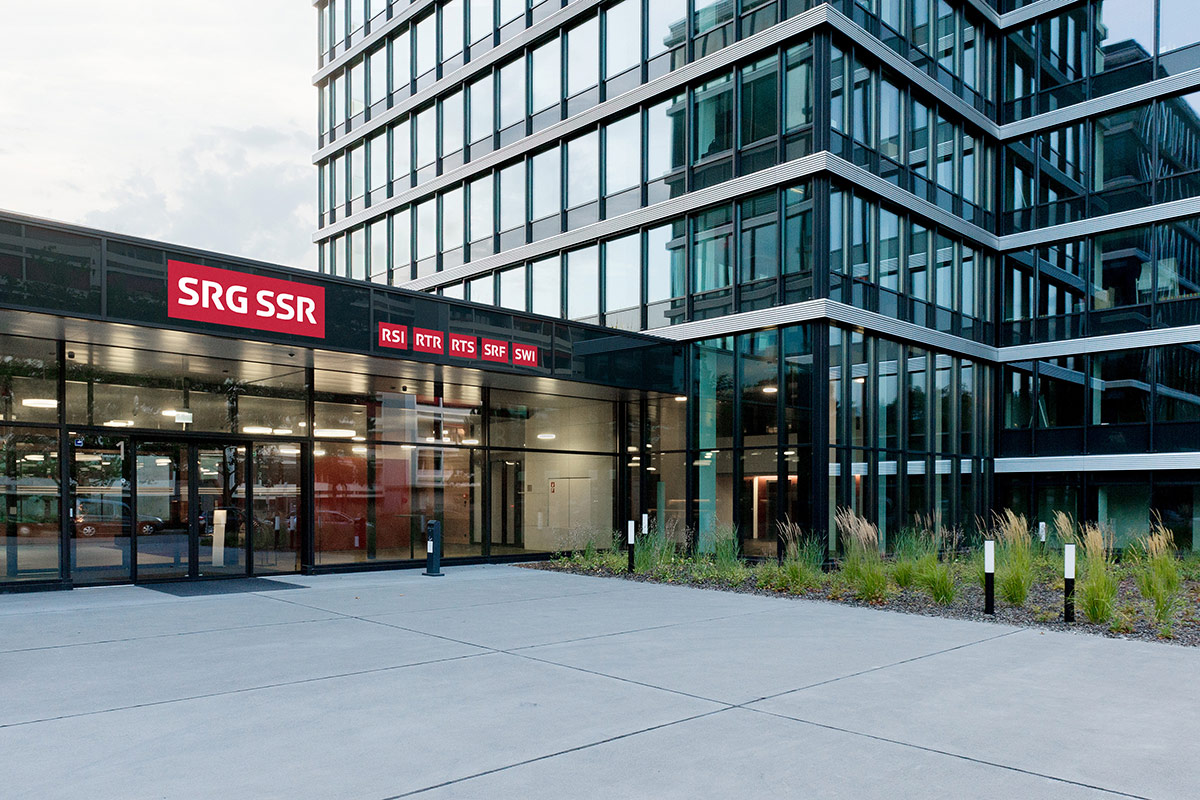
On 8 March, people in Switzerland will vote on the so-called “halving initiative” which, if passed, would slash the annual fee which funds SRG SSR slashed to 200 francs.
The populist Swiss People’s Party (SVP) has endorsed the initiative while the Federal Council wants it rejected. Media minister Albert Rösti said the SRG’s budget had already been reduced enough, recently dropping from 335 to 300 CHF. Further cuts would have serious consequences for the broadcasting group, he said, meaning fewer programmes, reduced local reporting, and the loss of more than 3,000 jobs.
Instead of reducing the 200 CHF household levy, the Federal Council has proposed a progressive cutbacks which would see the levy reduced to 300 CHF by 2027, with some 65,000 companies exempted from paying it.
The organisation of Young Journalists Switzerland (JJS), Cinésuisse, Suisseculture, the Swiss Music Council and the IG Volkskultur have advocated for the importance of a well-funded public broadcaster, both for the cultural industry and future generations of journalists.
Bolivia: TeleSUR and Russia TV blocked
Two international state media channels, TeleSUR and Russia Today (RT), have been blocked by Bolivia’s telecommunications authority.
TeleSUR was founded in 2005 under former Venezuelan president Hugo Chávez as a pan-Latin American broadcaster designed to counter western media. While it used to be a regional venture, with countries including Argentina and Bolivia participating and co-funding, it is now mostly funded by the Venezuelan state. It has been criticised for spreading disinformation and being a government mouthpiece. Argentina pulled out in 2016, citing a lack of pluralism or alternative viewpoints.
The decision to block teleSUR comes after the US operation to capture Venezuelan president Nicolas Maduro. However, the president of teleSUR, Patricia Villegas, said the move was “as predictable as it was condemnable”. There was also criticism from the Association of International Press Correspondents (ACPI) and the National Association of Journalists of Bolivia (ANPB) who said there had been no transparent justification for the decision. Russia Today (RT) was also blocked by the authority, known as Entel, who said it was due to “administrative issues.”
TeleSUR had been previously blocked in Bolivia between 2019 and 2020.

Featured image: SWI swissinfo.ch premises in Bern. Credit: SWI swissinfo.ch
Related Posts

Lay offs, shut downs & appointments | The PMA Briefing
RTM and Bernama join Malaysia’s Media…

Legal filings, a public media levy, and must-carry obligations | The PMA Briefing
Filings from the BBC seek to have the…
Standoffs, closures, and reforms | The PMA Briefing
CPB votes to dissolve; RTS unions in…

Inquiries, consultations & hearings into PSM | The PMA Briefing
Consultation on the BBC's future opens,…