

STATEMENT
Ghana: New funding model must support GBC’s sustainability and independence
28 January 2026
The President of Ghana recently expressed a desire to move away from the current licence fee model to an alternative funding system for the public broadcaster.
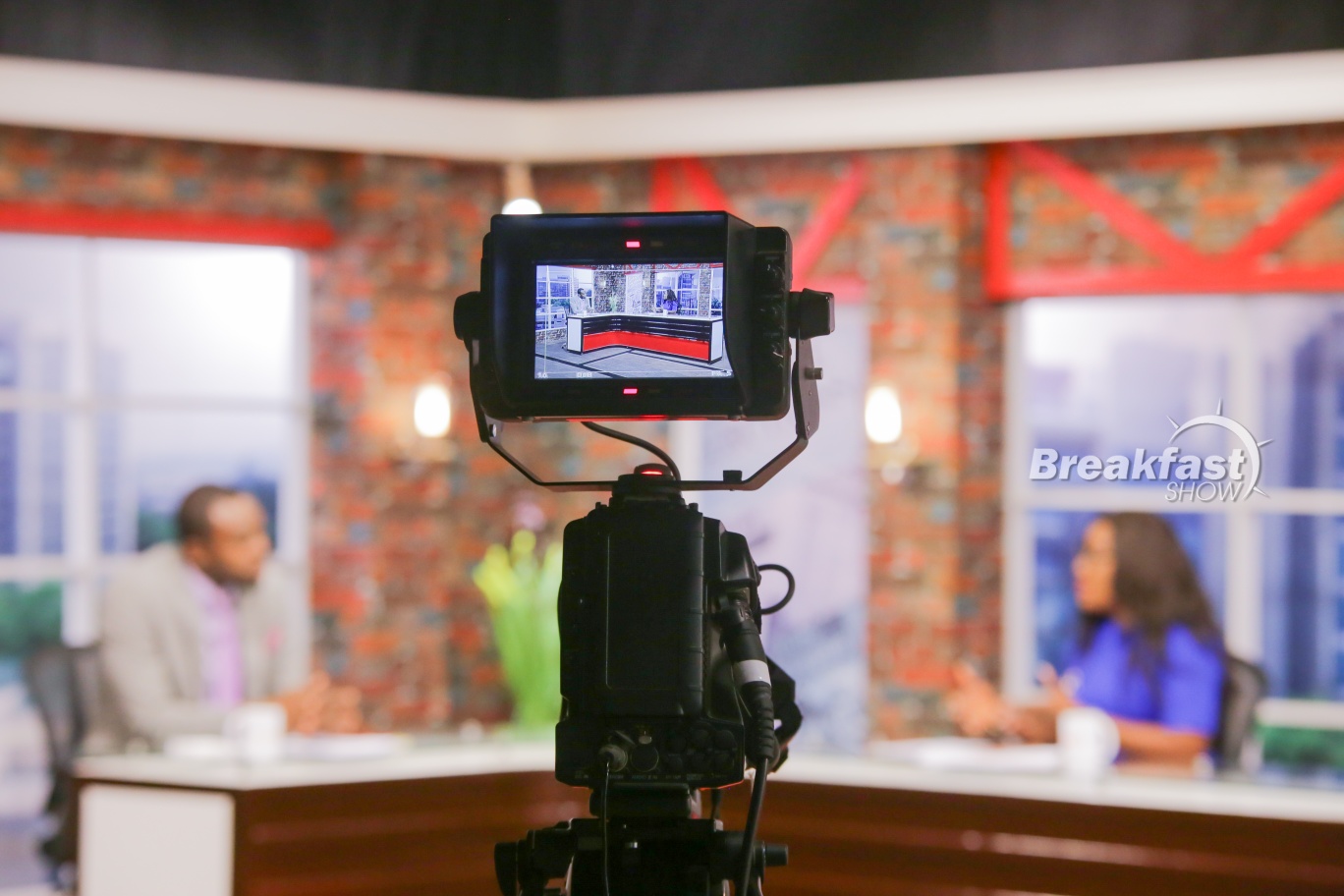
The Public Media Alliance supports the President’s ambition to review the funding model of the Ghana Broadcasting Corporation (GBC) and looks forward to engaging directly with the government on how any alternative model might best be structured and implemented to ensure the independence and sustainability of the GBC is protected and preserved.
On a recent visit to the GBC, the President John Dramani Mahama said that the Cabinet is deliberating what could replace the existing licence fee. “Our thinking is going in the same direction to amend that law to make it a public media levy of some sort,” Mahama said, and added that GBC and the National Media Commission would be consulted on any alternative funding mechanism. Specific details around how the levy would work are not yet clear.
Is a review of the GBC’s licence fee appropriate?
It is useful to consider the global picture when it comes to the licence fee. Debates are ongoing in countries such as the UK, South Africa and the Czech Republic over whether the licence fee is fit for purpose. The reasons for doing so are different, whether it’s because of high evasion rates as is the case in South Africa, evolving forms of content consumption as in the UK, and political hostility towards the licence fee as a model as in Czechia.
For the purpose of ensuring public value and accountability, PMA is open to investigating whether the licence fee is still the most appropriate funding model for public media, or if there are other feasible alternatives available. But this is contingent on two factors:
- The reasons for doing so are predicated upon what is best for public media, its independence, and its sustainability.
- The method of determining an alternative funding model is collaborative and transparent, involves key stakeholders, and is not determined in a top-down fashion.
In the case of the GBC, we believe that there are necessary and legitimate grounds to warrant a review of the licence fee.
What should replace the licence fee?
Public funding models in use around the world include: a specific public media tax as in Finland and Norway; a statutory allocation within the government budget as in France where it’s a proportion of VAT; private citizen donations and philanthropy as in the US; a household levy as in Germany and Austria; direct government funding as in Canada and Australia; commercial funding as for Channel 4 in the UK; dedicated taxes or levies, such as digital services taxes or streaming levies; or a hybrid model, as in Ireland, and South Africa.
Collection methods vary too. While in many places, public media collect the funding themselves, in South Korea, the KBS licence fee is collected by the state electricity company, KEPCO. In Thailand, a tax on alcohol and tobacco products funds Thai PBS, which is collected by a specific government department but ring-fenced to ensure independence. Some countries use an independent public body to distribute state collected tax or funds, such as Finland’s Transport and Communications Agency, or NZ On Air in New Zealand.
There is not one single funding model that we uniformly advocate for. Instead, we understand that each country and each public media organisation have their own set of circumstances and contexts that must be considered when pinpointing the most suitable model.
However, regardless of the funding model or collection method that is agreed upon, there are some essential prerequisites we believe any model should adhere to:
- The funding allocation and collection is protected from government interference and threats, ensuring public media can hold power and authorities to account without fear or favour, or the risk of punitive action.
- The funding allocation is long-term, ensuring public media can plan for the future and adapt to changing media environments.
- The funding allocation is consistently increased, for example via indexation, to prevent public media experiencing real-terms cuts.
For a public media levy to work – as suggested by President Mahama – it needs to fulfil these three criteria.
We understand that this work is still ongoing, and there are still many questions that need to be answered regarding how much a levy would be for audiences, how it is independently calculated and collected, and how it is ring-fenced and sustainable in the long-term. PMA is willing to engage with the government directly on how such a levy could work so that it satisfies these prerequisites.
The Public Media Alliance is also sending a private letter to the President and to relevant government ministers, expressing our position on the matter as outlined in this statement.
How are public media worldwide funded?
Advertising, household levy, or licence fee? Funding is one of the most pressing issues facing public media, becoming a thorny political issue in some countries. Sustainable, viable, and healthy funding that safeguards the independence of public media is increasingly difficult, with many organisations – big and small – weighing up which funding model works best for them.
Our online resource of funding models describes the different funding models in use worldwide today, and by which public media are using them.
Related Posts
The two questions shaping the public media funding debate in 2026
Is the licence fee on the brink of…
Legal filings, a public media levy, and must-carry obligations | The PMA Briefing
Filings from the BBC seek to have the…
GBC: Maintaining balance ahead of a crucial Ghana election
As Ghana prepares to vote in December…
Ghana’s public broadcaster must find a ‘permanent’ funding solution
Ghana Broadcasting Corporation needs a…