

The PMA Briefing
Legal claims, transparency boards & funding restructures
31 March 2026
VOA journalists take legal action against the White House, saying the broadcaster is being turned into a propaganda outlet, and ORF tries to clean up the mess left from the former DG’s resignation over sexual harassment claims. Plus: existential funding questions for public media in Poland and Czechia, while NHK looks to implement a major restructure to its radio offering.
US: Trump turned VOA into propaganda outlet, lawsuit claims
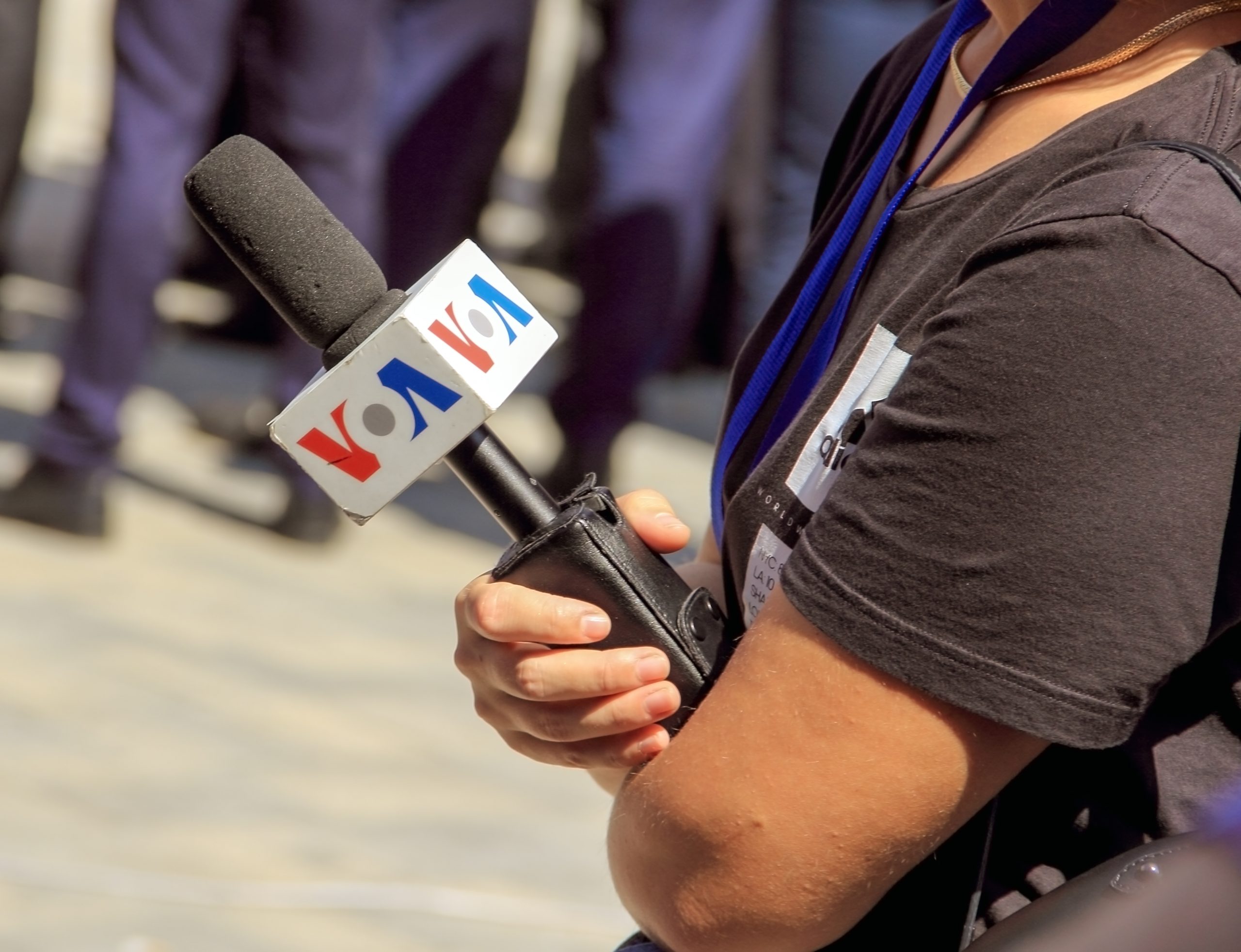
Staff at Voice of America (VOA) have filed a lawsuit accusing the White House of turning the broadcaster into a propaganda outlet for the government.
The lawsuit, filed by a group which includes VOA journalists and RSF, accuses the White House of eroding editorial independence at the broadcaster, alleging that VOA’s broadcasts to audiences in China, Iran, North Korea and to Kurdish people are no longer objective news programming. “The Trump administration has made clear that if it can’t eliminate VOA, it wants to turn it into a political propaganda machine,” said Clayton Weimers, Executive Director of RSF North America. “That is at odds with VOA’s mission to provide reliable information to millions around the world who lack access to credible journalism.
It comes after another legal victory earlier this month, when a judge ordered all staff back to work. The ruling found that Kari Lake – who was appointed by the Trump administration to a senior executive position – had exceeded her authority and broke the law in the decisions she made. These included the effective defunding and shuttering of VOA and mass layoffs. Initially appointed as senior advisor at the USAGM – the parent agency for VOA and other outlets like RFE/RL and RFA – the judge found Lake was given the de facto powers of the chief executive, finding she had even referred to herself as the acting CEO of the USAGM, despite having never been formally appointed. The government said it would appeal.
Austria: New transparency board established after Weißmann scandal
After the resignation of ORF’s director general, Roland Weißmann, in early March following allegations of sexual harassment, his interim replacement has created a transparency advisory board to investigate.
Weißmann, who denied the allegations, was replaced by ORF’s head of radio, Ingrid Thurner, who has already set about addressing the accusations and trying to restore public confidence in ORF, which has been damaged by the scandal. Upon the recommendation of the Foundation Board, Thurner has created a new transparency board to investigate the accusations against Weißmann, outline any recommendations, and find ways to improve ORF’s compliance and governance systems.
“When I was appointed, I promised to quickly assume responsibility and do everything in my power to guide the ORF professionally through this difficult phase,” said Thurner. “For me, it is primarily about creating clarity and speaking plainly. Because: Trust can only be built through transparency and consistency.”
Thurner steps into office at a particularly busy time for the ORF, which is due to host this year’s Eurovision. It also comes ahead of the already-scheduled election for the director general position this summer.
Czech Republic: Proposed reforms seen as existential threat
The Czech government’s proposed reforms to licence fee contributions risks undermining public media, the European Broadcasting Union and other major media freedom groups, including PMA, have warned. The coalition of prime minister Andrej Babiš has proposed slashing the number of licence fee payers by roughly one quarter, and to remove a clause that requires public media funding to rise in line with inflation.
Czech Radio and Czech Television have warned that such changes would have dire consequences for their services. The chair of the council which governs Czech Television, Karel Novák, this week warned it would be existential. “If the proposal is accepted, Czech Television is threatened with insolvency because it will not be able to meet its long-term obligations,” Novák said.
Meanwhile, more than 20 editors-in-chief from across the country called on Babiš and other politicians to respect free, independent and critical journalism. It came after the prime minister took to social media to criticise several outlets, accusing them of an “open campaign” against his government. Reporters Without Borders called his remarks “unacceptable defamatory practices.”

Poland: Major changes to come
The Polish government is preparing major amendments to the Broadcasting Act, including an overhaul of the licence fee. But just how public media will be funded is still being hotly debated.
In December, draft amendments aimed at depoliticising the public media system were published. The Ministry of Culture and National Heritage proposed abolishing the licence fee, which it deemed flawed, unsustainable and not aligned with the European Media Freedom Act, or EFMA. Any reforms would also entail changes to the governance of public media, and the implementation of EMFA.
It also proposed liquidating the controversial National Media Council, instead transferring its duties to a newly-composed National Broadcasting Council (KRRiT). Most of the reforms should be enforced this year, except for the issue of how to fund public media.
It was previously announced that public broadcasting in Poland would be funded directly via the state budget from the start of 2027, an announcement that was welcomed – with some reservations – by media freedom organisations, who said a 2.5 billion PLN (€590 million) revenue would weaken public media in the long run.
The idea of an audiovisual fee to be collected through tax administration is emerging, but no clear decisions have yet been made.

Japan: NHK restructures veteran radio services to save costs
NHK is shaking up its radio operations, consolidating its three radio services into two, which the broadcaster hopes will save approximately 27 billion yen over 20 years.
As part of the move, NHK’S long-established Radio 2 broadcast will close after 95 years on air. Known for its language learning outputs, including entry-level English programmes, this content will shift to the FM service. However, this transition “does not mean the role of [Radio 2] is ending”, said NHK Executive Vice President Hiroo Yamana, despite acknowledging changes in consumption habits and the growth of digital services.
Not all of Radio 2 will survive the overhaul. Several services, including Arabic language learning and social welfare programmes, are set to be discontinued by NHK altogether.

Featured image: Voice of America Building in DC. Credit: Rhododendrites, CC BY-SA 4.0 via Wikimedia Commons
Related Posts
Strikes, strategic goals & a decisive election | The PMA Briefing
ABC journalists go on strike; Swedish…

Controversial laws, accusations of bias, and navigating the digital era | The PMA Briefing
Control over KAN funding back on the…

Charter submissions, channel closures, referendum rejection | The PMA Briefing
The BBC outlines its position on the…
New wave of cuts, axing and pushback | The PMA Briefing
• Germany: DW becomes latest…