

STATEMENT
PMA welcomes new funding arrangement for USAGM but challenges remain
19 February 2026
Following presidential approval of the funding bill, the head of RFA announced that broadcasts to Chinese audiences have resumed.

The Public Media Alliance welcomes the return of substantial funding for the US Agency for Global Media (USAGM). This allocation will enable USAGM’s subsidiary organisations to resume their critical work in providing independent, fact-based news and information to underserved global audiences.
Last year, the US president signed an executive order suspending funding for USAGM’s subsidiaries, which include international public broadcasters Voice of America, Radio Free Asia, Radio Free Europe/Radio Liberty, and others. The funding cut resulted in the closure of dozens of language services, the furloughing of thousands of employees, and the cumulative loss of an audience numbering in the hundreds of millions.
In January 2026, however, a bipartisan funding bill proposed giving the USAGM $650 million, despite the USAGM leadership – installed by Trump to wind down USAGM operations – only requesting around $150 million. In early February, the funding bill was approved.
This funding – while still $200 million less than what had been promised to USAGM in 2025 before the executive order – is still substantial and is very well received. Already, RFA’s CEO and President Bay Fang, wrote on LinkedIn that RFA has “resumed broadcasting to audiences in China in Mandarin, Tibetan, and Uyghur, providing some of the world’s only independent reporting on these regions in the local languages.”
Such services are an essential lifeline, in providing audiences with trusted and independent fact-based news and information, in media ecosystems where otherwise accessing such news is either limited or completely blocked. Before the increased funding allocation, RFA had already prioritised its funds in launching a Korean service, “recognising the critical role of our uncensored reporting at a time when so few trusted sources are available to the North Korean people,” said Rohit Mahajan, RFA’s chief communications officer.
However, there should be no hiding that while this increased funding is welcome, the actions of the Trump presidency last year will have long-lasting consequences, and there are many challenges still facing USAGM services.
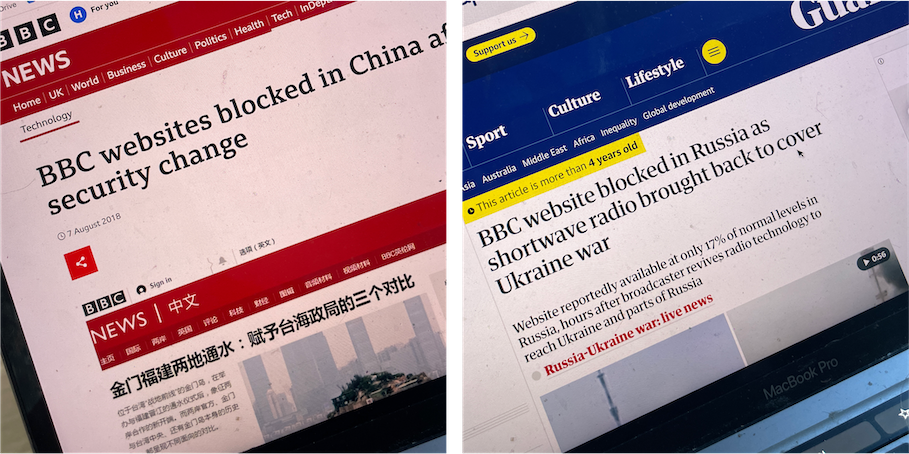

Firstly, the loss of funding resulted in the end of dozens of services, which had profound implications for the reach of the media organisations. Radio frequencies went quiet, websites went static with no updates, and bulletins and programmes produced by USAGM subsidiaries were ended. This meant domestic broadcasters were suddenly faced with a programming gap in their schedules. In this space came the state broadcasting entities of Russia and China. An analysis by the Washington Post found that in the wake of the funding cut, RFA stopped broadcasting on 60 shortwave frequencies by June last year. Over that same period, Chinese state media started broadcasting on eighty new frequencies, including those vacated by RFA.
The return of funding does not equate to the full return of VOA, RFA and other USAGM supported services, nor the instant return of millions of listeners, viewers, or readers. Additionally, broadcasters relying on these services for programming will have moved on, with many frequencies now occupied by other media companies.
Secondly, the loss of funding was devastating for hundreds of journalists situated across the world who were put on administrative leave or lost their jobs entirely. RFA laid off 90 percent of its staff in May 2025, and 500 VOA employees were terminated in August, only for a district court judge to order their restoration. Journalists for RFE/RL based in Europe were left in a precarious position, with freelancers let go, and staff put on administrative leave. These actions will have had a toll on journalists and staff, and damaged trust in their employers, as they contend with the risk of future political interference.
International public media services are an essential lifeline, in providing audiences with trusted and independent fact-based news and information, in media ecosystems where otherwise accessing such news is either limited or completely blocked.
Finally, concerns remain that the international public broadcasters supported by USAGM will continue to face challenges from the leadership of the parent company. For example, Kari Lake, who has managed USAGM under the Trump administration, blocked RFE/RL from using a USAGM transmitter located in the Middle East to broadcast messages into Iran during the recent protests. She also issued a memo at the start of 2026, instructing USAGM employees to follow the Trump administration’s national security policy, and “and use it, as appropriate, as a framework for programming.” With Lake still in position, and her noted opposition to the increased funding, the broadcasters could remain vulnerable to interference and efforts to hamper their work.
While these challenges remain, the Public Media Alliance acknowledges the vital and essential work done by the staff of USAGM media throughout the past year, who have worked to sustain their organisations, and those who, through no fault of their own, lost their jobs.
We urge the US presidential administration to commit to bolstering the independence and sustainability of USAGM’s international media services, to ensure that millions around the world have access to sources of reliable, trusted sources of news and information.
Related Posts

The impact of the Federal Rescission on US Public Media
Closures, job cuts, paused productions…

PMA joins call to maintain existing US visa system for foreign journalists
PMA has joined over 100 media…
PMA & others urge US to protect press freedom after USAGM order
More than 20 global media freedom…
USAGM cuts imperil journalism and news availability, PMA warns
The dismantling of USAGM will threaten…