

The PMA Briefing
A crisis, a controversial reform bill, and a funding boost
11 November 2025
A major crisis at the BBC has seen the organisation’s Director General and the CEO of News resign, and the Corporation threatened with a $1 billion lawsuit from Trump’s lawyers. Also, Canada’s government has promised $150m more for CBC/Radio-Canada, controversial broadcasting reforms are condemned in Israel, and Fiji’s FBC turns a profit despite less government funding.
UK: BBC threatened with $1 billion lawsuit as Director-General and News CEO quit
The BBC’s Director-General, Tim Davie, and the CEO of BBC News, Deborah Turness, have resigned, and lawyers for US President Donald Trump have threatened to sue the UK public broadcaster.
The resignations follow the revelation that a Panorama programme, broadcast in October 2024, had spliced together two clips from a speech Trump gave on 6 January 2021, which were said 50 minutes apart.
The incident came to light after a memo by Michael Prescott, a former independent adviser to the BBC’s Editorial Guidelines and Standards Board, was leaked to The Telegraph newspaper. The memo highlighted the edit in the programme, but also criticised the BBC’s coverage of trans issues, and alleged there were “systemic problems” in BBC Arabic’s reporting of the Israel-Gaza war. Prescott said he felt “despair at inaction by the BBC Executive when issues come to light.”
Davie and Turness announced on Sunday that they would both be stepping down. “Overall the BBC is delivering well, but there have been some mistakes made, and as director general I have to take ultimate responsibility,” Davie said. The news was welcomed by Trump, who said they resigned “because they were caught ‘doctoring’ my very good (PERFECT!) speech of January 6th”.
In a letter to MPs on Monday, the Chair of the BBC Board, Samir Shah, accepted that the edited clip was an “error of judgement” that “did give the impression of a direct call for violent action” by Trump. However, Shah disputed some of the other details in the memo. For instance, it “did not present a full picture of the discussions, decisions and actions that were taken,” including changes in leadership across the BBC Arabic and World Service teams.
The US President has since threatened to sue the BBC for $1 billion, unless it meets key demands. These include an apology, a retraction of the original programme and any “false, defamatory, disparaging, misleading, and inflammatory statements about President Trump in as conspicuous a manner as they were originally published,” as well as financial compensation. The BBC has until Friday to respond.
The whole saga has shone a light on the BBC and its impartiality. It has fuelled criticism from some quarters that the broadcaster is “institutionally biased”, including from the leaders of the Conservative party and Reform UK. However, this has been rejected by Davie and Turness, as well as the UK’s Prime Minister and the leader of the Liberal Democrats. There has also been speculation that the stepping down of Davie and Turness was driven, in part, by political motivations.
The BBC board will now be tasked with finding a replacement for Davie. A timeframe is not yet known.
Further updates to follow.
Israel: Controversial broadcasting reform moves forwards as Eurovision debate deepens
A controversial bill threatening to implement sweeping reforms to Israel’s broadcasting sector has passed its first Knesset reading. Led by Communications Minister Shlomo Karhi, the reform bill has sparked concerns it will endanger press freedom, and has faced international condemnation.
The bill would see a new single authority established, responsible for audiovisual content across all broadcasting platforms. Members of this authority would be appointed mostly by the communications minister. Under the authority, registered content providers would be required to distribute the content of the Israeli Public Broadcasting Corporation and the Knesset Channel. There are additional concerns that the bill would result in the concentration of news organisations into the hands of a few individuals, thus reducing media pluralism.
The bill has faced mounting criticism, and does not even have approval from the Attorney General. The Union of Journalists has called for an urgent hearing on the matter, while the opposition said it was “part of a clear trend by the government to fully take control of the media.” It has also attracted international attention, with RSF’s editorial director, Anne Bocandé, describing the vote as “the first nail in the coffin of broadcast media’s editorial independence in Israel. Communications Minister Shlomo Karhi is openly attacking a pillar of democracy.”
Meanwhile, amid calls from several European countries to bar Israel from Eurovision 2026, the ORF Chairman Roland Weissmann voiced his support for Israel’s continued participation in a joint statement with Israeli Public Broadcaster, Kan.
The scheduled vote on Israel’s participation was replaced with a discussion this coming December at the EBU’s General Assembly. “Eurovision will mark its 70th anniversary next year, and Israel is an inseparable part of the contest,” Weissmann said during a meeting at the President’s Residence in Jerusalem. Kan CEO Golan Yochpaz added that there was “no justification for excluding Israel from Eurovision”, given Kan has “consistently complied with all EBU regulations.”
Ynet reported that sources familiar with the matter have indicated that the risk of Israel’s disqualification has now largely passed, and the country is expected to take part in the 2026 Eurovision Song Contest.

Canada: Extra $150 million for CBC/Radio-Canada
CBC/Radio-Canada is in line to receive an additional $150 million in the newly-elected Liberal government’s first federal budget. “This is an important investment for Canadians,” said CBC/Radio-Canada’s President and CEO, Marie-Philippe Bouchard. “It will strengthen the programs and services they receive, including reliable news and information from every corner of the country, with benefits to the Canadian cultural sector.”
It also fulfills a campaign pledge of more money for public media put forward by prime minister Mark Carney during the election, although there was also the promise of governance reform, and statutory funding. A parliamentary vote on the budget will come later this month.
The federal budget also mentions the possibility of Canada entering the Eurovision Song Contest. It said the government is working with CBC/Radio-Canada to deliver this. “We want Canadian culture on a global stage,” Carney said. “Best culture in the world, best music in the world, I think Europe deserves to see it too.” Amidst a trade war with the US, the move has been seen as a way of seeking closer cooperation with the EU. However, it was also discarded by some as a “Carney vanity project”, and there are various obstacles standing in the way, mainly concerning the competition’s prominence (or lack thereof).

Fiji: FBC turns a profit, despite cuts
The Fiji parliament has debated the annual report of the public broadcaster, FBC, which turned a F$555,000 profit in 2024.
The profit came despite a cut in government funding – 39.4 percent of its funding comes from the government, down from 42.6 percent.
The assistant minister for public enterprise, Sachida Nand, said the FBC was undergoing a significant modernisation, including digital upgrades, a new outside broadcast system, and disaster resilience project supported by the South Korean government.

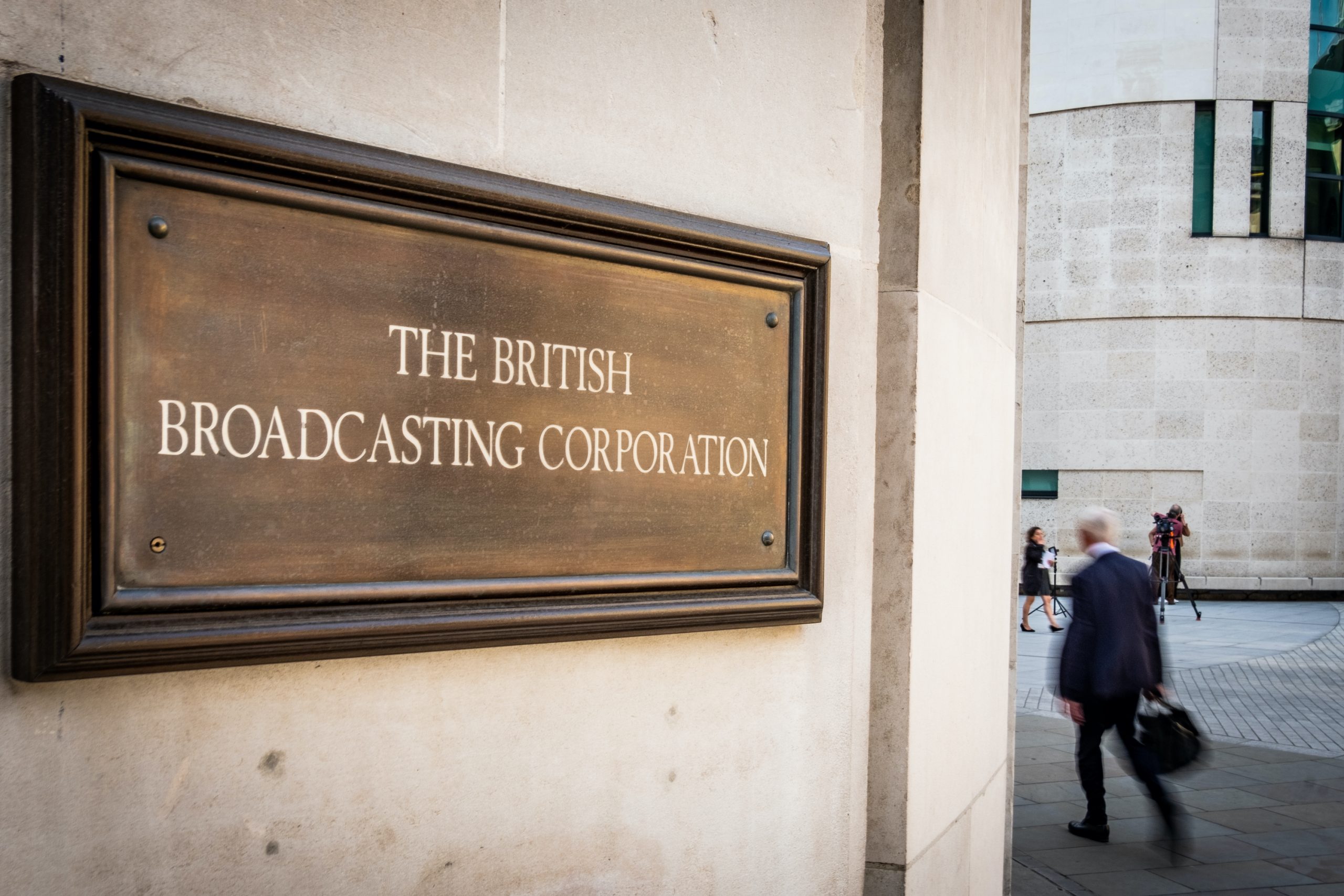
Featured image: BBC head office, London. Credit: IR_Stone/iStock
Related Posts

Blackouts, reforms, and a quota for streamers | The PMA Briefing
The protracted reform of public media…

What will the future look like for public media? | The PMA Briefing
As CBC/Radio-Canada unveils its new…

Broadcasting under fire | The PMA Briefing
A Rai journalist faces intimidation…

Public media fronting up to delicate issues | The PMA Briefing
SBS defends its editorial policy; KBS…