

The PMA Briefing
What will the future look like for public media?
28 October 2025
As CBC/Radio-Canada unveils its new 5-year strategy, the future is more uncertain for Czech public media after the recent election, while the Netherlands faces budget cuts for NPO programmes and channels. Plus, there’s concern over public broadcasting in Armenia, and while a board member of Georgia’s public broadcaster is arrested, TVNZ’s US Correspondent is blocked from a Pentagon event.
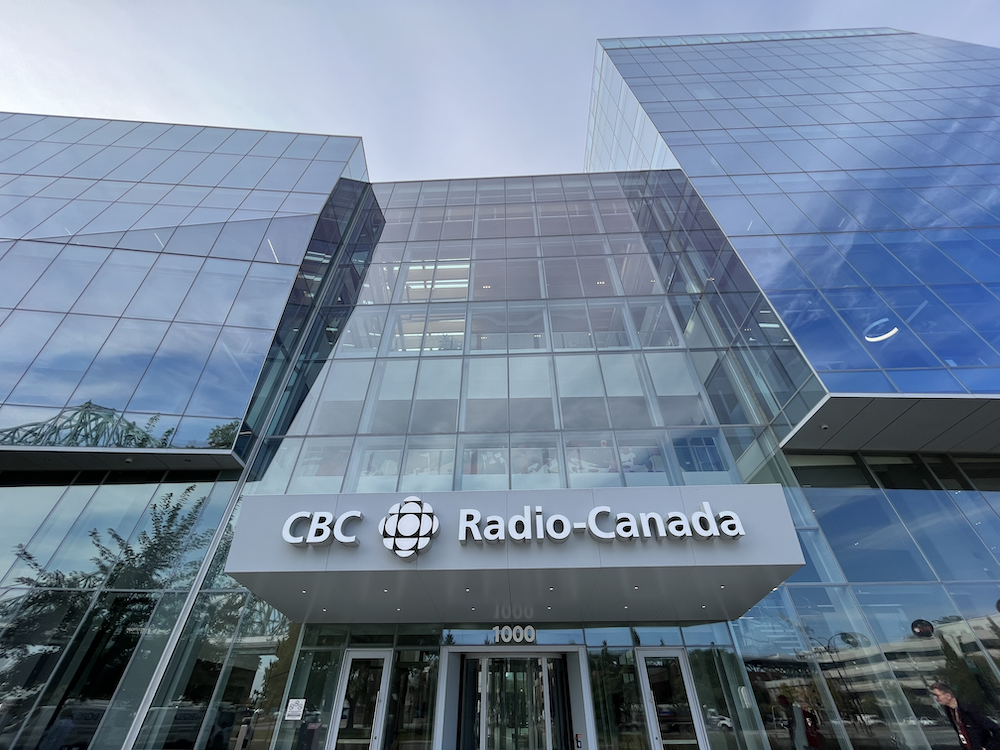
Canada: Youth, newcomers and non-users the focus in CBC/Radio-Canada’s new strategy
Creating a network of content creators, making archives more accessible, and increasing the number of overseas correspondents are some of the opportunities outlined in CBC/Radio-Canada’s new five-year corporate strategy.
The document, launched on 28 October as part of the public broadcaster’s Annual Public Meeting, will see it focus on reaching children and young audiences, newcomers to Canada, and people who don’t use or are dissatisfied with its services. “Setting a priority on [these] segments will mean a redirection of efforts and resources, and an increased focus on audiences using digital and third-party platforms,” the strategy report says.
The strategy consists of three pillars, with different “opportunities” identified for each:
- Proximity: this will see CBC/Radio-Canada become more present and reflective of Canadians, including increasing its physical presence in 15-20 new locations, as well as expanding its network of content creators.
- Digital Agility: this will see CBC/Radio-Canada become discoverable and relevant. This includes being present across third-party platforms, and improving the services on CBC/Radio-Canada’s own platforms.
- Bringing People Together: this will see CBC/Radio-Canada foster connections between communities and create spaces of healthy dialogue through cross-cultural programming, increased news budgets to expand CBC/Radio-Canada’s presence overseas, and making the broadcaster’s archives more accessible.
The plan has been received positively from the Heritage Minister, Steven Guilbeault, who said, “I think there’s lots of really good elements in this plan. I really like the fact that the public broadcaster wants to invest more in local news across the country,”
However, it is still unknown if the government will uphold its pre-election promise to increase CBC/Radio-Canada’s budget by $150 million.
Czech Republic: Election result raises questions over public media’s future
Media figures and opposition politicians have urged the new Czech government to not fundamentally alter the country’s public broadcasters. Andrej Babiš’ ANO party won the election, and he is currently forming a coalition government. He had campaigned on a pledge to merge Czech Television (ČT) and Czech Radio (ČRo) and abolish the licence fee funding model, replacing it with direct state budget funding.
A former head of Czech Television has raised concerns over the potential nationalisation of public media, drawing parallels to the capture of the RTVS in neighbouring Slovakia.
The newly elected MP Boris Šťastný has said ČT and ČRo must remain independent, while the outgoing culture minister, Martin Baxa, said, “if Andrej Babiš thinks that we will leave him alone with public service media, that’s not the case.”
ANO’s deputy chairwoman Alena Schillerová said the party does not want to nationalise public media, but “we want the public service to be defined and we know what its content should be and what we will pay for.”

Georgia: Public media board member imprisoned
A board member for the Georgian Public Broadcaster, GPB, has been imprisoned for five days after she was arrested at a protest in Tbilisi last week.
Lika Basilaia-Shavgulidze was among dozens arrested during the daily rallies that have seized Georgia’s capital for nearly a year. The Tbilisi City Court sentenced her on charges of hooliganism and disobedience.
The rally where Basilaia-Shavgulidze was arrested was held after jailed journalist Mzia Amaghlobeli was awarded the European Parliament’s Sakharov prize for freedom of thought.
Basilaia-Shavgulidze was elected to the board of trustees in 2022, representing the United National Movement opposition party quota.
Last week, the Georgia Dream government passed a series of measures which further restrict protest, including making it illegal for protesters to cover their faces. The protests have been held daily for nearly a year.

New Zealand & US: Journalist blocked from Pentagon meeting
The US correspondent for New Zealand’s public television broadcaster was denied access to a meeting at the Pentagon at the last minute. Logan Church was there to cover a meeting between New Zealand’s Defence Minister, Judith Collins and the US Secretary of War Pete Hegseth. According to his employer, TVNZ, Church had been assured by both US and New Zealand officials that he would be allowed to attend, but this was subsequently revoked.
“Press freedom is a cornerstone of democracy, not a privilege granted by those in power,” said the International Federation of Journalists General Secretary, Anthony Bellanger. “Journalists like Logan Church must be free to report independently, without fear, censorship or government control.”
It comes after new reporting restrictions came into effect at the Pentagon, requiring journalists to not report any unauthorised information, or otherwise risk losing access. “DoW information must be approved for public release by an appropriate authorising official before it is released, even if it is unclassified”.
However, many organisations, including conservative media outlets, refused to sign, instead handing in their accreditation because the new rules “undercut First Amendment protections.”
The US is becoming a more hostile environment for journalists. A British journalist was detained by immigration enforcement on Sunday, while the Emmy-award winning journalist Mario Guevara was deported to El Salvador earlier this month. He had lived in the US for 20 years.

Armenia: Worries over removal of public TV status
A coalition of media organisations in Armenia have criticised the proposed removal of a television station from the country’s list of public broadcasters. A bill before parliament would reduce the number of broadcasters from three to two, and remove the educational or cultural channel.
Critics say it is designed to eliminate Shoghakat, a channel operated under the auspices of the Armenian Apostolic Church, which has been at loggerheads with the government of Prime Minister Nikol Pashinyan.
An MP for the ruling bloc, Taguhi Ghazaryan, said the bill was designed to spread public funding across TV channels, instead of being earmarked for a single station.
But the joint statement from groups including the Committee to Protect Freedom of Expression, Yerevan Press Club, and the Media Initiatives Center, warned against “manipulations” of Armenian public media.
“Issues of culture, education, science and spirituality—fields crucial for societal development but rarely profitable—must remain a public broadcasting priority,” its statement read.

The Netherlands: Programmes and channels axed after budget cuts
Government-imposed budget cuts have forced NPO to announce that programming on two of its TV channels will be scaled back.
The measure is part of NPO’s strategy to cut €160 million by 2027, from which €70 million concern programming – approximately 10 percent of its yearly programming budget.
Besides the cutbacks on programming and jobs, the broadcaster is expected to collaborate more with other broadcasting outlets. Several public media radio and TV channels will also be discontinued. NPO Campus Radio, NPO Soul & Jazz, NPO 2 Extra, and the international channel BVN will disappear, with some still available on the NPO streaming platform while others will have their content redistributed to other channels.
The Sport Editor-in-Chief from public news and sports broadcaster NOS said the cuts do not bode well and could cause enormous damage to the unique public role played by sport broadcasting.

Featured image: The studio and newsroom in Maison de Radio-Canada, the HQ of Radio-Canada in Montreal. Credit: Radio-Canada
Related Posts
Broadcasting under fire | The PMA Briefing
A Rai journalist faces intimidation…
Public media fronting up to delicate issues | The PMA Briefing
SBS defends its editorial policy; KBS…

Confusion and complications for public media | The PMA Briefing
Confusion at VOA and trust in the media…

Big decisions ahead for public media | The PMA Briefing
EBU members vote on Israel's Eurovision…