

ANALYSIS
Celebrating the rare victories for public media
2 April 2026
The first three months of 2026 has seen victories for public media in Switzerland and the US, when both were facing existential crises. In an otherwise gloomy outlook, here’s why these success stories need to be recognised.
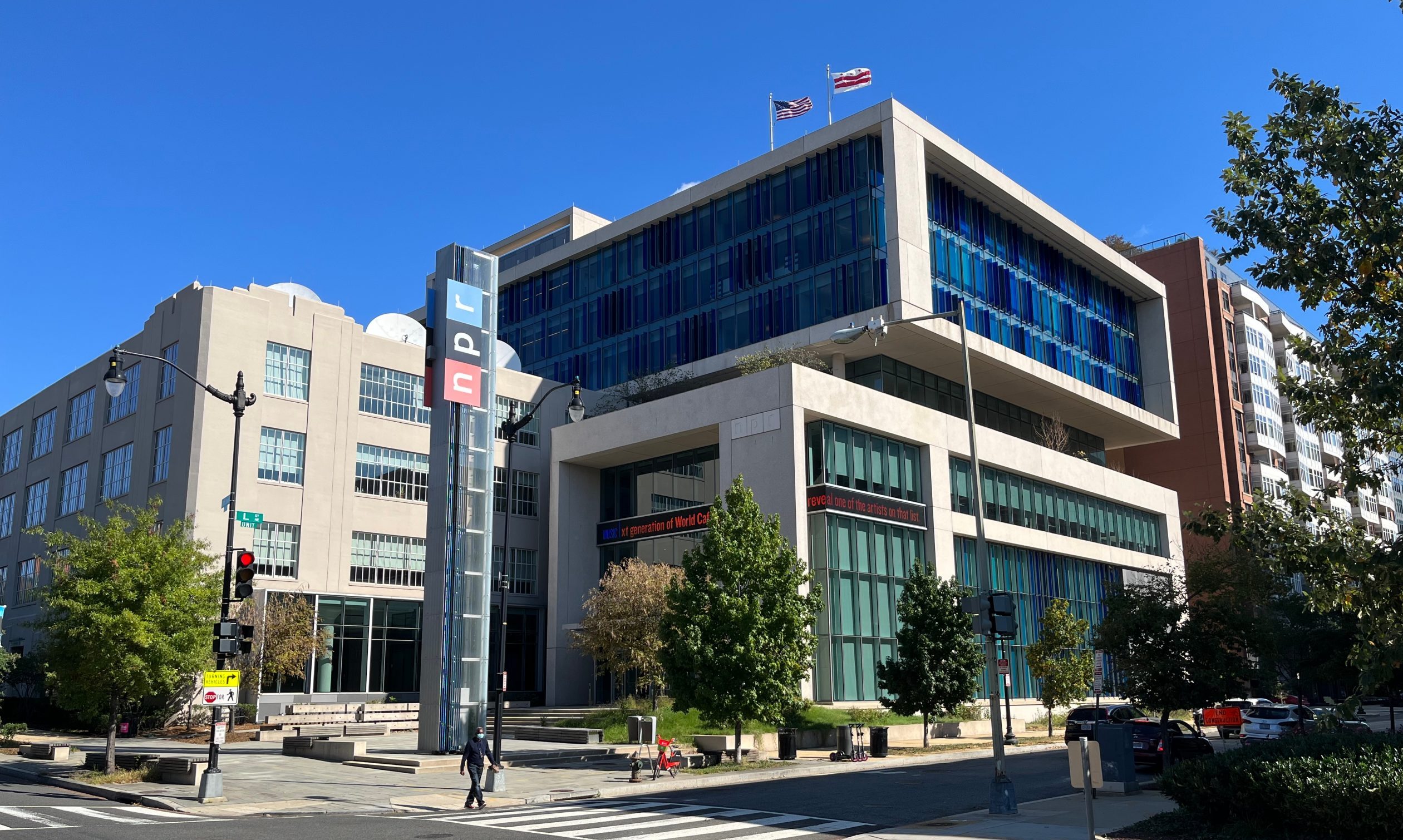
For the public media industry, no story dominated 2025 more than the saga in the US. Donald Trump’s administration entered office at the start of the year well-prepared, and the country’s public media were in the crosshairs of an ideological war on public spending.
An executive order, issued in May, directed all federal agencies to cease any direct or indirect funding they were giving to either NPR or PBS. The Corporation for Public Broadcasting – the now defunct non-profit body responsible for distributing federal funding to public media – was also told to “cease indirect funding”.
One consequence was the termination of the Department of Education’s Ready to Learn grant, which funded educational programming at PBS. It led to a 30 percent reduction in workforce, while tech innovation projects and research into kids learning ceased. “The delivery of free, high-quality educational content to children, families, and educators nationwide is at risk,” said Sara DeWitt, Senior Vice President & General Manager, PBS KIDS and Education.
Read more: What is happening to the USA’s public broadcasters?
What better news then, for public media supporters to wrap up the end of the first three months of 2026, than the decision handed down by a judge in the US, declaring the executive order as “unlawful and unenforceable”?
The order described NPR and PBS as “biased media”, and claimed that “neither entity presents a fair, accurate, or unbiased portrayal of current events to taxpaying citizens.” It was this that the judge, Randolph D. Moss, found to breach the First Amendment; that “On the basis of their speech, [they are barred] from all federally funded programs.
“The First Amendment draws a line, which the government may not cross, at efforts to use government power – including the power of the purse – ‘to punish or suppress disfavored expression’ by others,” Moss wrote.
Reacting to the judgement, CEO of NPR, Katherine Maher, said it was “a decisive affirmation of the rights of a free and independent press — and a win for NPR, our network of stations, and our tens of millions of listeners nationwide. … Public media exists to serve the public interest — that of Americans — not that of any political agenda or elected official.”
More on Public Media Funding
Explore recent funding shifts reshaping public broadcasters worldwide.


Glimmers of hope and rare wins
The legal victory for NPR and PBS’ was not alone in being the only win for public media in the face of efforts to diminish it.
US-funded international public media services were also targeted by the Trump White House in the first few months of his administration. Chief to this effort was the appointment of Kari Lake to a senior executive position, who practically assumed the role of CEO for the US Agency for Global Media (the parent agency for the likes of Voice of America, Radio Free Asia, Radio Free Europe / Radio Liberty and the Middle Eastern Broadcasting Networks). In this capacity, she presided over the effective defunding and shuttering of VOA and mass layoffs.
But after legal action was initiated by VOA unions, a ruling in early March found that Lake exceeded her authority and broke the law in the decisions she made. The judgement paves the way for the return to work for hundreds of VOA staffers who were dismissed, but this has been put on hold while the government appeals the decision, and staff remain on administrative leave.
Fresh from this victory, a second lawsuit is now being brought forwards by VOA journalists, accusing the White House of eroding editorial independence at the broadcaster, alleging that VOA’s broadcasts to audiences in China, Iran, North Korea and to Kurdish people are no longer objective news programming.
“Public media exists to serve the public interest — that of Americans — not that of any political agenda or elected official.” – Katherine Maher, CEO of NPR
Outside the US, the first few months of 2026 also saw a categorical victory for the Swiss public media system, SRG SSR. A public referendum on reducing the licence fee by nearly half was rejected. Equally as significant was both houses in the Swiss parliament rejecting the government proposal to end federal funding for SWI swissinfo.ch – the country’s international public service media – which provides half of SWI’s total budget.
The US and Swiss situations are comparable in their voraciousness. Both situations saw public media contending with wider political movements which sought to diminish, or even vanquish, their role and place in society. Public service media – as a news item – rarely makes it to the front pages. Yet these stories reverberated across the media, both domestically and internationally.
The public media organisations in question – NPR, PBS and SRG SSR – were all on the offensive, communicating their value and worth to key stakeholders. That they have been so far successful in their various ways demonstrates that there is a positive case to be made for public media, and that the value of public media can be communicated to a wide audience.
In the US, arguments centred around local news, emergency broadcasting, and infrastructure. In the wake of funding cuts, donations to PBS and NPR surged and millennials were key players. The legal system and the US Constitution has also demonstrated some resilience and counter to the Trump administration.
SRG, meanwhile, had to lure citizens away from an enticing chance to reduce their own bill. What proved the difference was highlighting the unique offer that only SRG provides: “an SRG that remains rooted in the regions, stays close to the people and provides a diverse range of programming in all language regions.”

Canaries or outliers?
These cases provide positive lessons for a public media industry that has, for years, been on a difficult trajectory. Alongside a wider decline in press freedom, and amid tough economic circumstances, public media faced declining revenue, questions over its relevance, and threats to its independence and governance.
This has largely continued in the early part of 2026. French public media has faced what’s felt akin to a witch-trial in the form of parliamentary inquiry, an idea now also being proposed in Spain. Governance threats are being realised in Lithuania despite the European Commission’s best warnings, and the Czech Republic government appears intent on replacing the licence fee with direct government funding. Funding has also been cut by a quarter for Māori media by the government in New Zealand. In Argentina, meanwhile, the government has continued its attacks on public media, reducing its budget and workforce and aiming to rename it, while the mayor of Buenos Aires has tried to sell off the city’s stations. And in Israel, the government has been unrelenting in finding ways of exerting financial and editorial pressure upon KAN.
Under these circumstances, it would be wrong, therefore, to assume that the situations in both the US and Switzerland indicate a wider sea change in how public media are being considered and treated by governments. What’s more, in Switzerland and the US, the picture isn’t so straightforward. SRG is still facing a reduction in the licence fee. It will be phased down from 335 CHF to 300 CHF by 2029. And for NPR and PBS, Congress passed a rescission bill last summer which ended all federal funding for public media. That bill remains unaffected by the legal challenge, and despite the increase in public donations, they aren’t making up the shortfall.
Public media worldwide remain under enormous pressure, and yet the demand and need for their services remains as essential as ever. But it’s for that exact reason that the victories for public media in the US and Switzerland should be recognised and understood correctly. So that other public media organisations can learn from how NPR, PBS and SRG SSR withstood a barrage, and emerged successfully.
Related Posts

PMA welcomes new funding arrangement for USAGM but challenges remain
Following presidential approval of the…
PMA opposes proposal to cut funding for Swiss public media
Ahead of the Swiss referendum on…

The Trump playbook: a precedent for PSM in Europe?
This week marked the end of federal…
The SRG is repositioning itself and moving closer together
Citing cost-saving pressures and a…