

INTERVIEW
“Citizens are our first line of defence”: BCJ on digital media literacy across Caribbean generations
29 September 2026
As the Caribbean grapples with a widening gap between high rates of digital connectivity but low rates of genuine digital, media, and information literacy, the Broadcasting Commission of Jamaica (BCJ) argues that reaching both the youngest and oldest members of our communities is where the work to close it must begin.

How can Small Island Developing States combat the harms and threats that come from high rates of digital connectivity? Internet penetration across the Caribbean was recorded at 74 percent last year. Yet with little appetite from tech companies to combat the harms their platforms perpetuate, in Jamaica, the emphasis has been on facilitating a whole of society approach.
This year, PMA’s Strengthening Media Literacy Across Generations in the Caribbean project is building practical digital, media and information literacy (DMIL) capacity across Guyana, Jamaica, and Trinidad & Tobago. Over the past few months, the UNESCO IPDC-funded project brought together professionals from media organisations, universities, and libraries to develop community-driven initiatives targeting two audiences that are consistently underserved by regional MIL programming: young people aged 6-17 and older adults aged 50 and above.
From a larger cohort of trained individuals, 24 MIL Champions were selected to take their concepts further. Each country team is now preparing to pilot their work with the public at respective MIL Action Days in October 2026.
Ahead of the Action Days, PMA’s Project and Advocacy Coordinator, Desilon Daniels, spoke with Sasha Smikle, an economist and Manager of Policy & Research with the Broadcasting Commission of Jamaica (BCJ), one of the project’s facilitating partners and the independent statutory agency responsible for monitoring and regulating broadcasting in Jamaica. She reflected on the state of digital media literacy across the Caribbean, what the June workshops revealed about where regional professionals currently stand, and why reaching both the youngest and oldest members of our communities is essential to closing the region’s digital literacy gap.
Desilon Daniels: Digital media and information literacy (DMIL) has globally been a growing priority for some years now, but how would you describe the state of DMIL in the Caribbean specifically? Is the region keeping pace, or is there a gap?
Sasha Smikle: The Caribbean is currently facing a significant digital literacy gap, but we are also seeing pioneering strides to close it. For many years, the region’s primary developmental focus was on building physical digital infrastructure and expanding connectivity. However, as the Fourth Industrial Revolution rapidly accelerates, we have realised that simply having a smartphone and a data plan is not enough to participate safely or productively in the modern digital economy.
The reality of this gap is backed by sobering data: global research from the World Bank indicates that nearly 70% of individuals in developing economies who are excluded from digital technologies are held back primarily by deficiencies in digital literacy. In Latin America and the Caribbean, early studies showed that nearly two-thirds of citizens with mobile broadband access were not utilising it because they lacked basic digital skills.
Rather than passively accepting this divide, Jamaica has completed a comprehensive national AI Readiness Assessment and the BCJ has developed and formally presented a comprehensive, data-driven “whole-of-society” DMIL Skills Framework to establish clear, internationally comparable standards for building cognitive digital capacity across our workforce, schools, and communities.
DD: The Caribbean has a distinctive media landscape with strong broadcast traditions, high social media penetration, and real variation between countries. How does that context shape the MIL challenge here?
SS: This distinctive mix of strong local traditions and rapid digital migration creates a profound “trust gap” that completely reshapes our regulatory and educational approach. It can be framed as a dual challenge.
The first dimension is exposure to digital harms. Traditional, border-bound content regulation is inefficient in a converged digital space where users seamlessly bypass conventional networks. Unregulated social media has become the most problematic space; A 2025 BCJ national study found that 66% of respondents considered adult, mature or problematic content common on social media. Then there was a 2026 AI Insights study which found AI-generated misinformation to be among Jamaicans’ highest-rated AI-related concerns, with a mean concern score of 3.6 out of 5. The second is the jurisdictional limits of local law. As small island developing nations, we simply do not have the extra-territorial leverage to enforce our domestic legislation on massive, foreign-based tech platforms.
“Generation matters immensely because different age cohorts experience entirely different digital realities, usage styles, and vulnerabilities, meaning a “one-size-fits-all” literacy campaign is guaranteed to fail.”
Because we cannot easily police a borderless internet, the BCJ sees the citizen as the ultimate “first line of defence”. Our regulatory toolkit has shifted to include technology-agnostic, content-focused standards supported by aggressive media literacy education. We focus on equipping citizens with critical thinking skills to detect algorithmic manipulation, identify deepfakes, protect their personal data, and guard against malicious actors online.

DD: PMA’s current project focuses on two specific audiences: young people aged 6-17 and older adults aged 50+. Why do age groups matter to how we think about DMIL?
SS: Generation matters immensely because different age cohorts experience entirely different digital realities, usage styles, and vulnerabilities, meaning a “one-size-fits-all” literacy campaign is guaranteed to fail.
For our youth, they are highly connected “digital natives” who are rapidly migrating away from legacy media to immersive, visual platforms and online gaming environments. They have high digital fluency but lack critical cognitive safeguards. They are vulnerable to severe behavioural risks such as cyberbullying, online grooming, predatory content, and the permanent psychological consequences of their digital footprints.
For our older adults, older cohorts – particularly Boomers – report significantly lower familiarity with advanced digital concepts. the AI Insights study found that only 11% of Baby Boomers were familiar with the term ‘deepfake’, while 47% had heard of it but knew little about it. This cohort is highly vulnerable as they transition onto smart devices and online citizenship, making them prime targets for advanced AI-driven deception, identity theft, financial fraud, and romance scams.
By understanding these distinct behavioural patterns, we can design targeted, generation-specific interventions such as gamified safety modules for children and community-based, intergenerational library tech hubs for seniors.
DD: Older adults are often overlooked in DMIL conversations, with the focus usually defaulting to youth. Based on your experience, why is that a problem?
SS: Ignoring older adults in digital literacy policies is a critical error because it accelerates social exclusion and leaves our most vulnerable citizens exposed to predatory digital harms. Under the “Inverse Equity Hypothesis”, we have empirically observed that older, rural, and less-educated individuals, who would actually derive the greatest marginal benefit from digital services and internet access, are the very ones with the lowest literacy levels and least access.
Furthermore, as public and private services, ranging from banking and utility bills to national health records and the Digital Television Switchover (DSO), increasingly shift to fully digital, online delivery models, senior-citizen households are left completely stranded. When older adults lack the skills to verify online information, they suffer disproportionately from the “truth deficit”. They are target-marketed by sophisticated scammers using deepfakes and automated social engineering. Overlooking seniors doesn’t just hurt individuals; it actively undermines family safety, as they are often the primary guardians responsible for managing children’s screen time and devices at home.

DD: What did participants’ responses at the Jamaica workshops in June tell you about where DMIL understanding currently sits among media, library, and university professionals in the region?
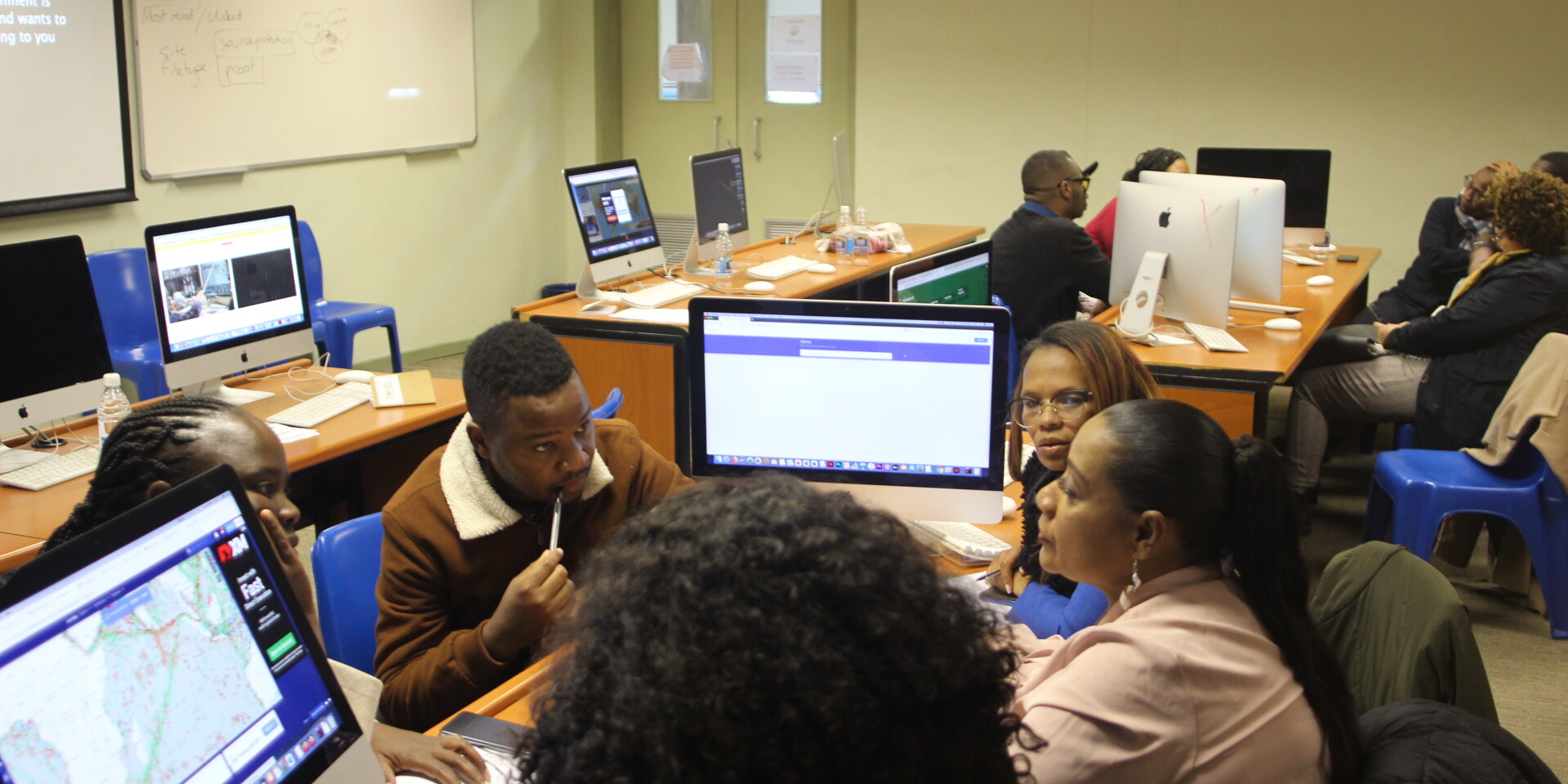
SS: The workshops highlighted that our regional professionals possess strong starting motivation and ICT competencies to identify gaps in DMIL among stakeholders. They are aware of many of the harms that can arise but need guidance on designing the interventions that are necessary to fill the gaps. This showed us that we must move our professional training programmes away from functional IT instruction towards literacy, including specialised, domain-related digital ethics, data verification, and online safety standards.
DD: Was there anything that surprised you, or that confirmed something you’d long suspected?
SS: One of the most surprising aspects of the workshop was the fact that all three sectors represented were doing some work in DMIL and came into contact with each other but never realised how their work was related or overlapped. This confirmed that for DMIL interventions to be impactful, a whole of society approach is needed and also confirmed a long-held belief that DMIL sensitisation efforts are happening but in silos.
More on Digital, Media & Information Literacy in the Caribbean


DD: The BCJ has a specific mandate for supporting digital literacy. What does that work look like in practice?
SS: In practice, our outreach is split into highly targeted, practical initiatives. Through our schools outreach, we engage over 4,000 primary and secondary students annually across the island. We deliver interactive multimedia presentations that teach children how to critically evaluate online sources, protect their digital footprints, and recognise the signs of cyberbullying, online grooming, and internet addiction.
For adults and parents, we reached over 3,000 adults and senior citizens in 2025 alone. We partner with organisations like the Jamaica Library Service, Parent-Teacher Associations, and the Lions Club of Mandeville to conduct workshops on managing screen time, implementing parental controls, and identifying romance scams and deepfakes.
We also create highly resonant, culturally tailored media assets and award-winning public campaigns. There was the “What If?” campaign followed by the “Digital Nightmare” campaign specifically aimed at highlighting potential fake news pitfalls. In November 2025, we launched “Truth Yard” in partnership with UNESCO and CARIMAC [the Caribbean School of Media and Communication]; this rapid-response platform operates a real-time monitoring and verification team to debunk false claims and deepfakes during national crises.
DD: BCJ has built practical experience in digital literacy programming that few institutions in the region can match. What do you think media bodies, libraries, and universities from other Caribbean countries could take from that experience as they build their own MIL capacity?
SS: We believe that there are four major, exportable lessons that our Caribbean counterparts can immediately adopt to build sustainable capacity. Firstly, move beyond static IT instruction to DMIL. Universities and training institutions must stop teaching “computer literacy” as a series of isolated office skills. We must transition to a unified, globally comparable Competency Model, like the DMIL model synthesised from UNESCO frameworks, that treats media evaluation, data privacy, and algorithm literacy as integrated transversal skills.
Secondly, take a “whole-of-society” approach. You cannot solve this in a silo. Media bodies, libraries, and universities must form active coalitions across the public, productive sector, education, and civil society to ensure shared responsibility.
Thirdly, engage big tech through pragmatic partnerships. Small island states lack the jurisdictional scale to regulate global platforms. Instead of antagonistic legislation, we recommend pursuing co-regulatory tools to rapidly remove harmful content and designing voluntary programmes to encourage tech platforms to fund local media literacy programmes.
Finally, embrace cultural and linguistic relevance. To get genuine public buy-in, your messaging must be compatible with local cultural values. Do not import dry, clinical guidelines from outside the region; package your lessons using local idioms, Patois, music, and storytelling.

DD: The MIL Champions coming out of this project will be designing and piloting their own initiatives later this year. What advice would you give them as they move from training into practice?
SS: As you move from theory into the field, I urge you to keep three guiding principles at the absolute center of your designs. Design “mobile-first” as a priority. In our region, the computer is not a desktop; it is a smartphone. Our national baselines show that the median citizen accesses the internet exclusively via a mobile device, using data plans rather than fixed broadband. Your workshops, user-reporting tools, and online portals must be light, visually optimised for small screens, and designed for easy mobile shareability.
Prioritise equity over equality. Never distribute your training resources in a generic, egalitarian manner, because the best-resourced and most organised groups will inevitably co-opt them. You must actively seek out and design custom, inclusive initiatives for the most vulnerable and marginalised: rural communities, seniors, lower-income brackets, and persons with disabilities, such as Deaf and Blind youth who rely on specific visual and screen-reading interfaces.
And finally, empower and mobilise, don’t just educate. Shift your audience from passive consumers to active participants. Turn your digital literacy sessions into active problem-solving exercises where citizens are empowered to protect their communities, manage their data rights, and co-create truthful, uplifting Caribbean content.
Project partners
The interview was conducted as part of the Strengthening Media Literacy Across Generations in the Caribbean, being implemented by the Public Media Alliance with support from UNESCO Caribbean and UNESCO’s International Programme for the Development of Communication (IPDC). The Broadcasting Commission of Jamaica is a facilitating partner. Learn more about this initiative.

Related Posts

Highlights from our media literacy training workshops across the Caribbean
The Public Media Alliance hosted…

How the Caribbean is building disaster-ready communities through information resilience
UNESCO Caribbean shares why initiatives…

The three projects helping Caribbean communities prepare for disaster
Meet the Data Journalism in Action…

How media literacy is empowering Caribbean youth
Initiatives like the Public Media…