

SPEECH
“Making the case for the global value of the BBC”
17 September 2026
In a speech, the BBC’s deputy director-general outlines the ways in which the corporation has impact across the world.
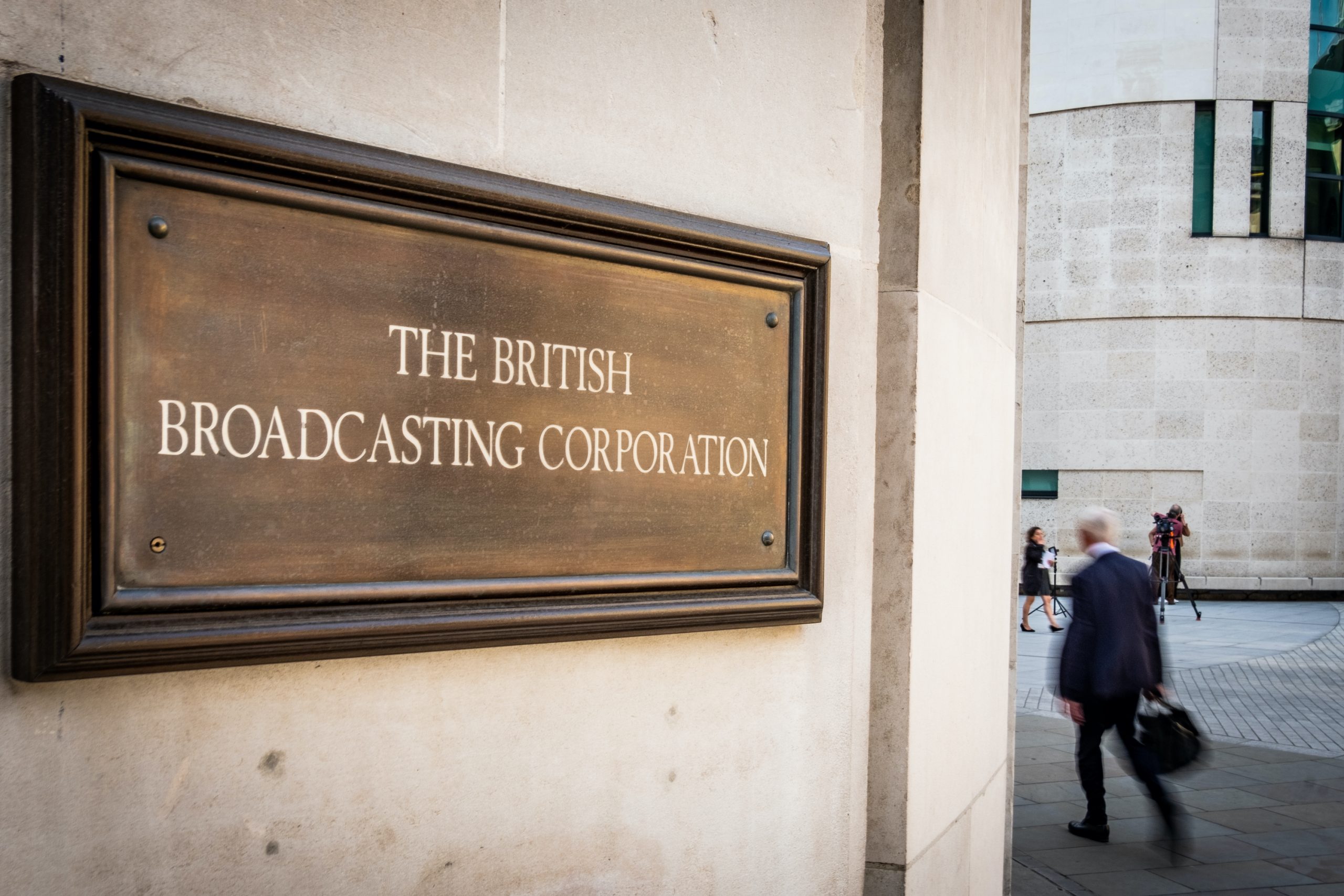
At an event in London on Monday 14 September, titled “Beyond Britain: The Global Value of the BBC”, the organisation’s deputy director-general, Rhodri Talfan Davies delivered a keynote speech, reflecting on how the BBC provides value around the world. From the World Service’s delivery of trusted and accurate news and information to worldwide audiences, to the BBC’s work in developing the next generation of homegrown journalists around the world – Davies iterated the ways in which their international impact also benefits UK audiences.
The event was organised by the Public Media Alliance in partnership with the Centre for Journalism and Democracy, and hosted by City St George’s, University of London. It was held as the BBC continues its negotiations with the government over a new Royal Charter.
The speech is published in full below.
Read more from the event and the speakers here.
Speech by Rhodri Talfan Davies, Deputy Director-General, BBC & Chair, BBC Media Action
Good afternoon,
Thanks so much for the invitation to be here today – to reflect on the global impact and value of the BBC as we face a defining moment for our organisation and the role it plays internationally.
The BBC was of course a founding member of the PMA back in 1945 – and your advocacy and support over the decades has been vital, as I’m certain it will be during this current debate.
And it’s a debate that’s gaining momentum.
Right now, the key questions that must be answered as part of the BBC’s Charter Renewal are being weighed, and our role on the world stage – and what that will mean for partners and audiences – is one of the central pillars of the negotiations.
That’s why I want to spend some time today focussing on that global public service media role – how we’ve got to where we are; why it matters in an evolving and uncertain world; and what’s needed to safeguard and strengthen it for the future.
Looking back: A historic achievement
Let me take that first point – and I hope you’ll indulge me for briefly casting back into our history.
As the evidence shows – and as we’re acutely aware – what the BBC has done over the past century, matters. Not just for the media world, but for communities and societies around the globe.
Firstly, the BBC as a model to follow – whether it’s the very concept of public service broadcasting and the values that underpin it; the introduction of the Licence Fee, a core funding model adopted by other nations; or leading the digital on-demand revolution, such as launching iPlayer.
Or, the BBC as a partner – shaping our industry by helping to found bodies like the PMA and EBU to advance media policy and regulation; or creating the world’s first regularly scheduled high-definition television service.
And, most critically, the BBC as a beacon for truth – providing trusted and impartial news and information through the BBC World Service, launched in 1932; foreign language broadcasting into occupied Europe; and ultimately becoming a global standard for news broadcasting.
The BBC’s founders were bold – ‘Nation Shall Speak Peace Unto Nation’, they said. And, in pursuit of this noble goal, the BBC has led, pioneered, innovated, and – alongside our partners – created a media ecosystem that serves and supports an informed public, free from political, partisan, or commercial influence.
It is an exceptional and precious achievement.
Read the Public Media Alliance’s submission to the UK government on the Charter Review
The BBC is under pressure like never before, yet its importance and role in the global news ecology, and its value to citizens at a time of growing disinformation and geopolitical instability, has arguably never been greater.
The review of the current Charter will be deeply consequential, not just for UK audiences, but for audiences and trusted, independent public media around the world.
The BBC today: Why it matters now
But the case we make today is not rooted in past achievements. It is rooted solely in the urgency of the moment.
No one in this room will be under any illusions what that means: an anxious world, typified by growing division, tension and repression, and changing at a breakneck speed.
The direction of travel for press freedom alone is deeply worrying, with 75% of countries now with low or non-existent media freedom.
Our societies are plagued by disinformation – Russia and China are spending billions on media to gain international favourability, while AI provides us with a new and significant threat to information integrity and security.
And for public service media – our budgets are shrinking, our costs are rising, and all against a backdrop of massive media market competition and change.
There is no doubt the challenges we face are daunting.
But it is precisely why the mission of the BBC, and that of our international partners, has never been more important or more needed. And to those who have not yet raised their voice in this debate, I simply say this: if not now – when?
We are the antidote to mis-and-disinformation; we are a bulwark against a global monoculture; we are a champion for shared truth and understanding that brings audiences together – rather than pushing them apart.
It’s not a very British thing to say, but we also have some muscles we can flex: a unique position of strength grounded in public trust, creative excellence and global reach.
For the first time the BBC is now reaching over half a billion people a week globally on average, primarily through the World Service.
The BBC’s founders were bold – ‘Nation Shall Speak Peace Unto Nation’, they said. And, in pursuit of this noble goal, the BBC has led, pioneered, innovated, and – alongside our partners – created a media ecosystem that serves and supports an informed public, free from political, partisan, or commercial influence.
And we’re growing in every region – ranked number one among international news providers for trust, reliability and independence.
So, audiences are crystal clear about the value we offer. They’re turning to us for the global insight, the expertise and the scale of a truly international news service – one that helps them make sense of a complex world where trusted sources are vanishingly thin.
It will not surprise you that some of the regions where we’re seeing the highest growth are those which are most scarred by conflict.
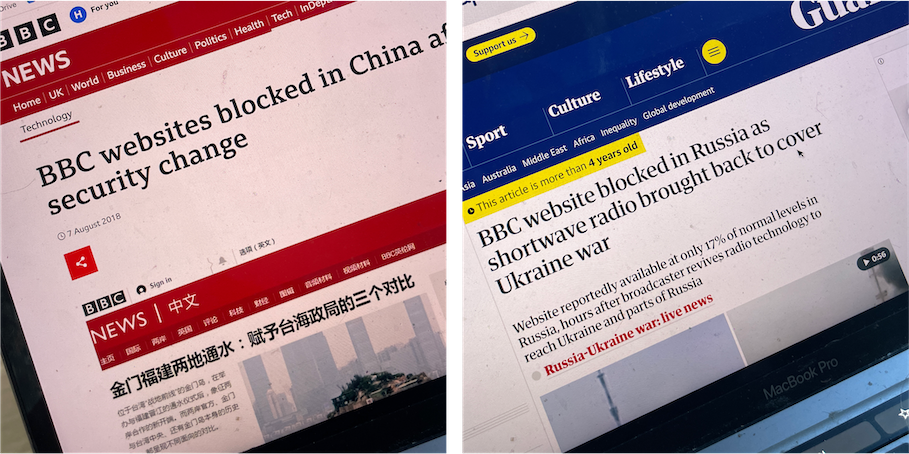
In Ukraine, our service reaches more than one in five adults – up more than 200% in the past year. In Iran, we reach one in four adults – despite being banned. That’s nearly 25 million people. At the frontline of conflicts globally, it should be no surprise that audiences seek voices they can trust and rely on.
And as the media landscape changes, we change too, finding new ways to serve audiences – expanding our presence on digital platforms and investing in distinctive journalism and programming. Today, the BBC is the most-followed English language news publisher on YouTube.
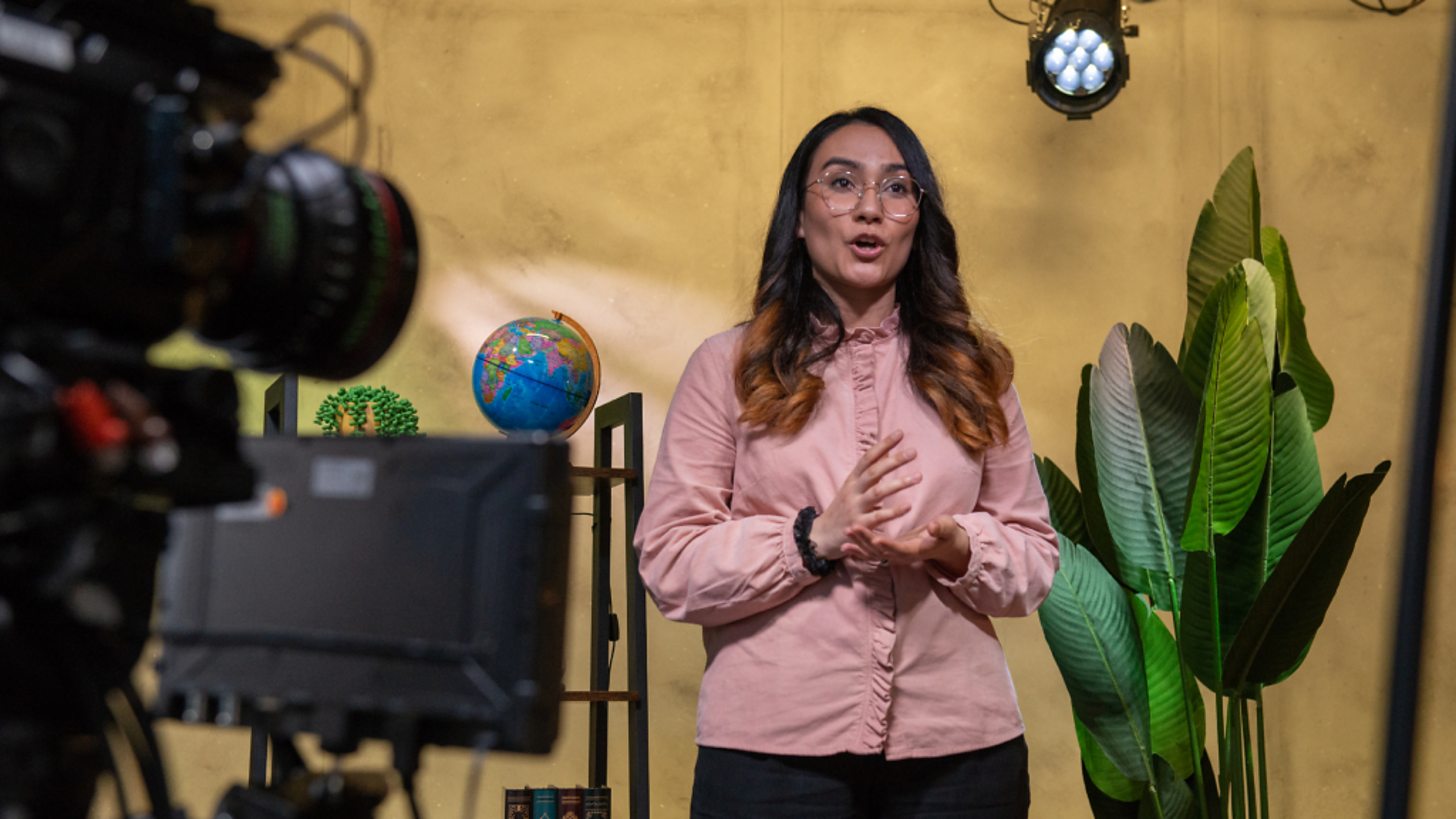
This wave of innovation is matched by a commitment to partnership on the ground. The charity I now chair – BBC Media Action – focuses on developing the next generation of homegrown journalists across the world working with hundreds of regional partners. In Afghanistan, in the Ukraine, and, most recently, supporting local news teams in the immediate aftermath of the Nepalese floods.
Alongside these audience and societal impacts, we also need to recognise the growing economic value of our international services to the UK.
Trade, investment and growth increasingly depend on how the UK is viewed abroad, as a reliable partner, a stable destination for capital, and a country governed by the rule of law. The BBC – and particularly the World Service – plays a pivotal role in sustaining those perceptions, with measurable consequences for the UK economy.
Our research shows that influential people who use the BBC are more likely to invest in the UK, and to continue investing, than non-users. The stronger the engagement, the stronger the intention to invest.
They are also more likely to participate in democratic processes such as voting in an election, underlining our role in promoting democratic values around the world.

Looking ahead: Our goal for the future
All that said, we do now find ourselves at an inflection point. The future of the BBC – and our impact at home and abroad – cannot be taken for granted.
The BBC’s global reputation and standing has not been built overnight. It is the result of decades spent earning the trust of audiences around the globe.
Making the wrong choices now could erode those hard-won benefits. And far from neglecting our international operations, we’ve been very clear that this Charter Review is the moment to reinvent the whole of the BBC for today and tomorrow.
That includes how we work with our international partners to stand up for and strengthen the role and impact of public media worldwide.
And it includes the World Service, where we must be more ambitious to meet increasing global threats. To that end, we’ve been calling on the UK Government to take back full funding of the service, just as it did for the first 80 years of its existence.
Because we know we can do so much more.
But it requires a long-term sustainable funding model that provides us with predictable and stable funding. And that’s a big part of the case we are making in this Charter Review process.
As that process reaches its conclusion in the next few months, we’ll continue to listen to the voices of the public and everyone who believes in the value of what the BBC delivers.
We hope, where possible, that you will continue to be our champion and advocate, helping to make the case for a world-leading public service media organisation in the platform age – as part of a critical public media ecosystem.
I believe the global role of the BBC in these uncertain times has never been more needed. But it has also never been more important that we join together to fight for our collective future. If not now, when?
About the speaker

Rhodri Talfan Davies was appointed Deputy Director-General in June 2026. He served as Interim Director-General from April to May 2026. Prior to that, Rhodri joined the BBC Executive Committee in 2021 following his appointment as Director of Nations. In this role he led the BBC’s work serving nations and local audiences across England, Scotland, Wales and Northern Ireland, as well as leading the BBC’s Across the UK strategy to decentralise the organisation across the country. Alongside his role as Director of Nations, Rhodri has led the BBC’s response to Generative AI – overseeing a range of technical and editorial pilots across news, sport and local services, and introducing new editorial policies and standards to manage the adoption of this new wave of technology. Rhodri was Director of BBC Cymru Wales between 2011 and 2020, where he led the opening of the BBC’s new production centre at Central Square in Cardiff in 2020 and oversaw a transformation in drama production set in Wales. In June 2025, Rhodri was appointed Chair of BBC Media Action – the BBC’s international development charity which operates in more than 30 countries.
Image credit: BBC Wales / Patrick Olner
Related Posts
BBC Charter Review: The global value of the BBC
With the Charter Review underway, we…
BBC Charter Review: A generational opportunity for the BBC
In its BBC Charter Review submission,…
BBC research reveals global influence and status as top UK cultural export
Recent global audience research from UK…
BBC WS director on competition in the international media market
BBC News’ Global Director on why the UK…