

The PMA Briefing
A week of new programmes, initiatives, hubs and pledges
15 April 2025
Public media mark International Fact-Checking Day by highlighting and launching new fact-checking initiatives; Peru’s IRTP opens a new regional hub in the country’s south; and Australian and Canadian politicians make new pledges regarding the ABC and CBC/Radio-Canada. Elsewhere, GBC’s Chair calls for unity; and calls to restore KBS’ funding.
Belgium, Germany and Ireland: Initiatives to combat mis- and disinformation
RTÉ has unveiled a new strand of content, RTÉ Clarity, focussed on debunking mis- and dis-information while explaining how RTÉ fact-checks its reporting “to equip the reader, the listener, the follower, the viewer, with accurate and impartial facts so you can judge for yourselves where the real story is,” according to Deirdre McCarthy, Managing Director of RTÉ News & Current Affairs. Content under the Clarity brand will primarily be digital-first. “We want you to be confident in our newsgathering and our sourcing of stories to make sure you can see there is no agenda behind our storytelling,” McCarthy said.
There will also be an emphasis on helping audiences identify mis- and disinformation, as part of the broadcaster’s new strategy to build media literacy with Irish audiences. It comes as the broadcaster looks to restore its trust with the public, after several damaging scandals.
Deutsche Welle (DW), Germany’s international public broadcaster, similarly emphasised its role in combatting mis- and disinformation as it marked International Fact-Checking Day on 2 April. DW recently expanded the number of fact-checks it does, and has a central fact-checking hub. “This agile network enables us to respond to disinformation quickly yet thoroughly and based on facts. The linguistic and regional expertise of the 32 DW languages is a great asset for us when it comes to clarifying false narratives,” said Joscha Weber, Head of DW Fact-checking.
The role of DW and other international public media organisations has been highlighted recently given the decisions by tech platforms to stop their fact-checking capabilities, while the defunding of USAGM will also have serious repercussions.
Belgium’s VRT similarly used International Fact-Checking Day to emphasise the different fact-checking efforts it is involved in. While VRT has its own fact-checking units, it is also involved in the International Fact-Checking Network (IFCN), the European Fact-Checking Standards Network (EFCSN), deChekcers, and BENEDMO.
Read more >> [Belgium]
Read more >> [German]
Read more >> [Ireland]

Australia & Canada: Broadcasting policy comes up in elections
Australia’s opposition leader, Peter Dutton, has refused to rule out cuts to ABC if he wins the May 3 election, saying the public broadcaster would need to demonstrate “excellence”.
The ABC’s chair, Kim Williams, meanwhile said he had “no doubt” a review would be held if the coalition won, but said the organisation “had nothing to apologise for”.
“I don’t think there’s any doubt within the event of Mr Dutton acceding to office that there would be a very early call for an efficiency and, apparently, an excellency review for what the ABC does. Game on,” Williams said during a speech in Melbourne. “A well-resourced and empowered ABC has never been more important in being a bastion for truthful journalism.”
In Canada, which is also in the midst of an election campaign, the Liberal party leader Mark Carney pledged to increase CBC/Radio-Canada’s funding by C$150m annually, setting him in stark contrast to Conservative leader Pierre Poilievre, who wants to defund the CBC.
Carney said CBC/Radio-Canada needed “stable, long-term funding”. Poilievre called the plan “unaffordable”.
Read more >> [Australia]
Read more >> [Canada]

Peru: Decentralisation on IRTP’s agenda
The National Institute of Radio and Television of Peru (IRTP) has opened a regional hub in the south of the country, as part of a broader strategy to decentralise its operations and put more emphasis on local content.
The Arequipa headquarters will serve Peru’s seven southern regions. “This space … isn’t simply an administrative extension,” said Ninoska Chandia, the Head of IRTP. “It’s a living center of creation, where each team member has the extraordinary opportunity to tell the stories that deserve to be told: stories of overcoming, innovation, talent, and hope that flourish daily in the towns of the southern macroregion.”
The Arequipa office is the first to be opened under a strategy to have more operations in different parts of Peru. A further three offices in the north, the east and central Peru will be opened in the future.
The broadcaster is deemed to be state-controlled by the State Media Monitor, and is directly overseen by the Ministry of Culture. Chandia is known to have close relations with Peru’s President, Dina Boluarte.

Ghana: GBC Chair urges unity amongst management & staff
An appeal for calm and unity has been made by the Chair of the Ghana Broadcasting Corporation following weeks of tension between some unionised staff members and the Director General. A durbar [formal meeting] was held last week, attended by staff, management, and the board. According to the GBC, the broadcaster’s Chair, Samuel Kojo Intsiaba, called for staff to follow due process when airing grievances, while also saying the board would hold the management to account.
The disagreement with director general Amin Alhassan erupted in mid-March, when the Unionised Workers of the Ghana Broadcasting Corporation held a news conference in which they said they had lost confidence in Alhassan, and demanded his resignation. They also called for “an immediate investigation and forensic audits of the financial dealings of the GBC”, under Alhassan’s leadership. In an editorial, a former GBC staff member accused the “small but vocal group” of launching “not just an attack on one man—it is an attack on the progress, stability, and future of GBC itself.” Abdul Hayi Moomen said under Alhassan, GBC was modernising, its infrastructure upgraded, and staff morale improved.
With Alhassan’s first term as Director General ending in 2024, there was also confusion – including among many GBC staff – about whether he had been re-appointed. This was subsequently confirmed by the National Media Commission.
During the durbar, Alhassan said such negative media coverage of GBC’s operations would further impact their financial situation. “When GBC does well, we will all do well. When GBC suffers, we will share in the suffering… Bad press for an organisation like GBC, it doesn’t help us. It destroys our business,” he said, according to The Ghanaian Times.

South Korea: Calls for resolution to KBS funding crisis
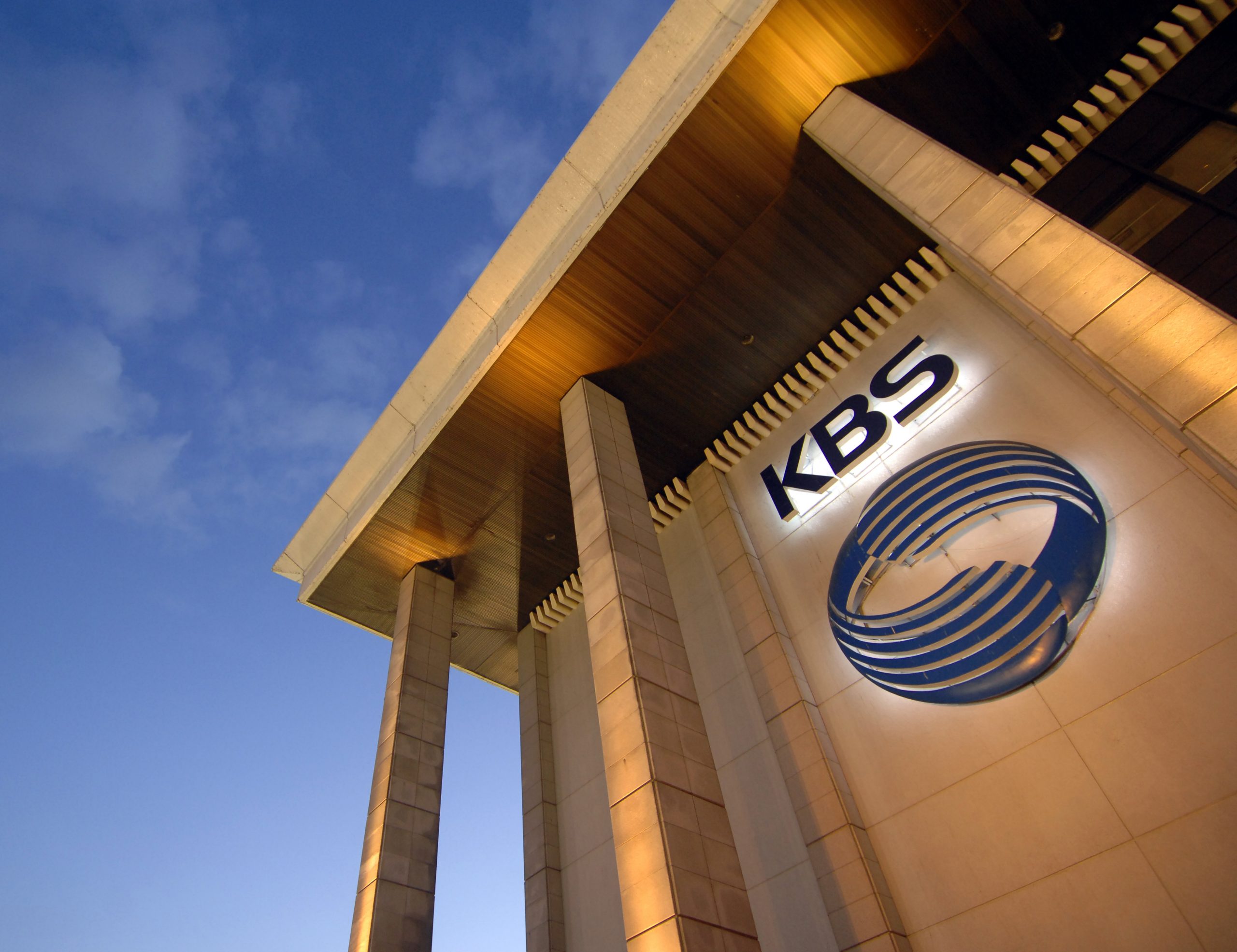
The Korean Actors’ union has called for new measures to collect fees for public broadcaster KBS, saying their jobs are facing a “serious crisis” because of a market slump.
“KBS, which raised the status of K-dramas and led the Korean Wave in a structure where it competes not only with domestic broadcasters but also with global OTT operators, is struggling due to the worsening market environment and intensified competition,” the union said in a statement, reported by IS Plus.
In 2023, a new funding regime was introduced which meant the broadcasting fee was no longer collected from citizens when they paid their electricity bills. Instead, KBS was left to find its own way to collect revenue. The move has seen revenue plummet.
The union said: “We urge the National Assembly members to pass the Broadcasting Act amendment, including the subscription fee collection plan, so that the public broadcasting station KBS can actively produce high-quality content based on public funds to meet the expectations of viewers and compete on equal terms with global OTTs to elevate the status of Korean popular culture.”
Featured Image: BERLIN: the logo of the brand “DW Deutsche Welle”, Berlin. Credit: 360b / Shutterstock.com
Related Posts
Public media accused of bias | The PMA Briefing
NPR and PBS CEOs defended PSM in…
Plans to strengthen broadcasting through mergers & partnerships | PMA Briefing
Indonesia and Bangladesh's gov't…
Hope for public media funding? | The PMA Briefing
VRT gets a €20 million boost, US…

Clampdowns, agreements and new hope | The PMA Briefing
Czech Republic sees boost in PSM's…