

The PMA Briefing
Standing up for public media
11 June 2025
Social participation in the form of two elected committees is back at the EBC, after a 9-year hiatus; a joint call from German-speaking journalists has urged the protection of public media against right-wing populist parties; a step closer to the Malaysian Media Council; and a victory for CPB in the courts.
Brazil: The return of social participation at EBC
There are hopes of greater democratic involvement in the EBC, the umbrella organisation of Brazil’s public broadcasting network, after the company announced the appointment of members to the Editorial and Programming Committee, nearly a decade after it was disbanded. It came after a visit from the Communications Minister, Sidônio Palmeira, to EBC’s headquarters last Thursday, during which the DG Journalists’ Union called for greater investment in the EBC, and the restoration of the Editorial Committee.
Under communications legislation, there should be a National System of Social Participation in Public Communication (SINPAS). This system is made up of the Editorial Committee (Comep), the EBC Ombudsman, the Special Advisory Office for Social Participation, and the Social Participation, Diversity and Inclusion Committee (Cipadi).
But both Comep and Cipadi have been in stasis for six months, since their elections in December last year. Members were appointed to Cipadi, but no formal meeting was arranged, while for Comep, no one was appointed. “It has been six months of waiting, which has delayed the project to resume truly public communication at EBC, with civil society participation in monitoring the broadcasters’ programming,” the union said in its letter to the minister. On 4 June, the University of Brasília held an unofficial gathering of the Cipadi, as “a necessary act of rebellion” to force the government’s hand.
Since then, and after the visit from the minister, things have moved quickly. The first meeting of Cipadi was scheduled for 11 June. Meanwhile, the members of the Editorial Commitee were finally appointed. It paves the way for hope that social participation in EBC – absent since 2016 – can be restored. Concerns about funding, however, persist, and led to the resignation of one EBC Director.
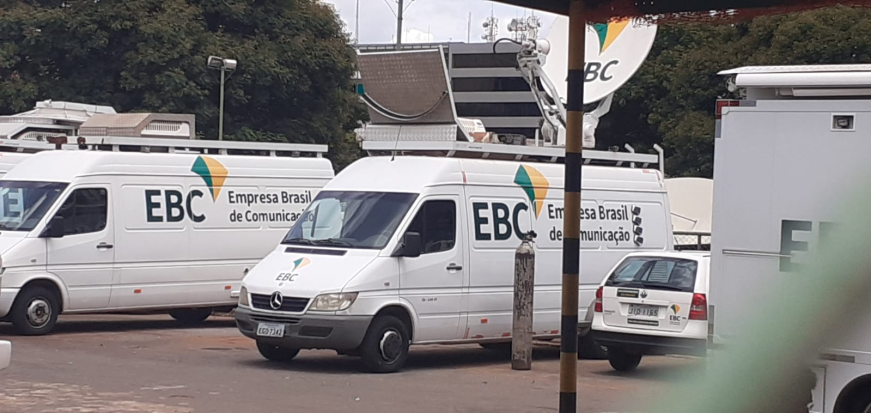
Austria, Germany & Switzerland: Journalists unite to call for protection of public media!
Journalists and editors from the ARD, ZDF, Deutschlandfunk, ORF and SRF have called for more protection of their public broadcasters against populist and far-right forces.
During the yearly meeting of the Association of Public Broadcasting Editorial Committees (Agra), representatives from Germanic public broadcasters stressed that free and critical journalism must be properly funded and legally protected, amid a global trend that has seen media freedom deteriorate globally.
In Switzerland, the debate over the funding of SRG SSR has begun in the National Council. The referendum proposed by the right-wing populist political party SVP calls for a reduction of the public broadcaster’s licence fee and for companies to be exempted from the broadcasting tax. The opposition to the halving of SRG’s funding warned that further cuts would have serious consequences on the mission and operations of the broadcaster and its plans to embrace digital transformation and reach younger audiences. SRG SSR is already implementing an austerity plan throughout the whole organisation, after alternative plans were put forward which will see the licence fee gradually reduced down to 300 francs from 335 francs by 2029.
In Austria, the ORF narrowly avoided a position where substantial reforms would have been imposed, after the far-right party, FPÖ, failed to get into government. The FPÖ had proposed getting rid of the household fee entirely. However, it still faces a tricky scenario, with its funding frozen and the government currently going through a restructuring of the ORF board and its different committees.
In Germany, serious concerns have been raised about the funding of the public broadcasters, after the 16 states froze its funding. This was despite the recommendations of the independent commission that evaluates the financial requirements of public broadcasting in the country. A legal challenge, brought forward by ARD and ZDF, is ongoing.
Malaysia: Details about new Malaysian Media Council to emerge
Several months after the Malaysian Media Council was passed by the lower and upper house, a big announcement is being teed up at the National Journalists’ Day Summit on 14 June.
The creation of the self-regulatory body – created to protect media freedom, carry out investigations, and establish a common code of conduct – was widely lauded by civil society groups, who said it “marks a significant step towards fostering an independent, multi-stakeholder regulatory and accountable media ecosystem” in Malaysia. The Council will also handle public complaints against media companies.
However, there has been some concern that there will be two government representatives on the 21-member council, but the government has consistently promised that these will be from the state-owned media companies, RTM and Bernama. “It is appropriate for the government to have representation on the council for government matters, and as stipulated in the bill, these representatives must be from the media industry, such as RTM and Bernama,” said Deputy Communications Minister, Teo Nie Ching.
It’s hoped, ahead of the summit later this week, the council will be formally established, and members appointed.

US: Judge rules in favor of CPB’s independence
A U.S. District Court Judge has recognised the independence of the CPB, stating that “the president is not free to remove directors and then unilaterally to appoint their replacements, thereby using his power to remove as an effective tool for altering Board policy.”
The CPB sued the Trump Administration in April after the White House attempted to remove three of its board members. The organisation defended its independence as a non-profit corporation created by Congress, with protections from government direction or control. It asked the court for a preliminary injunction to temporarily stop the Trump Administration from removing Laura Ross, Thomas Rothman, and Diane Kaplan from their positions. Despite the judge’s ruling that the CPB did not meet the legal requirements to be granted this injunction, the three board members will keep their seats and continue their work for the CPB.
In a statement, the CPB’s President said they were “very pleased that the Court recognized CPB is an independent, nonprofit corporation, free from governmental control or influence. CPB, board and management, look forward to continuing our work with policymakers and other stakeholders to ensure accurate, unbiased and nonpartisan public media is available for all Americans”.
Featured Image: The offices of SRG SSR in Bern. Credit: SRG SSR
Related Posts
New deals for content | The PMA Briefing
Argentina’s kids TV channel unveils a…

Lifelines for public media? | The PMA Briefing
As NPR announces legal action against…
What’s the world’s biggest public broadcaster? | The PMA Briefing
A new report ranks the top 100 media…
Public media and politics: debates over coverage, platforms and funding | The PMA Briefing
Controversy surrounds political…