

The PMA Briefing
Standoffs, closures, and reforms
6 January 2025
The board of the Corporation for Public Broadcasting has voted to dissolve itself, after losing federal funding last year; RTS unions are in an open dispute with the broadcaster’s senior management; Czech TV faces a major restructure; and LRT’s funding freeze will be challenged in the Constitutional Court.
US: CPB votes to dissolve itself while USAGM aligns with National Security Strategy
US-funded international public media has been instructed to follow national security policy and the Corporation for Public Broadcasting has voted to dissolve itself, as the pressure on American public media in 2026 shows no sign of abating.
On 2 January, the Deputy CEO of the US Agency for Global Media, Kari Lake, issued a memo linking the Trump administration’s 2025 National Security Strategy with the work and output of the networks which sit under USAGM. “The Strategy’s identification of U.S. policy priorities in the major regions of [the] world must be the focus of the Agency’s broadcast networks. … All USAGM personnel should be familiar with this Strategy and use it, as appropriate, as a framework for programming, consistent with the broadcasting standards and principles set forth in the International Broadcasting Act.”
Meanwhile, the board of the Corporation for Public Broadcasting (CPB) has voted to dissolve the organisation. Founded in 1967, the nonprofit was responsible for distributing federal funding to American public media stations. However, Congress voted to rescind its funding last year, which saw most staff laid off. The President and CEO of CPB, Patricia Harrison, said that dissolving the organisation was a final move to protect the independence of public media, “rather than allowing the organization to remain defunded and vulnerable to additional attacks.” CPB said it will continue to disburse all remaining funds, and support the American Archive of Public Broadcasting, while its own archives will be preserved at the University of Maryland.
However, in spite of the ending of federal funding, there is some positive news for public media. NPR’s CEO, Katherine Maher, told the New York Times that their business was stable and that they are receiving record levels of donations, while the public broadcaster’s digital and broadcast reach is increasing. Local stations are also seeing high levels of donations, where federal and state-level cuts to public media has triggered “rage giving”.

Senegal: Management in standoff with unions
RTS unions have appealed to the President and Prime Minister of Senegal to intervene over what they have described as a ‘serious managerial drift’ within the Senegalese Radio and Television Broadcasting Corporation (RTS).
In a joint statement, the Synpics and Synpap unions criticised the governance of RTS, accusing management of blatant cronyism within the corporation. The unions listed several grievances, including the conversion of the historic former RTS building into a personal office, the purchasing of vehicles with public funds, the violation of trade unions rights by banning union press conferences on RTS premises, and the unfair dismissal of journalists and technicians. The statement also denounced the lack of transparency in the awarding of public contracts.
The joint statement follows a televised address by RTS CEO Pape Alé Niang, who has led the broadcaster since 2024. Niang rejected some of the unions’ accusations, and defended the pay cuts.

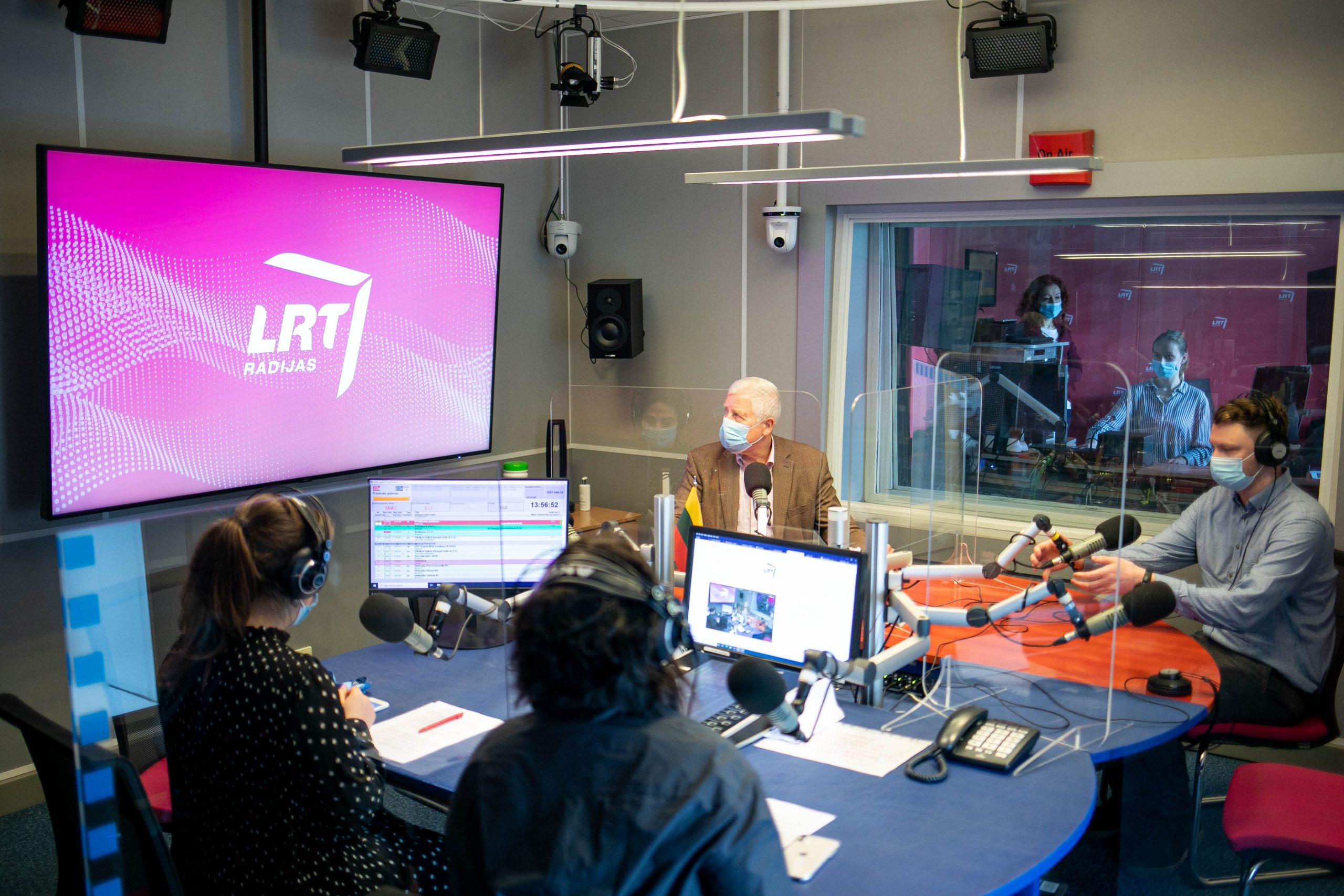
Lithuania: LRT funding feeze to be challenged in constitutional court
Lithuania’s opposition will challenge the funding freeze of LRT in the constitutional court, after collecting enough signatures to meet the threshold. The funding freeze was passed in November 2025, and sparked national and international condemnation. “The Constitution obliges the state to ensure funding that guarantees the independence of the national public broadcaster,” said Mindaugas Lingė, deputy chair of the Conservative group.
It comes as representatives of LRT’s journalists and the Association of Professional Journalists boycott a parliamentary working group on additional reforms to LRT. The law amendments seek to change the process of dismissing the director general, but when it was introduced, there was a wave of protest amongst LRT staff and press freedom organisations who warned against the increased political pressures the public broadcaster is experiencing. Following major protests, the decision on the bill was delayed to later in 2026.
The parliamentary working group is meant to involve 12 MPs and 5 media representatives, including a representative of LRT’s journalists and one from the journalists’ union. However, shortly after the formation of the working group, the latter two announced they would not take part. According to Deividas Jursevičius who is representing LRT journalists, the working group was built inequitably, in such a way that more power was being given to governing politicians. Together with the journalists’ union, they demanded for the reforms to be abandoned as they would “amount to almost direct censorship”. Jursevičius argued that no constructive discussion could take place from a position of power with a majority of representatives in favour of the amendments.
Czech Republic: Significant changes at Czech Television
The Czech public broadcaster Czech Television (ČT) has adopted a different operation system, in an effort to strengthen its identity but also make savings. As announced by its recently appointed CEO, Hynek Chudárek, the broadcaster introduced important changes in its management and production system at the start of the year.
ČT used to function with two divisions, one dedicated to programmes and digital services and the other to content. Under the new structure, these two divisions will be merged into one. Instead of the production division, six new genre centres will be created, each overseeing a specific format, such as documentaries, entertainment and children. The hope is this new structure will simplify the process of producing content.
The goal is also to streamline the television’s management, including a reduction of the number of top managers to eliminate “double-track decision-making and increasing the responsibility of individual managers”, according to Chudárek. ČT’s CEO said the money saved with this restructure will be invested in programme production.
Besides the structural changes, there has also been a reshuffle of the main presenters of ČT’s programmes to strengthen ČT24 programs’s individuality and increase the audience’s identification with the programmes’ figures.

Featured image: The headquarters of NPR public radio in downtown Washington DC, USA. Credit: Ahmed_Janabi / Shutterstock.com
Related Posts

Inquiries, consultations & hearings into PSM | The PMA Briefing
Consultation on the BBC's future opens,…
Lawsuits, austerity, and competing with big tech | The PMA Briefing
Colombian public media face a lawsuit;…
Hearings, reforms, and a crackdown on non-payments | The PMA Briefing
Figures at the centre of the recent BBC…

What’s new? Strategies, leadership & funding | The PMA Briefing
Public media in Jamaica and South Korea…