

INTERVIEW
“Despite the attacks, newsroom operations have never stopped”: Inside Ukraine public broadcaster’s wartime operations
17 June 2026
After years of Russia’s full-scale invasion, the CEO of the Ukrainian public broadcaster Suspilne, Mykola Chernotytskyi explains how they continue to cover the war despite the risks.
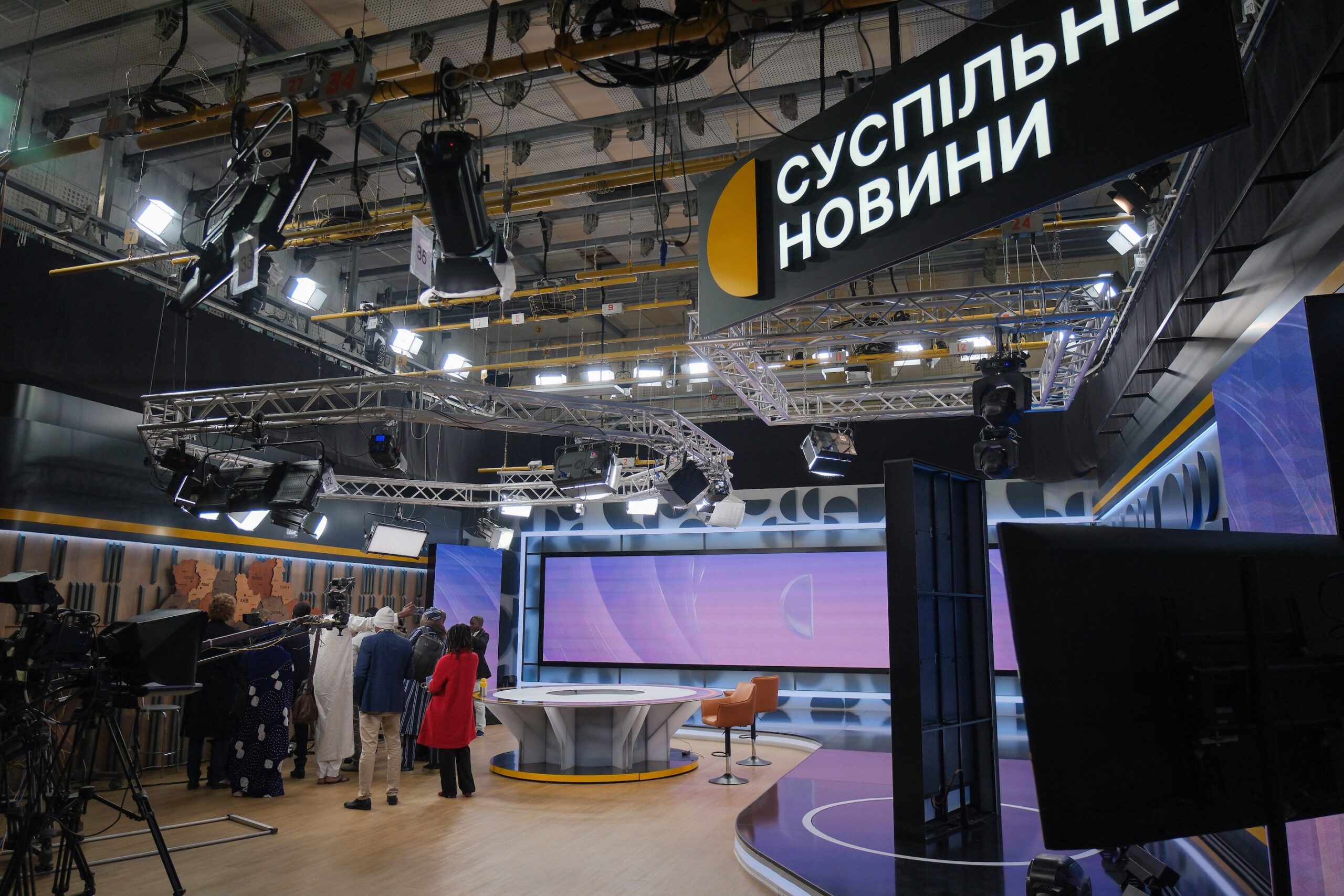
This article was originally published by The Fix. Find out more from the world of European media by signing up to The Fix’s newsletter.
The Fix Editor’s Note: The Fix has covered Ukraine’s public broadcaster Suspilne on multiple occasions, including in a recent profile. This interview with CEO Mykola Chernotytskyi looks specifically at how Suspilne’s operations have been affected by the full-scale invasion and how the broadcaster works under constant wartime risks.
By Romain Chauvet
It has been more than four years since the Russian invasion of Ukraine began. Since then, journalists from the public broadcaster Suspilne have been covering the conflict and Russian attacks day after day.
Founded in 2017, Suspilne Ukraine brought together the state broadcaster and 22 regional TV and radio companies into a single public broadcaster. After years of war, journalists, like Ukrainians, are becoming increasingly weary of the conflict, and the psychological impact is taking its toll.
Read more: What ‘critical infrastructure’ means for public media
Added to this are the threats facing journalists, particularly from Russian drones. Since February 2022, Reporters Without Borders (RSF) has reported at least 16 journalists killed and 53 injured by Russian forces.
But how does the work on the ground continue? What security measures are in place? How can they protect themselves from drone attacks?
The Fix spoke with Mykola Chernotytskyi, CEO (chairman of the management board) of Suspilne Ukraine.
Romain Chauvet: How often do you send teams near the frontline?
Mykola Chernotytskyi: We applied a combined approach to covering events in combat zones. News teams from the central office regularly travel to the frontline on long-term monthly assignments.
In addition, filming crews from our regional hubs operate 24/7 in frontline regions: the Northern Hub (Chernihiv, Novhorod-Siverskyi, Sumy), the Eastern Hub (Kharkiv, Donbas, Dnipro, Zaporizhzhia), and the Southern Hub (Kherson, Mykolaiv, Odesa). These journalists live and work in high-risk conditions near the frontline.
RC: How large are these teams?
MC: A standard field team from the central newsroom consists of 3–4 professionals. This balanced structure allows us to efficiently carry out editorial tasks while maintaining mobility and security. The team includes a journalist, camera operator (or photographer), driver, and a qualified security specialist.
Regional branch teams usually consist of a journalist, a camera operator, and a driver. In the near future, these branch teams will also be reinforced with security specialists.



RC: What security protocols are in place?
MC: We have our own internal protocols regulating route planning, security risk assessment, and actions in crisis situations. These protocols are constantly updated in accordance with developments on the frontline and the unique experience of Suspilne journalists.
RC: At least 16 journalists have been killed by Russia since February 2022. Is it therefore becoming increasingly dangerous to cover this conflict?
MC: Absolutely. You need to understand that the word “PRESS” on your bulletproof vest is no longer necessarily protection for journalists. It can even become a target for Russian soldiers. Another important point concerns drones. In some situations, they can be destroyed with a shotgun. But journalists cannot carry weapons, because the moment a journalist picks up a shotgun, he or she becomes a combatant.
We are discussing this issue with members of parliament and with colleagues from other media organisations. We need to think about new rules for this new kind of war in order to better protect journalists.
“The whole nation is tired, and in some cases journalists are even more exhausted than others. We have seen examples of burnout because journalists work very closely with trauma and share in the suffering of the people they report on.”
RC: Did you also have a drone attack on your main office in Kyiv?
MC: Kyiv, like all Ukrainian cities, remains under constant threat of attacks. Most recently, during the overnight strike on May 24, media offices of six outlets in Kyiv were damaged, including those of our international partners DW and ARD.
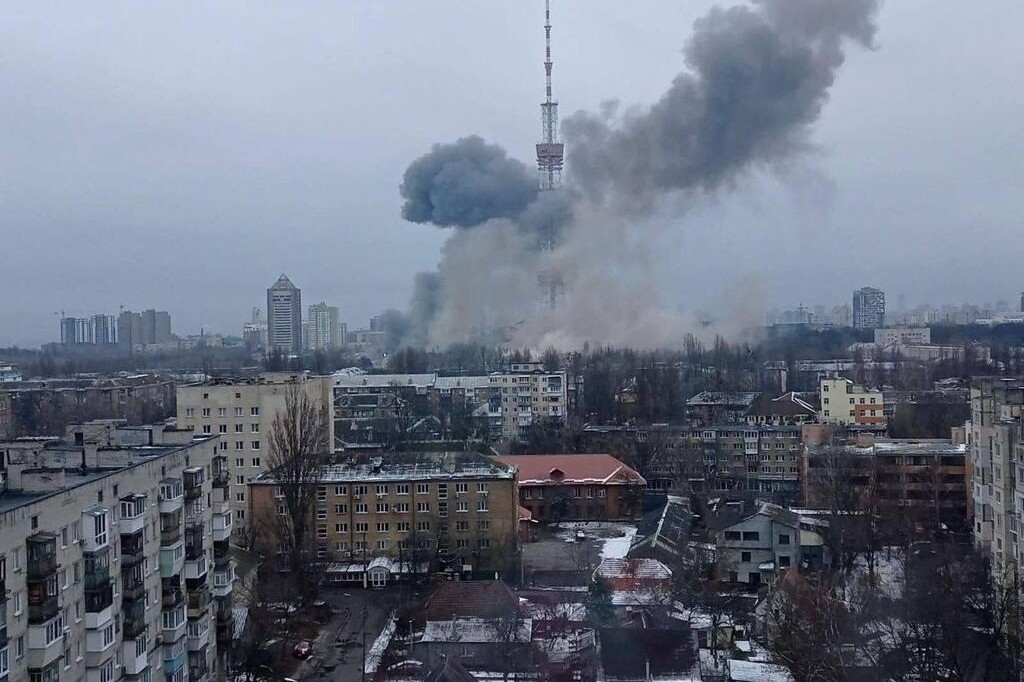
At the beginning of the full-scale invasion, on March 1, 2022, Russia launched missile strikes against the TV tower located near Suspilne’s central office building, known as “Olivets” (“pencil” in Ukrainian). Since the start of the war, we have not operated from that location. Our offices are equipped with shelters where colleagues continue working during air raid alerts, including going live on air.
RC: How often are your operations affected by drone attacks?
MC: Suspilne Ukraine operates in all regions of the country, which means our branches are regularly affected by shelling and attacks. In total, 35 Suspilne facilities across 10 regional branches have been damaged.
Last November, our Dnipro office suffered the most severe destruction: it was hit by 13 Shahed drones, causing strong reactions from the international and media communities. Two teams had been working in that building — Dnipro and Donbas. Notably, Suspilne Donbas has lost its offices twice: first in 2014 (Donetsk and Luhansk), and again in 2022 (Sievierodonetsk).
In March this year, four Suspilne Odesa buildings were damaged as a result of shelling. One of them sustained a direct Shahed drone hit and cannot be restored. All office premises lost their windows and suffered structural damage, and the Suspilne Academy was also affected. At present, the office is not suitable for operation, and restoration in the near future is impossible. Employees of the two teams — Dnipro and Donbas — are currently working from rented premises.

RC: What impact does this have on the budget?
MC: The estimated losses caused by damage to our buildings during the war exceed UAH 50 million (~EUR 1 million). No capital expenditures for restoration are currently planned.
RC: What security protocols do you have in place?
MC: Despite the attacks, newsroom operations have never stopped. In Dnipro, Kherson, and other locations, people continued working under fire. Filming crews — especially those operating in frontline regions such as Dnipro, Donbas, Kharkiv, and Kherson — regularly come under attack.
For example, in February, an FPV drone struck near a Suspilne Kharkiv filming crew. Unfortunately, double-tap strike tactics are widely used by Russian forces. Field teams are equipped with certified personal protective equipment, including body armour, helmets, and specialised first-aid kits. We also have one armoured vehicle for movement in high-risk areas. To monitor airspace around filming crews, we have started using drone detectors.
“You need to understand that the word “PRESS” on your bulletproof vest is no longer necessarily protection for journalists. It can even become a target for Russian soldiers. … We need to think about new rules for this new kind of war in order to better protect journalists.”
RC: Do you also face cyberattacks?
MC: We experienced a major cyberattack in 2023. After that, we drew important conclusions and now take into account both our own experience and the expertise of our international partners. In particular, we continuously exchange knowledge with members of the European Broadcasting Union.
RC: After more than four years of the Russian invasion, is fatigue beginning to affect journalists?
MC: Obviously, the whole nation is tired, and in some cases journalists are even more exhausted than others. We have seen examples of burnout because journalists work very closely with trauma and share in the suffering of the people they report on.
Our HR department works on these issues together with psychologists, and we organise retreats. I’m happy that many organisations support journalists by organising recovery programmes and retreats in places like the Carpathian Mountains for a week, for example. Mental health is extremely important in this situation.
Related Posts
What ‘critical infrastructure’ means for public media
What does the designation of critical…

Global Task Force for public media condemns destruction of TV tower in Kharkiv, Ukraine
The destruction of a TV tower by a…

WATCH: How the BBC created Ukrainecast
For Radiodays Asia 2023, PMA asked news…
1 Year On: Public Broadcasting and Ukraine
Public service broadcasters continue to…