

The PMA Briefing
Election pressures, AI safeguards & digital transformation
28 July 2026
As Brazil’s EBC deals with the fallout from removing nearly 200,000 articles to comply with pre-election restrictions, Germany’s ARD and ZDF reckon with the potential consequences of electoral victories of the AfD or CDU in this year’s state elections. Plus, a 100-day transformation agenda at Cameroon’s CRTV; Indonesia’s TVRI wants international cooperation on AI governance; and how RTM looks to capitalise on World Cup momentum.
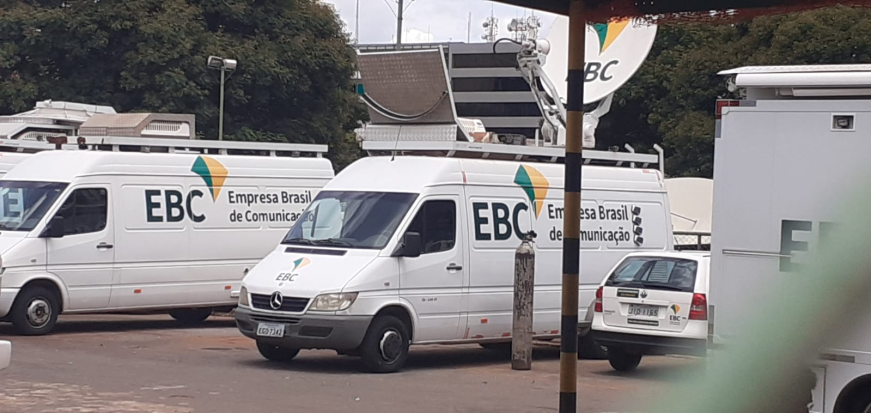
Brazil: Why EBC removed nearly 200,000 news articles ahead of election
The president of Brazil’s EBC has blamed a “lack of clarity” around pre-election reporting restrictions for why it took down nearly 200,000 articles from its platforms.
In early July, EBC announced that content produced between 3 July 2023 and 3 July 2026 would be unavailable in order to comply with restrictions imposed in the build up to an election, which are designed to ensure fair coverage to all candidates and political parties. EBC said all such content would return after the election. In total, around 180,000 articles were removed.
However, there was some unhappiness within EBC at the decision. “In more than 20 years at the company, I have never seen anything as absurd as this,” EBC journalist Akemi Nitahara told the LatAm Journalism Review.
The debacle centres on how the rules apply to EBC. As it affects any public administration body, the EBC’s president Antônia Pellegrino, said that the ban does impact EBC, which is funded and overseen by government departments. Further complicating the matter is EBC’s dual function to serve both as a public and governmental communication system. “In this context, the challenge lies in ensuring a balance between protecting electoral equality and preserving the freedom of journalistic information, especially within a public company created to provide public communication services” she said.
Pellegrino said, therefore, “a specific interpretation of EBC is necessary” as currently, EBC is held to the same standard as “to a ministry’s press office”. But in lieu of such an interpretation and given the “lack of clarity” – as well as the sheer quantity of articles which could be in breach – the decision was made to archive all reports. EBC has also called for special legal protection from the Superior Electoral Court so Agência Brasil could continue to produce journalistic content during the election period, and not be found guilty of breaking the rules. The outcome is still pending.
In the latest update, EBC said it was going through the tens of thousands of articles taken down, and re-uploading those which do not breach the rules.
Germany: Growing political pressures on public broadcasting
With state elections fast approaching and in the midst of major restructures, political pressure on the public broadcasters ARD and ZDF show no sign of abating.
The far-right populist party, AfD, which has for long considered the ARD and ZDF to be biased, envisions a drastically diminished public broadcasting system, and an end to the house-levy funding system. In its political bastions, in Saxony-Anhalt and Mecklenburg-Western Pomerania, AfD politicians plan on abolishing public media treaties altogether, if they win the state elections. This would mean an end to the broadcasting fee and would prevent regional public media from broadcasting. Such a scenario would have a great impact on the ARD, the umbrella public media which oversees the regional broadcasters, which relies on the broadcasting fee for 85 per cent of its revenue.
ARD and the regional broadcaster MDR are said to be considering an appeal to the Federal Constitutional Court, which has previously ruled in defence of accessible, independent and well-funded public broadcasting.
The conservative alliance of CDU and CSU have also considered ARD and ZDF as dominated by left-wing opinions, and have also demanded strong reforms and drastic budget cuts.
Cameroon: 100 days to achieve digital transformation at CRTV
Major changes are on the horizon for Cameroon’s public broadcaster, CRTV, with a suite of changes announced at a forum aimed at reviewing its editorial offering.
CRTV wants to start a rapid digital transition within 100 days, including upgrading the information system, modernising the broadcast network and improving connectivity for regional stations.
The changes will also impact national and regional channels and stations, to refocus on audiences and their singularities to improve its public service remit.
“Our programmes must be designed for specific audiences,” director general Charles Ndongo said. The plan includes an awareness campaign and the development of a streaming platform.
Beyond the editorial content, financial changes are also expected, with CRTV planning to increase revenue from its advertising and commercial agency, the CMCA, through new commercial offerings.

Indonesia: TVRI calls for clearer AI governance to safeguard copyright
The Republic of Indonesia Public Television Broadcasting Institution (TVRI) has called for stronger regional cooperation on AI governance and intellectual property, while promising to protect copyright regulations as artificial intelligence transforms broadcasting.
Speaking at the 32nd Asia-Pacific Broadcasting Union (ABU) Intellectual Property and Legal Committee (IPLC) conference in Jakarta, TVRI’s Head of International Relations, Harismen, argued that AI raised questions around universal rules on copyright infringement, ownership rights, royalties, and the protection of archives. Ultimately, the implementation of AI should strengthen public service broadcasting, but only when underpinned by transparent governance structures.
TVRI also urged the ABU to promote functional guidelines on AI governance across Asia’s public broadcasting sector.

Malaysia: World Cup fuels RTM partnerships & global sporting coverage
RTM is using the momentum from the FIFA World Cup to offer more global sporting events, and to deliver wider access to RTM services for Malaysian audiences.
The director general of the public broadcaster promised that RTM would broadcast more sport events to the communications minister, Datuk Seri Fahmi Fadzil, who endorsed the initiative. “When it comes to something that Malaysians need, the department believes that it goes beyond competitive rivalry,” Fadzil told the New Straits Times. Securing the rights to the World Cup cost RM26.2 million (US$6.1 million), which was supported by the government.
He also added that the World Cup broadcaster provided “a good opportunity for us to explore new technologies, including the ability to watch television on smartphones.” The tournament drew record numbers of downloads to the streaming platform, RTM Klik.
While no global sporting event – with the exception of the Olympics – is as big as the FIFA World Cup, the national broadcaster has already secured the rights to the Commonwealth Games in Glasgow. To coincide with the coverage, it has also announced a new partnership with the satellite TV provider, Astro, which will see two new channels available on the platform, as well as the return of seven radio stations.

Related Posts
Expansion, complaints processes & visas | The PMA Briefing
CBC/Radio-Canada announces a major…

Pressure, prominence & AI | The PMA Briefing
SBC’s CEO decries political pressure, a…

Financial uncertainties, shutdowns & cooperation | The PMA Briefing
Public broadcasters in both Chile and…

Football, local news & cuts | The PMA Briefing
How the FIFA World Cup is driving…