

The PMA Briefing
EMFA, reforms & funding cuts
16 September 2026
RSF leads calls for the effective implementation of EMFA to combat threats to public media. Plus: The Dutch cabinet agrees on how to reform the public media system; SRG announces how it’ll make savings, including a 20 percent reduction in management positions; and the Czech international news service is to lose all of its funding. Meanwhile, in South Korea, the president and CEO of KBS takes legal action after the board launches a recruitment process to replace him.
Europe: RSF & MEPs call for strong EMFA implementation
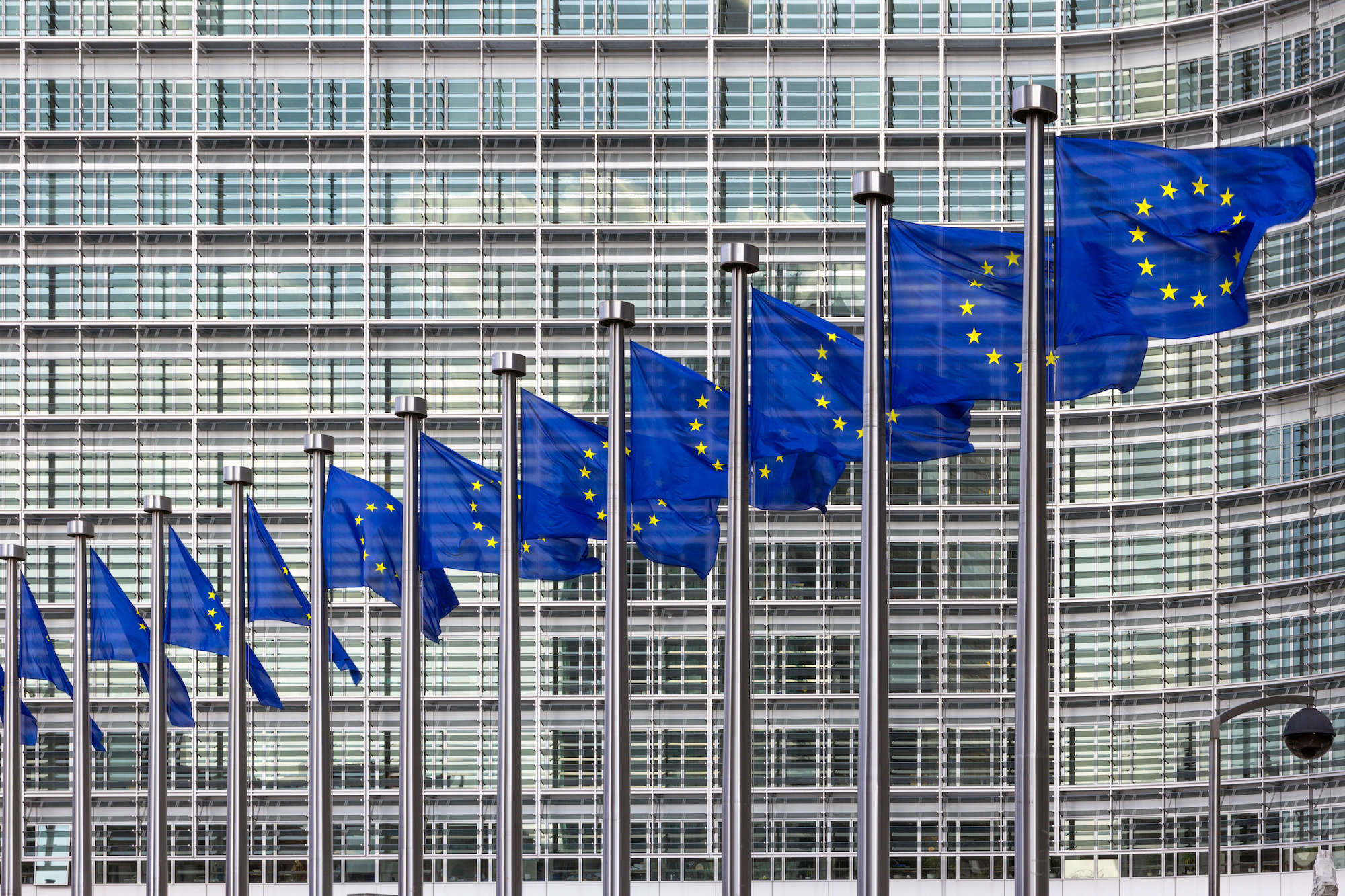
A year since the European Media Freedom Act (EMFA) came into effect, members of the European Parliament, media freedom organisation and public media representatives met in Brussels to discuss the latest pressures on public media in Europe. Together, they highlighted the need for the European Media Freedom Act (EMFA) to be fully enforced across the EU.
Article 5 of the EMFA requires Member States to guarantee the editorial independence of public service broadcasting, as well as “sufficient, sustainable and predictable” funding. But it was pointed out that these principles are proving difficult and slow to implement. Recent developments in Czechia, Slovakia, Slovenia, Lithuania and Bulgaria have shown a broader European trend in which safeguards designed to protect the editorial independence and a sustainable and independent funding for public media are being threatened, weakened, bypassed or brought under greater political influence.
For RSF’s Director-General, Thibaut Bruttin, EMFA is a “tool that remains more relevant than ever, and is even emerging as the only recourse, at a time when public service media have become [the] subject of political contention as part of a campaign that is spreading across Europe, to varying degrees.” But he stressed it has to be fully implemented as soon as possible.
MEPs highlighted that the legislation is still in its infancy but is vital for the strengthening of European democracies. MEP Sandro Ruotolo said that “We need more EMFA, not less. We need more Europe, not less, if we care about the future of our liberal democracies.”
Netherlands: Cabinet agrees on bill to overhaul PSM system
The Dutch public media system is to go through a radical overhaul with its collection of nearly a dozen separate broadcasting associations condensed into just five entities.
Currently, there are eleven broadcasting associations, which serve different audiences, with NPO acting as an umbrella organisation, responsible for funding and distribution. Nine of these associations are member-based, while the remaining two have statutory responsibilities to provide news and current affairs programming.
This system is to be simplified, however, under a new bill put forward by the cabinet. The key reforms are:
- Merging the eleven broadcasting associations into just four ‘broadcasting houses’, while NOS and NTR – which have statutory responsibilities – will continue just as NOS.
- Dismantling the existing system of memberships. Currently, any new association can be created, provided it meets a threshold of members, and must apply for a licence every five years. The new ‘broadcasting houses’ will be permanent bodies.
- Currently, just two associations (NTR and NOS) have statutory responsibilities. In the new system, the responsibility to fulfil the public service mandate will be shared between the four broadcasting houses as well as NOS. There will be further requirements on producing diverse content and offerings for minorities. The Media Authority will be responsible for ensuring compliance.
- There will be a redivision of tasks for NPO, which will see NPO focus more on acting as a “constructive entity”.
However, the bill was met with opposition from the very body that is being lined up to oversee the new system. “The legislative proposal appears to leave the sector itself to determine the standards,” the Media Authority said in a statement. “External oversight is not enabled to address and prevent problems in advance.” The regulator also criticised the lack of reference or proposed solutions to ensure public media’s visibility and discoverability, both online and offline.
The reforms come at a particularly heated moment for the public media system, currently at civil war. Ten of the broadcasting associations want the eleventh – Ongehoord Nederlands – to be expelled. The government began proceedings to revoke its licence last week.

Switzerland: SRG SSR announces cost-savings in major transformation
The Swiss Broadcasting Corporation (SRG SSR) has announced a series of transformation and cost-saving measures for 2027, as part of its company-wide Enavant project, aimed at making the public broadcaster more digital-focused, streamlined, and resourceful. These changes will include closer collaboration across Switzerland’s language regions and a restructure of management positions, with more than 20 percent of the broadcaster’s top three management levels being cut compared with 2024 levels.
SRG must save around CHF 270 million (US $339 million) by 2029, with around 95 percent of next year’s savings expected to come from changes to organisational structures, processes and production methods. SRG did however acknowledge changes to its programming as a result of the cuts, and will aim to avoid cutting entire programmes where possible.
The broadcaster explained the measures are partly driven by the Swiss government’s decision to reduce the licence fee, and that further changes to its programming and operations will continue to develop as it works towards the 2029 savings target.
Czechia: No more funding for Radio Prague International
Foreign Minister Petr Macinka has acted on his plan to reduce the funding and ultimately liquidate Radio Prague International (RPI). In the 2027 budget presented at the end of August, the ministry will not spend a single cent on the 90-year-old international broadcasting service run by Czech Radio.
RPI’s budget, which comes from the Ministry of Foreign Affairs, had already been cut by one quarter earlier this year, but the complete cessation of public funding puts the international service’s existence in jeopardy. Earlier this year, experts warned that withdrawing all funds would be tantamount to sounding the death knell for RPI. However, a Czech Radio spokesperson wrote to staff that the organisation was confident they would find a solution to reverse the funding cuts plans, ensuring they have support among the Ministry of Foreign Affairs representatives and diplomats.
According to the Ministry of Foreign Affairs, the funding of RPI is related to the government’s proposal to transfer of Czech Radio (ČRo) and Czech Television (ČT) funding from licence fee to a state budget. The government approved the bill in June, but it still has to go through parliament. Additionally, the legislative process is expected to meet the resistance of the opposition’s obstruction, the Senate and President Petr Pavel.

South Korea: President and CEO files injunction to stop recruitment for a replacement
The president and CEO of KBS has taken legal action to suspend a recruitment process to replace him more than a year earlier than the end of his term. Park Jang-beom was appointed as President and CEO of KBS in December 2024 for a period of three years.
However, in a board meeting on 9 September, it was decided to begin a new recruitment process for the position. Applications will be open from 17 September and will conclude in mid-October. The board will recommend a single candidate for presidential approval, after additional vetting by the the National Recommendation Committee for Presidential Candidates.
Yet this timeline is now uncertain, after President Park filed an injunction to suspend the recruitment process. The current president and CEO of KBS argued that the decision to open the role up to new applications was taken without a full board, with only eight members out of fifteen in post. His legal team also pointed to confusion around the existing board, where “it remains unclear whether the terms of the previous board members ended before the Broadcasting Act was revised.” These claims were dismissed by the board who said the regulator had approved the new board members, and said requirements for a quorum were satisfied.
Featured image: EU flags in EU Council building during the meeting of Eurogroup Finance Ministers, at the European Council in Brussels, Belgium on Nov. 7, 2022. Credit: Alexandros Michailidis / Shutterstock.com
Related Posts
Cancelled licences, threatened closure, and funding boost | The PMA Briefing
The Dutch government moves against ON,…
Resets, legal challenges & streaming growth | The PMA Briefing
Public media resets unfold in Hungary,…

DGs, job cuts & funding crises | The PMA Briefing
An ORF board member files complaint…

Severance, uncertainty & damaged archives | The PMA Briefing
National broadcasters face scrutiny in…