

The PMA Briefing
Resets, legal challenges & streaming growth
25 August 2026
Public or national media organisations in Hungary, Syria and Colombia are all at various stages of a reset. Meanwhile, BHRT challenges a court decision over payments, and South Korea’s public service streaming platform sees good engagement.
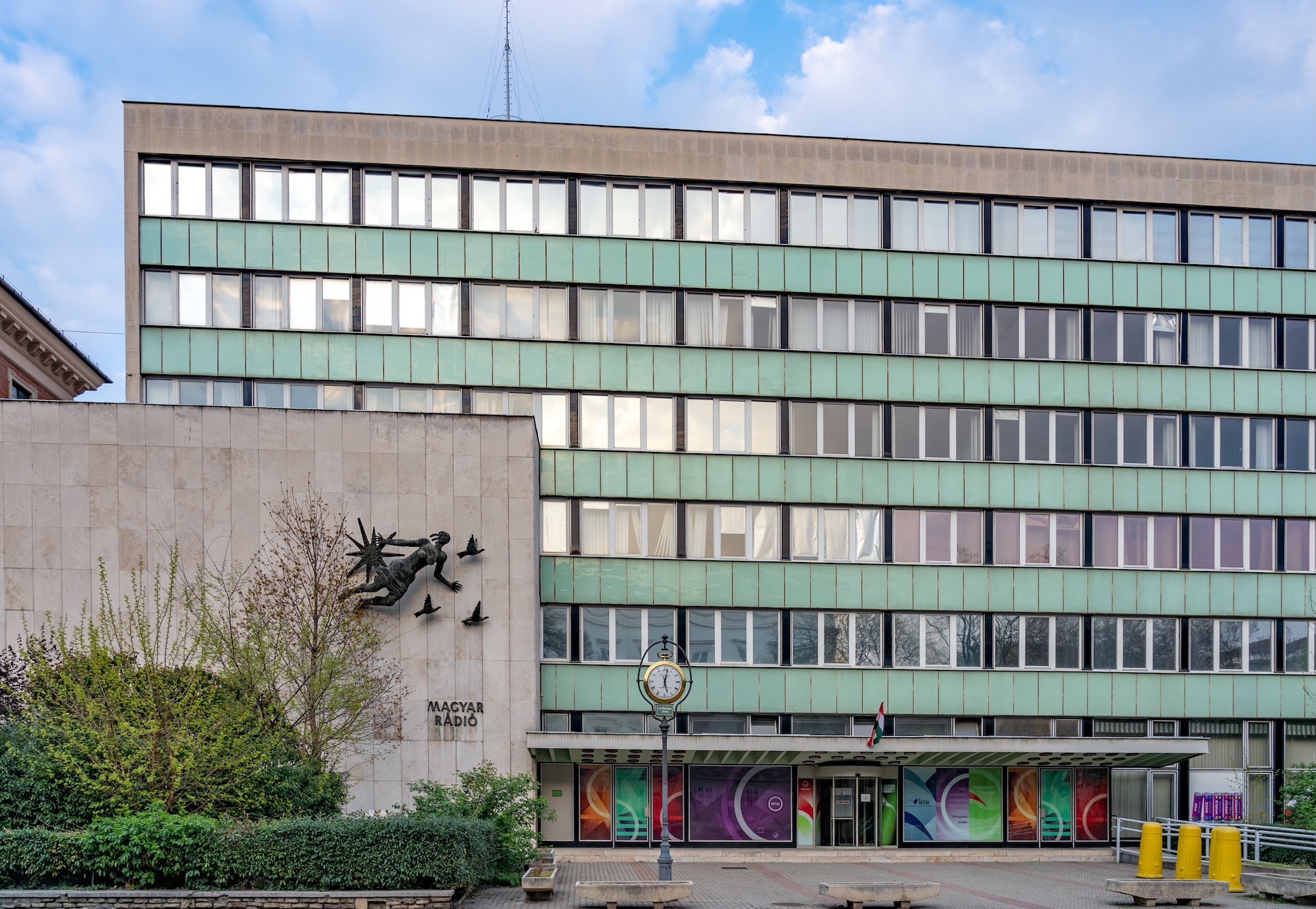
Hungary: News programming restored as reforms continue
News programming has been restored to Kozmedia, formerly known as MTVA, weeks after it was abruptly suspended. The new prime minister, Péter Magyar, was elected in April on a ticket of reforming the broadcaster, which was accused of being under the control of previous prime minister, Viktor Orbán. Despite early vows to suspend the news coverage, it took several months for Magyar’s government to make good. In the meantime, senior leaders were replaced, an interim administration installed, and a bill introduced looking to restore the organisation’s independence. When news broadcasts were eventually shuttered, the minister overseeing the transition, Judit Grosz, said it was the only way to address “serious and longstanding” issues.
To mark Hungary’s national holiday, on 20 August, news coverage resumed on the primary TV channel, at 6am local time, beginning with a news bulletin. The story reported on the new president taking office the day before. According to Hungarian outlet Telex, the coverage across the 20 minute bulletin was balanced and featured diverse viewpoints – a rarity in recent years.
RSF welcomed the return of news broadcasts. “This opening must be used to build modern public service media outlets that are independent of political power, useful to every community and able to reach audiences on every platform,” said Pavol Szalai, Director of the RSF Prague Bureau. Szalai had previously criticised the decision to shutter news broadcasts.
On the same day as news broadcasters were restored, a public consultation on the future of public media closed, with Magyar promising further reforms.
Colombia: Radical reset of public media under new government
An immediate action plan has been unveiled for Inravisión, aiming to depoliticise and dismantle what they describe as a political “propaganda apparatus” within public media. The plan was launched by the new head of Colombia’s public broadcaster and the Minister of Information and Communication Technologies, after Colombia’s new president, Abelardo de la Espriella, led to a rapid restructuring of the public broadcaster, which had been regarded as close to the former government of Gustavo Petro.
The new government stated they sought to build a “pluralistic, independent, transparent system at the service of the citizens” that prioritises cultural, artistic, and educational content and regional diversity.
The restructuring plan includes ending the existing news and opinion programming block, reviewing more than 1,000 contracts signed in 2026, auditing content, agreements and spending, and reorienting programming towards culture, education and the arts.
Inravisión’s new management, led by Ángela María Mora, also started reviewing the operations of the public broadcaster under the previous government. Their investigation alleged that significant funds from the Ministry of Education, approximately $2 million, were used for digital advertising on Inravisión ahead of the 2026 presidential elections.
Some of the measures taken by the de la Espriella’s government have caused concern. The local news and opinion programmes from the twenty Emisoras de Paz (Peace Radio Stations), whose remit was to promote peace in certain conflicted areas, have been suspended and were replaced by musical content. The Foundation for Press Freedom (FLIP), echoed by the Ombudsman, urged the Government to reassess the suspension and restore the public radio stations’ programming.

Syria: SANA marks one year anniversary of re-launch
The Syrian Arab News Agency has used the return of several experienced journalists to laud its transformation one year into its relaunch. A report from SANA highlighted the return of editors Yahya al-Haj Naasan and Ahmad Ibrahim – both of whom left in protest against how SANA was being used by the previous regime – as a testament to how SANA has changed in the intervening years. In August 2025, SANA unveiled a new strategy, “SANA… A turning point”, which included a rebrand, and an emphasis on new professional standards.
Under the Syrian transitional government, there have been efforts to reform the media sector. In June, a consultation of 1,000 media workers resulted in the launch of a Professional and Ethical Code of Conduct, a code by which to uplift the professionalisation of the industry. Further engagement took place in January involving media workers, which explored what reforms were necessary to develop the sector. “We welcome the development of this initiative into a consultative process involving the various stakeholders in the media sector,” said the IFJ’s general secretary, Anthony Bellanger. “We look forward to it resulting in the adoption of policies that protect journalists and regulate the media sector in accordance with international standards.”
Meanwhile, other initiatives have attempted to bolster Syria’s media sector. SANA staff participated in a workshop hosted by DW Akademie and Fatabyyano, an Arabic fact checking platform. The workshop was part of a larger two-year EU-funded project, “Fill the space”, with the purpose of strengthening Syria’s information ecosystem.

Bosnia & Herzegovina: BHRT challenges Sarajevo judgment over RTRS payment
BHRT has sought to reverse a Sarajevo court judgment ordering the national public broadcaster to pay the regional broadcaster, RTRS, 17 million BAM (US$10 million) over disputed marketing revenues and the use of landline radio connections, reported the Sarajevo Times. RTRS is the regional broadcaster, serving the Republika Srpska, the region mainly populated by Serbs in Bosnia and Herzegovina.
A 2012 agreement between the two public broadcasters specified that both could use the landline connection free of charge. BHRT argued it provided RTRS radio connection services over the past decade worth more than $19 million, which it never billed as per the agreement, and that RTRS had not paid marketing fees either. BHRT stated they were ready to take the case to the Constitutional Court.
There have been questions over how the case was handled. Over the months of the initial hearing, BHRT reported that media and political pressures were exerted on the judiciary, including by the revealing of the judge’s name in RTRS reports. BHRT appealed to the High Judicial and Prosecutorial Council (HJPC) and the Office of the High Representative (OHR) to protect judges from the various threats from Republika Srpska’s officials and media.
This legal debacle is the latest in a long line of conflicts between the two organisations. In total, RTRS has accumulated a debt to BHRT of more than $62 million over the last decade in unpaid broadcasting licence fees, which should have been paid to the national public broadcaster as required by law. Some allege this non-payment has left BHRT at risk of institutional crisis.
RTRS’s account was frozen following the non-payment of part of its debt to BHRT but was subsequently unfrozen following the intervention of the authorities of the Republika Srpska, despite the failure to settle the debt.

South Korea: PSM streaming platform narrows gap to Netflix on engagement, but still behind on users
The South Korean public media streaming platform, Wavve, is on the heels of Netflix in South Korea, for time spent on the platform.
Data provided by IGAWorks showed YouTube remains by far the most watched online platform, with audiences spending nearly 44 hours on the platform every month, followed by TikTok (10.5 hours) and Netflix (9 hours). However, close behind Netflix’s heels is Waave, which saw users spend just half an hour less on the platform than on Netflix. Waave was launched in 2019 by two public service broadcasters, KBS, and MBC, and one commercial, SBS. It was intended to be a homegrown streaming platform to rival the global streaming platforms.
While the figures show engagement ratings for Waave are high, the public service streamer remains well below Netflix in terms of number of users. According to a January study, Netflix had around 15 million monthly active users, while Waave sits well below with 2.35 million monthly active users. However, an impending merger between Waave and Tving could help narrow the gap. Tving, another local streaming platform, has over 5 million monthly users. Both Waave and Tving have recently pivoted to launching dozens of FAST channels, to boost their subscription base.
Featured image: TV tower located on Hum hill in Sarajevo, Bosnia and Herzegovina. Credit: iDaSad / Shutterstock.com
Related Posts

DGs, job cuts & funding crises | The PMA Briefing
An ORF board member files complaint…

Severance, uncertainty & damaged archives | The PMA Briefing
National broadcasters face scrutiny in…

Funding pressures and state media reform | The PMA Briefing
Politicians are targeting public media…

Election pressures, AI safeguards & digital transformation | The PMA Briefing
EBC removes nearly 200,000 articles to…