

The PMA Briefing
Solidarity, terrestrial networks & boycotts
29 September 2026
Sweden’s two public broadcasters have called for full compensation to cover the costs of maintaining the terrestrial network. Fiji’s government spreads the Public Service Broadcasting funding allocation. Solidarity on display from France’s film industry with FTV after more cuts, and US public media with CNN, MS NOW and Politico after White House ban. Plus: How’s Eurovision shaping up for next year? PSM state their position.
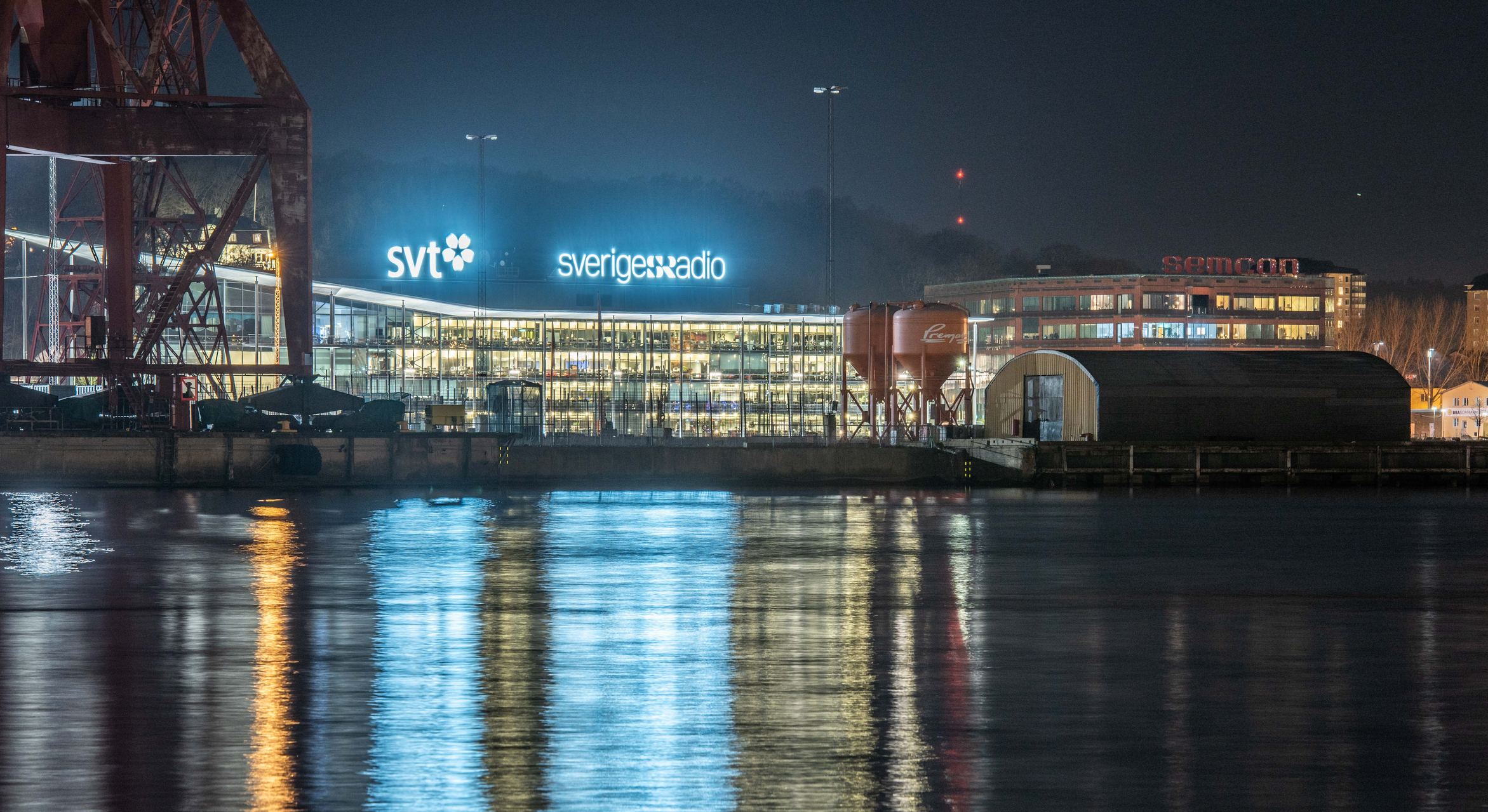
Sweden: Full compensation essential to cover costs of terrestrial network – SR & SVT
Both SR and SVT have argued that they must be compensated in full by the Riksdag, to cover the hundreds of millions of krone they’re having to pay to maintain the country’s terrestrial network. Currently, the terrestrial network is paid for by the media organisations which use it. However, with commercial players exiting the network, the cost of running the system has fallen singularly onto public service media.
The answer, both broadcasters made clear, is not to turn off the system. In Swedish Radio’s (SR) official response to the government, Chief of Staff, Gabriel Byström said: “Swedish Radio’s mission is to reach the entire population with news, public information and important messages, even when other communication systems are not working. To fulfill this mission, the terrestrial network is a fundamental part of Sweden’s preparedness.”
Yet SR said the cost of the network distribution has risen by nearly a fifth over the past two years, and now took up nearly a tenth of SR’s entire budget. It requested SEK 68 million (US$6.8 million) in additional funds, covering both 2025 and 2026. SVT, meanwhile, valued the increased cost of maintaining terrestrial at SEK 192 million (US$19.2 million) per year.
In June, the Swedish government proposed providing additional funding to SR and SVT to cover the cost increases, with various options on the table – either the full amount of the increase, or 75, 50 or 25 percent. Both broadcasters warned that only partial compensation would not suffice. Not providing the funding, Byström said, would see resources re-allocated “from journalism, local presence, security work or other parts of the core business.” It would mean “less money for journalism, program operations and digital development,” said Kristian Lindquist, SVT’s Director of Strategy and Emergency Preparedness.
Fiji: Gov’t signals wider spread of Public Service Broadcasting funding allocation
The Fijian government has said it will continue to provide funding to commercial media organisations through its Public Service Broadcasting allocation, as a way of expanding its reach.
In July, the newspapers Fiji Times and the Fiji Sun were given $375,000 (US$170,000), each for the first time. The remainder of the total allocation of $11 million (US$4.9 million) was split between the public broadcaster, the Fijian Broadcasting Corporation, which was given the largest share of $1.85 million (US$825,000), and other broadcasters, including Fiji Television, Communication Fiji Ltd. and Mai TV.
At the 8th Pacific Media Summit, the Ministry for Information permanent secretary, Eseta Nadakuitavuki, indicated this approach, first started in 2025, would continue. “Our audiences were becoming increasingly fragmented across different platforms,” she said. “While the public service broadcasting arrangement remained concentrated with one particular provider, if the objective is public reach, then our partnership model also has to follow the audience.”
The summit also featured other major announcements, including the opening of the new Pacific Centre for Communications and Journalism at the Fiji National University, by the Prime Minister. There was an emphasis on how AI could be leveraged by Pacific media to support independent journalism, without surrendering national and cultural sovereignty. A declaration, signed at the conclusion of the summit, also called for greater transparency, access and accountability from governments and public agencies, regarding climate information and disinformation.

France: Film industry condemns budget cuts for France Télévisions
France’s independent film industry has criticised budget cuts to the public media, warning the decision will cause irreparable damage to the sector. In an open letter, nine independent film organisations represented by three producers’ unions said that the government was “implementing a brutal restructuring plan in the audiovisual production sector.”
It comes after the President of France Télévisions, Delphine Ernotte Cunci, announced that the organisation would have to make savings of nearly €90 million (US$102 million) in 2027, after the government unveiled a €47 million cutback (US$53 million) in state funding and a sharp fall in advertising revenue. It comes after the public broadcaster was forced to make savings of €140 million (US$158 million) in 2026. She said she was “sounding the alarm” to safeguard the French cultural model, increasingly threatened by the foreign tech platforms. “What is becoming apparent is that foreign platforms will soon be making the largest investments in French creative output. Do we want this kind of subservience? In other words, TV series and films conceived, financed, cast, written and produced by the Americans or the Chinese?” she told Le Monde.
Funding cuts for France Télévisions clash with the French President’s comments at the Lumières Summit where he described the audiovisual industry as an “engine for economic growth”. Alongside South Korean President Lee Jae Myung, Emmanuel Macron promised to invest €1 billion ($1.16 billion) in the global screen industry over the next four years.
The open letter from the film industry called on politicians to see the audiovisual industry as an investment rather than a budget expenditure. They highlighted that the sector “accounts for 260,000 direct and indirect jobs across France and generates over €12 billion in added value, surpassing both the automotive and textile industries,” including 700 production companies, and is highly strategic as a cornerstone of democracy and of French cultural sovereignty.

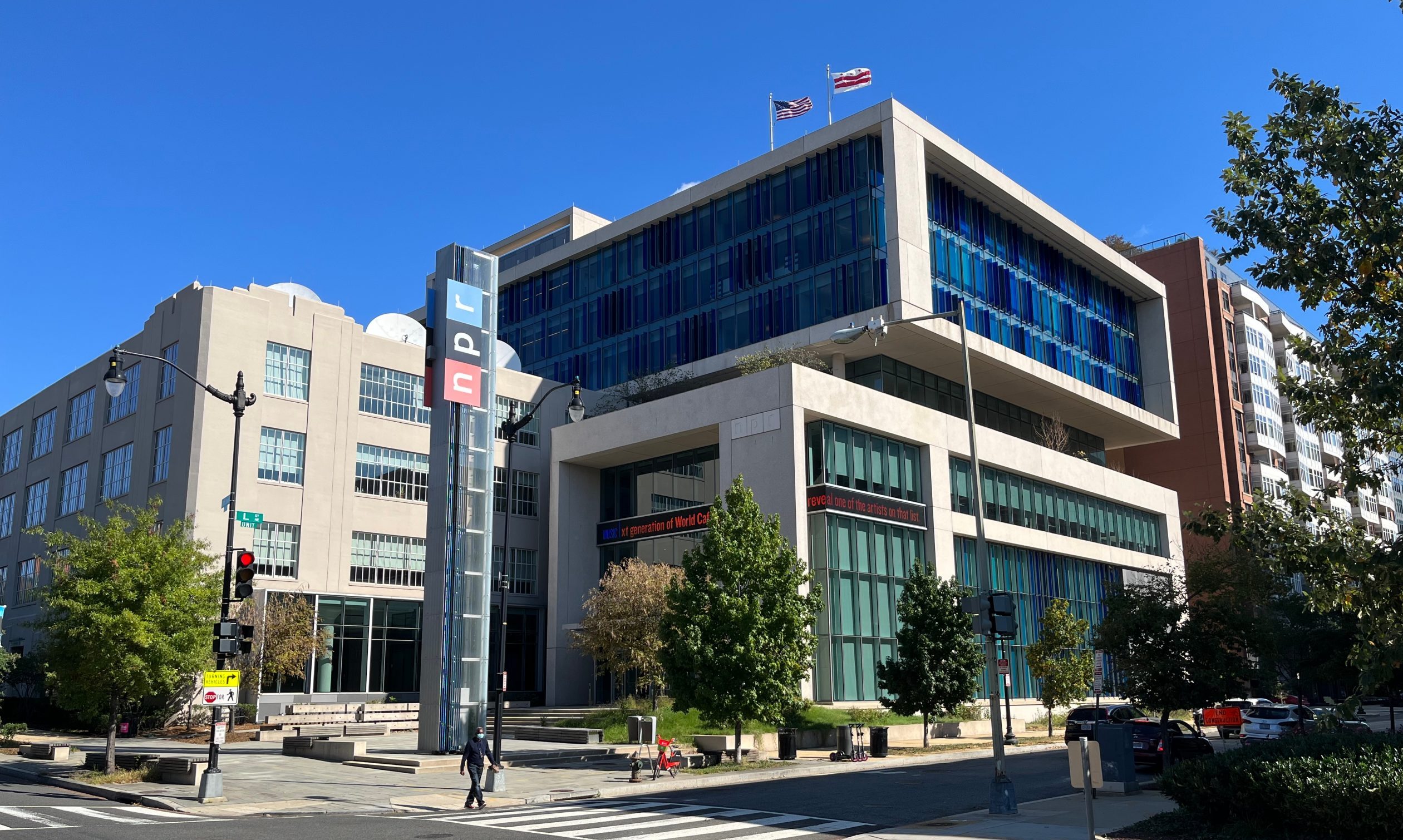
US: NPR & PBS join pool coverage boycott; President accused of launching “state run TV”
NPR and PBS joined in the boycott of coverage of the White House, after CNN, MS NOW and Politico were all barred by the US President. Despite a judge temporarily overruling the order, journalists from the outlets have remained subject to random blocks – a Politico journalist was unable to access the White House, CNN weren’t allowed onboard Air Force One. The media organisations, meanwhile, have urged the judge to extend the ruling beyond the initial two weeks.
In an interview with Houston Public Media, NPR’s President and CEO, Katherine Maher, said “We stand in solidarity with the free press. … We have suspended airing pool audio of the president on our air in solidarity with the television stations’ decisions to also suspend pool until further notice.” In a statement shared by PBS NewsHour anchor, Amna Nawaz, the public television broadcaster said, “In support of free and fair journalistic access, PBS News is not publishing video or still images provided by the administration.” Internationally, DW also announced it would also “refrain from using on its German and English language platforms any photo or video material produced by the White House itself and distributed through its official communication channels.”
The US President has also been accused of creating a new “state run” media organisation, with the launch of “Trump TV”. “[H]e’s launching what is quite literally state-run TV to try drowning out the fact that he and his corrupt administration are failing the American people,” said Democratic Governor, Gavin Newsom. Media ethics and law professor, Jane Kirtley, concurred. “I think the public has a right to have information that has been subjected to scrutiny and that has been vetted by independent sources like the news media. And here we don’t have that.”
Eurovision: Another year of boycotts?
NPO and VRT have confirmed they will participate in the Eurovision Song Contest in Bulgaria in 2027. It comes after the public broadcasters from Ireland, Spain, the Netherlands, Slovenia and Iceland decided to stay out of the competition this year due to the debate surrounding Israel’s participation. RTÉ had said that Ireland’s participation “remains unconscionable given the appalling loss of lives in Gaza and the humanitarian crisis there which continues to put the lives of so many civilians at risk.” The Irish public broadcaster announced it will not return for the 2027 competition, while Iceland, Spain and Slovenia are yet to announce their decision.
The European Broadcasting Union (EBU), which organises the contest, said it has taken notice of its members’ complaints and made “meaningful steps” to change certain things, including rules for participation, voting, and judging and the departure of Moroccanoil as one of the main sponsors. In August, it was also announced that warring countries would be barred from hosting the competition in case of victory in the next edition. However, sensitivities still remain around the musical event, notably because of some sponsors of the event, issues with judging and voting processes as well as the participation of Israel to the competition.
VRT’s CEO, Frederic Delaplace, said their taking part in the Eurovision did not mean they endorsed what is happening in Gaza and Israel but rather reflected their intention to stay engaged in shaping the future of the contest. However, not everyone was pleased with the decision, with unions filing strike notices on the dates of the contest.
Despite the withdrawal of one of its public broadcasters, AVROTROS (which is usually responsible for the Dutch entry), NPO said in a statement that its participation “will become a joint project of the public broadcasters”. This already happens for other national events, but an independent team will be formed to be responsible for the selection and support of their participant. NPO’s Director of Media, Jurre Bosman, stated that “It is important that, as a public broadcaster, we remain part of this unifying European event at this moment in particular, an event that wants to take serious steps towards a format that better reflects the times we live in.”

Related Posts

Impartiality, investigations & oversight | The PMA Briefing
The ABC rejects a media regulator…

EMFA, reforms & funding cuts | The PMA Briefing
Why EMFA needs to be implemented; a…

Cancelled licences, threatened closure, and funding boost | The PMA Briefing
The Dutch government moves against ON,…
Resets, legal challenges & streaming growth | The PMA Briefing
Public media resets unfold in Hungary,…