

The PMA Briefing
Funding changes, copyright & cuts
7 October 2026
A Thai governing party MP suggests replacing Thai PBS funding from the ‘sin tax’ to direct budget funding; ERR’s funding is extended to a four-year allocation; and a parliamentary report suggests sticking with the BBC licence fee, but expanding it. Plus, Inravisión management says it’s facing a US$46.4 million deficit, and Australia’s public media calls for AI labs to be included in the news bargaining code.
Thailand: Ensuring independence is crucial, whatever funding model – Thai PBS
Thai PBS has said that any alternative funding system must ensure the organisation’s independence, after a proposal to change the existing model was put forward.
Public hearings are currently underway on the law amendment, proposed by an MP from the largest party in the governing coalition, the Bhumjaithai Party. The amendment looks to replace the existing funding model – the so-called ‘sin tax’, a 1.5 percent share of all taxes on alcohol and tobacco products – with direct state budget funding. According to Thai PBS, the Bhumjaithai Party MP, Suphachai Jaismut, said the decision was to “unify the nation’s fiscal system”.
However, the proposal faced criticism by rival political parties, who warned it could expose Thai PBS to political interference, while the Sustainable Thai Society Health Media Network called on the amendment to be dropped. The government denied accusations that the reform was politically motivated, or an attempt to the broadcaster.
In its statement, Thai PBS said it recognised the “authority of parliament,” and the need to review such laws. However, it said that given the alternative model proposed, there would need to be “clear legal and institutional safeguards” to ensure that any new model doesn’t “become a tool that affects independence in policy-making, management or professional freedom of editorial staff, both now and in the future. … Thai PBS stands firm on the fundamental principle that the people must be able to wholeheartedly trust that public media operates independently, free from control of the state, budget authority or political and economic interests in any given period of time.”

Estonia: Funding and governance reforms for ERR as gov’t approves ERR Act
The funding and governance of ERR has been updated for the first time in two decades, but the head of the public broadcaster said it still does not address ERR’s underfunding. The Estonian government passed a bill modernising the ERR Act, which aims to inscribe in the law the digital services that ERR has been providing for several years, as well as European media legislation. Before being enforced in January 2027, the bill will have to be approved by the parliament.
ERR is currently funded via a yearly allowance from the state budget. The amendments suggest the establishment of a four-year funding framework instead, to ensure more predictable and long-term funding. However, the chairs of the ERR Management Board, Erik Roose, and ERR Council, Sulev Valner, said that this proposal, whilst it does represent a step forward, lacks substance as it does not address the problem of underfunding. “The amendment ensures long-termity, but not sustainability or sufficiency,” Roose said. Valner added that while the broadcaster is currently well placed in terms of trust and audience, it “does not have the resources to produce the programming it might want to produce throughout the year,” and should not be asked to do less.
The amendments also provide a streamlining of ERR’s management and include the creation of mechanisms to assess the impact of ERR’s digital services. It also aims to ensure the technological neutrality of the organisation.
In parallel, ERR’s Council has welcomed three new experts in its ranks. The Council gathers political representatives and media experts, but there is a new requirement that national broadcasting experts should be the majority within the supervisory body.

UK: More cuts as new parliamentary report pushes for licence fee reform
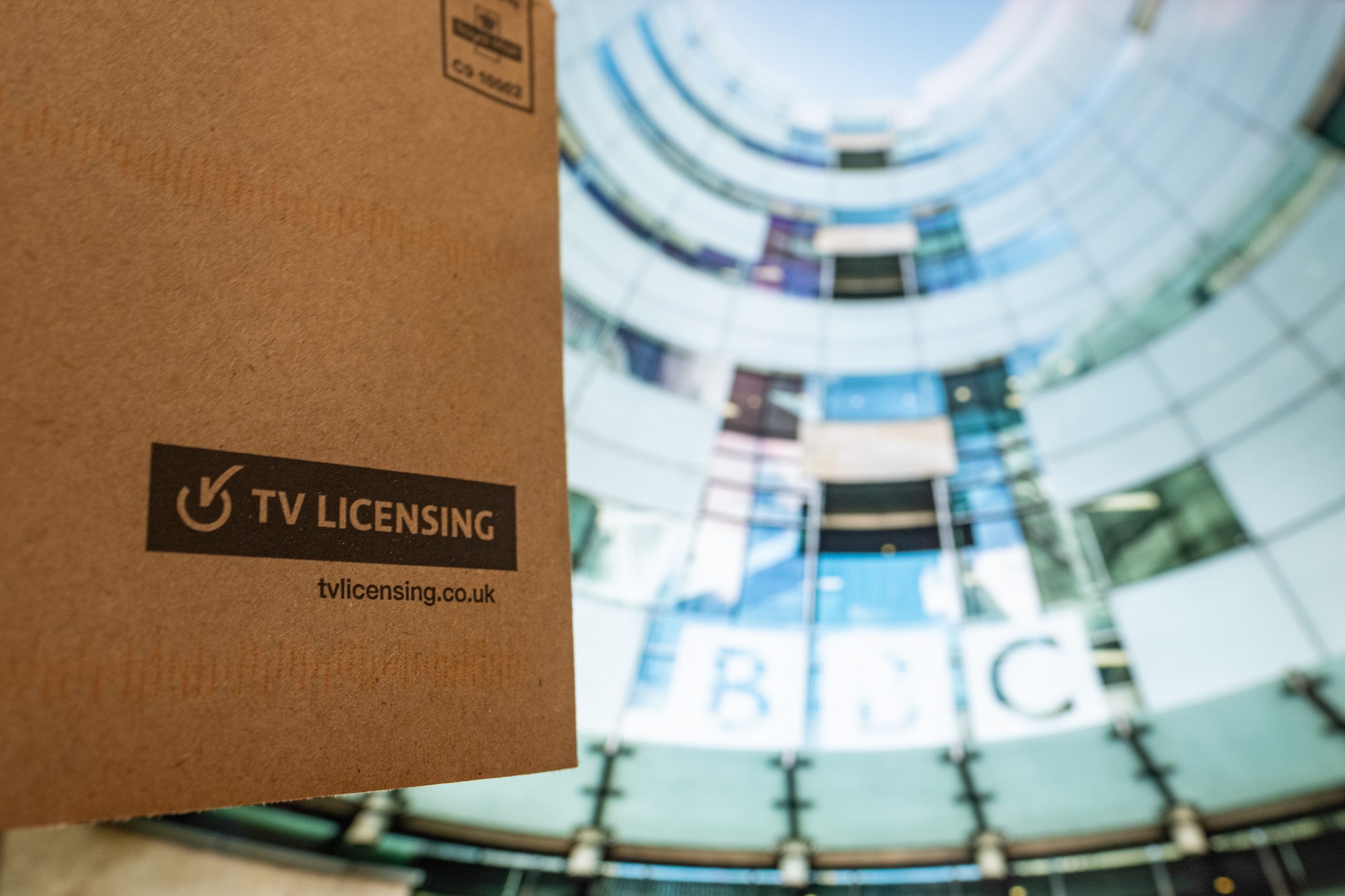
A new report suggests updating the licence fee and reducing its cost, as the BBC – as part of plans to save £500 million over the next two years – continues its programme of cutting up to 2,000 jobs, and ending some services.
The report, published last week by the parliamentary culture and media committee, said the licence fee needed reform, and suggested it should be updated so that “it is no longer linked to the consumption of live TV or to a particular device.” The committee also recommended reducing the fee, arguing if it was made more affordable from its existing £180 rate, more people would pay it. It comes amid declining levels of licence fee payment, which the corporation said had dropped to fewer than 80 percent of households, and dwindling cash reserves. The new director general, Matt Brittin, described the existing funding model as a “busted flush” as the BBC continues its negotiations with the government over its new Charter.
However, any funding reform is unlikely to immediately halt the BBC’s current programme of cuts and savings. As well as jobs, it is believed that BBC Scotland and BBC Three will both be made online only. There is a shakeup to regional news, and the rights to live rugby league could also be in jeopardy. In late September, it was announced that 20 hours of TV programming on BBC Cymru were also being dropped. In response, the Welsh language commissioner, Efa Gruffudd Jones, said Welsh-language broadcasting “is central to efforts to promote and protect language, culture and identity. I fully recognise the significant challenges facing the BBC, and the difficult decisions it must make. However, the long-term impact on our culture—and the cost to future generations—must be fully considered.”
Colombia: Inravisión faces ‘critical’ finances amid $46.4 million deficit
The former administration of Colombia’s national broadcaster, Inravisón, has been blamed by the new management for its current financial crisis, with the broadcaster reporting a deficit of COP 148 billion (US$46.4 million) as of August 2026. While projected revenue for the previous fiscal year stood at COP 461 billion (US$144 million), Inravisón ultimately raised only COP 312 billion (US$97.9 million).
The loss has threatened the broadcaster’s ability to sustain its operations, not least because Inravisión’s previous administration had contractually committed COP 357 billion (US$110 million) in spending, according to an official government report. Ultimately counting on “money that wasn’t there” , the report highlighted that essential operational costs, including station leases and electricity supplies, had been left financially unaccounted for.
Inravisión’s new management, installed since the changeover of government, subsequently launched a mitigation plan, including a comprehensive audit of its budget and existing contractual obligations. The broadcaster’s general manager, Ángela Mora, said that the plans will prioritise employee salaries and social security contributions, alongside essential costs required to keep its channels operating. Colombia’s government also intervened, describing the situation as critical, and guaranteeing the transfer of funds to Colombia’s public media. It said unlocking such funding will equip Inravisión with emergency cash allocation and a financial sustainability strategy to maintain Inravisión’s operations through the end of 2026.

Australia: ABC and SBS call for strict laws on AI training
Australia’s public broadcasters ABC and SBS have called on the government to include AI companies in the news bargaining incentive. The legislation compels big tech platforms to strike deals with Australian media organisations, or else face a 2.5 percent levy on their advertising revenues. AI chatbots are currently exempt from the scheme.
It comes as the American AI lab, Anthropic, requested “conditional approval” from the government to train its models on Australian copyrighted material. A few weeks ago, leaked information about a meeting between the government and AI executives sparked fury from the creative industry, as the AI giants proposed rewriting Australian copyright law to allow the model to train on protected works and content.
After the prime minister, Anthony Albanese, dismissed such a proposal, Anthropic has now proposed an opt-out system, whereby companies could use robots.txt files to deter any scraping. The advocacy group Save Our Arts called for a system where companies wishing to train their AI models on media and creators’ work should instead seek their permission.
In its submission to the federal parliamentary inquiry on AI, ABC warned that as AI companies are not yet subjected to the same standards as Australian media outlets around privacy, defamation and copyright. It argued that this inequality “will accelerate the cannibalisation of the Australian news industry”. SBS meanwhile criticised the AI firm’s demands, saying its AI models were “challenges to the sustainability of the Australian news industry and the erosion of information integrity and public trust through their use of news content without permission, attribution or compensation”. Both public broadcasters also called for the scope of the News Bargaining Incentive to be expanded to include AI firms.
Featured image: An outside broadcast van, parked up in the snow. Credit: Kairit Leibold / ERR
Related Posts

Solidarity, terrestrial networks & boycotts | The PMA Briefing
Sweden’s two public broadcasters call…

Impartiality, investigations & oversight | The PMA Briefing
The ABC rejects a media regulator…

EMFA, reforms & funding cuts | The PMA Briefing
Why EMFA needs to be implemented; a…

Cancelled licences, threatened closure, and funding boost | The PMA Briefing
The Dutch government moves against ON,…