

Old, Educated, and Politically Diverse
REPORT
Old, Educated, and Politically Diverse
The Audience of Public Service News
Anne Schulz, David A. L. Levy, and Rasmus Kleis Nielsen – Reuters Institute for the Study of Journalism
Abstract
Public service media are often widely used, highly trusted, and do not face the business pressures with which their private peers have to contend. But a closer look suggests that the challenges that face public service media news provision are bigger – much bigger – than is commonly acknowledged, even in countries with a long history of strong public service media. This report analyses survey data from a sample of eight countries to assess the reach of public service news. It finds that the audience for public service news is old, educated, and politically diverse, and that public service media in many countries fall far short of the ambition to provide a near-universal news service, especially online. While they are among the most widely trusted news sources, they are often less trusted by people on the political right and people with populist attitudes.

Public Broadcasting: The Latin American Exception
JOURNAL
Public Broadcasting: The Latin American Exception.
The Political Economy of Communication 7(1), 105–109.
Martín Becerra
Abstract
An edited version of a talk at the panel The Future of Public Broadcasting: How to Win Back our Hearts? Forum Media and Development, Berlin, November 2018.
Public Service Broadcasting in the Digital Age
JOURNAL
Public Service Broadcasting in the Digital Age
Journal of European Television History and Culture. Volume 8 – Issue 16 – 2019. Special Issue
Jérôme Bourdon, Mette Charis Buchman and Peter B. Kaufman (eds.)
Abstract:
This special issue proposes a reexamination of public service broadcasting (PSB) in the light of the most recent technological, political and economic developments. Traditional public service broadcasters, ideally designed to serve citizens rather than consumers to inform the national conversations in well-informed democracies, face the double challenge of commercialization (since the 1980s) and digitization (since the 1990s). The question of their survival in this context has been posed again and again. The need for a redefinition seems inevitable.
Licence Fee 2019
REPORT
Licence Fee 2019
EBU
Abstract
This report highlights the vital importance the licence fee has for public service media. Find out about licence fee amounts across Europe and price trends; which countries have dropped or phased-out as well as those experiencing recent reforms to the fee; and about the comprehensive benchmarking of licence fee collection systems, exemptions and evasion rates. Login required.
Organisational Culture of Public Service Media
REPORT
Organisational Culture of Public Service Media
People, Values and Processes (2015–2019)
Michal Glowacki and Lizzie Jackson
Abstract
In 2015-2019 Dr Michał Głowacki and Professor Lizzie Jackson investigated the internal organisational cultures of ten successful high technology clusters in North America and Europe to identify strategies to support the evolution of Public Service Media worldwide. Four media clusters were located in North America: Austin (Texas), Boston/Cambridge (Massachusetts), Detroit (Michigan) and Toronto (Canada). European clusters included London (UK), Warsaw (Poland), Copenhagen (Denmark), Brussels (Belgium), Tallinn (Estonia), and Vienna (Austria). To answer the question ‘what people, values and processes’ should Public Service Media embody going forward we found there is an urgent need for adaptation. Without internal change there is likely to be a decline in the ability of PSM to survive within the fast-evolving contemporary media and communications production and distribution landscape.
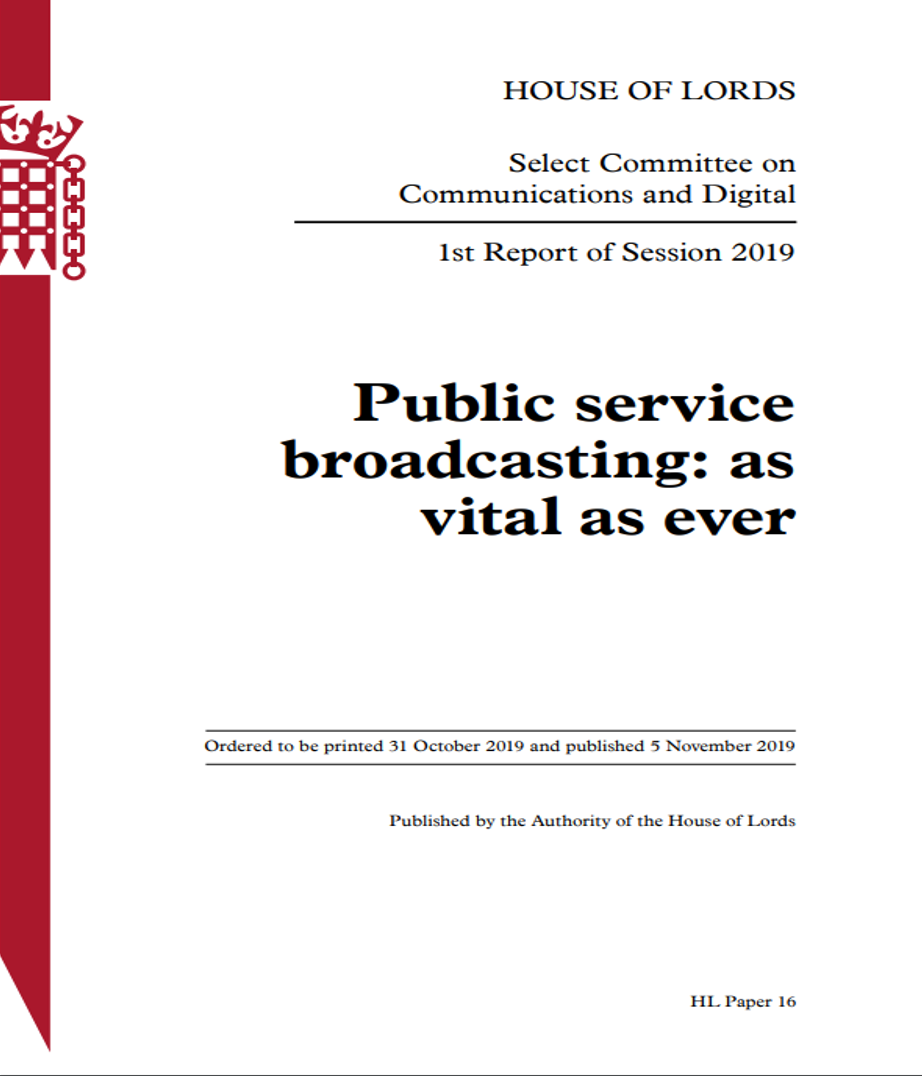
Public service broadcasting: as vital as ever
REPORT
Public service broadcasting: as vital as ever
By The UK House of Lords Select Committee on Communications

The House of Lords report on public service broadcasting in the age of video on demand concludes that PSBs are vital and in need of better support to produce high quality content and programming. But they also need to adapt to the changing media landscape in order to better serve audiences.
The report also reveals that public service broadcasting remains prominent within the UK and is a driver of the creative economy. Recommendations include the establishment of a new body called the BBC Funding Commission and to ensure that deals and plans are conducted with more transparency.
Read the PMA response to this report here.

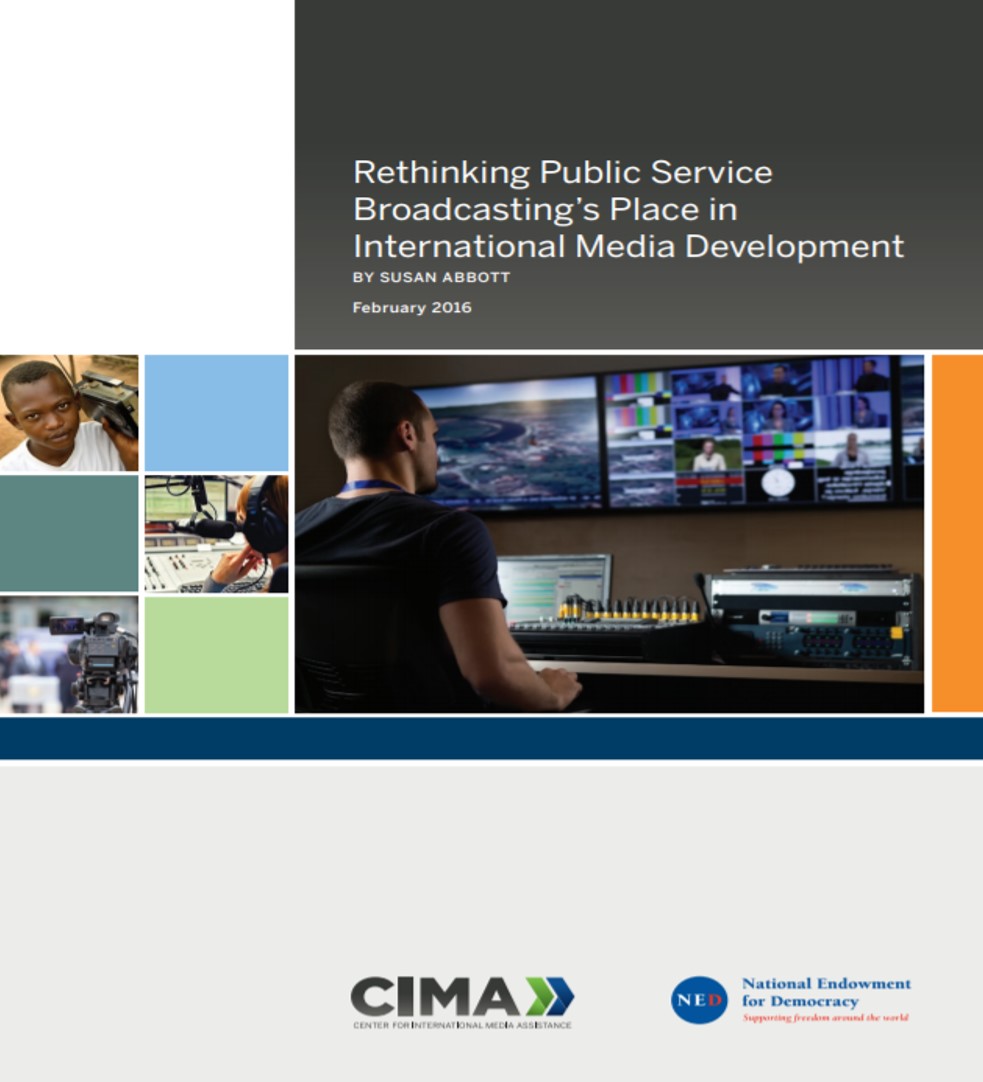
Rethinking Public Service Broadcasting’s Place in International Media Development
REPORT
Rethinking Public Service Broadcasting’s Place in International Media Development
By Susan Abbott
This report re-evaluates the role of public service broadcasting (PSB) in the current, international media climate and what its future may hold.
In her report, Abbott raises critical questions for the media development community regarding what PSB can bring to a crowded digital media environment to ensure media diversity and plurality, the role of donors, what the successes of PSB have been and what its future may entail. In clear and concise language, she also successfully manages to define core terms including what is PSB and how it sets itself apart from state-run broadcasting.
About the author:
Susan Abbott is an independent consultant who specializes in working with non-profit organizations, universities, and donors in the areas of media development, civil society assistance, and digital rights. Abbott provides consulting services for facilitating workshops and training programs, grant writing, monitoring and evaluation, and organizational capacity building.
[Text above sourced from CIMA]
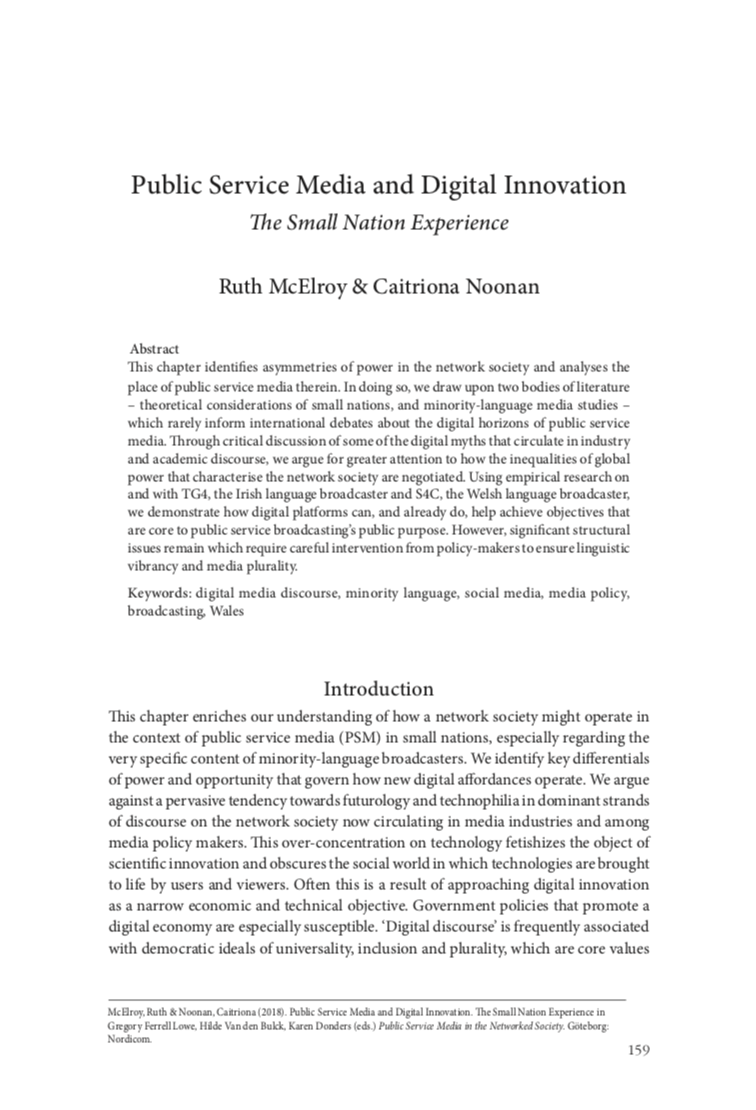
Public Service Media & Digital Innovation: The Small Nation Experience
JOURNAL
Public Service Media & Digital Innovation: The Small Nation Experience
Ruth McElroy & Caitriona Noonan
This chapter from Nordicom’s 2018 publication Public Service Media in the Networked Society, emphasises the role of public media in providing minority language services in small nation states.
This excellent paper explores the way Irish Language Broadcaster,TG4, and Welsh language broadcaster, S4C, use digital platforms to achieve objectives that are core to their public service mandate, while negotiating the “asymmetry of power in the network society”. They note that significant structural issues remain, which require the intervention of policy-makers to ensure “linguistic vibrancy and media plurality”.
Getting the Message Across
REPORT
Getting the Message Across
Reporting on Climate Change and Sustainable Development in Asia and the Pacific: A Handbook for Journalists
This book is a vital resource for journalists covering climate change. Through an exploration of the essential aspects of climate change, including its injustices to vulnerable communities and examples of best practice, UNESCO has published a book that effectively contextualises the severity of the issue to help journalists improve the way they report its environmental, social, economic ̧ political and technological implications.
“This Handbook is part UNESCO’s International Programme for the Development of Communication’s Series on Journalism Education. The series aims to reinforce the capacities of journalists, journalism educators and their institutions to promote sustainable development, by enhancing the abilities of journalists to report on science, development and democratic governance.”
Journalism, 'Fake News' and Disinformation: A Handbook for Journalism Education and Training
REPORT
Journalism, ‘Fake News’ and Disinformation: A Handbook for Journalism Education and Training (UNESCO)
This recent publication explores the key feature of journalism and seeks to guide readers on how to best navigate the news environment and fight against misinformation.
As journalism is constantly transformed and challenged by a wide range of factors, such as technology, politics and users interaction with the media, understanding how journalism works it’s becoming essential.
Written by experts from all around the world and published by UNESCO, this handbook includes modules on trust, critical thinking and social platforms, media literacy, fact checking and combating online abuse.
Given its structure, this handbook is particularly useful for journalism educators as well as media professionals and editors and all those interested in how information is shared and used.
