

The PMA Briefing
Funding bills, resignations & editorial policies
27 May 2026
Kan in Israel and Czech public media contend with legislation that would impact their funding systems, while the ABC and SBS defend their decision not to use the IHRA definition of antisemitism. Plus, RNZ’s CEO will step down at the end of the year and KBC looks for international collaboration.
Israel: Bill to alter Kan funding model passes next hurdle despite legal objections
The Israeli government’s long-held ambition to exert greater financial control over the country’s public broadcaster, Kan, is moving closer to completion, after the Knesset Finance Committee approved the legislation.
Under the terms of the bill, the government would gain greater control over Kan’s budget, which is currently ringfenced and guaranteed. First introduced in 2024, the bill was initially rejected by the economics committee which was tasked with scrutinising the legislation. However, in March, the Knesset approved the bill’s transferral to the finance committee, where it was met with less resistance, and has now been approved. It will next have its first reading in the Knesset.
Yet according to the Times of Israel, the bill is opposed by the economics committee’s legal advisers, the deputy attorney general, and the Knesset legal team. There’s also international opposition. Noel Curran, the director general of the EBU, of which Kan is a member, said ”A news system that depends on the government for its budget cannot independently report on the same government that determines that budget.” There were also warnings that Kan could face expulsion from the Eurovision Song Contest.
The bill comes ahead of an October election, and fears from the political opposition that the government is seeking greater control over the media. A separate bill also looks to create a new media regulatory council, whose members are appointed by the government, leading to accusations that the government is replicating “Viktor Orban’s entire Hungarian playbook.”
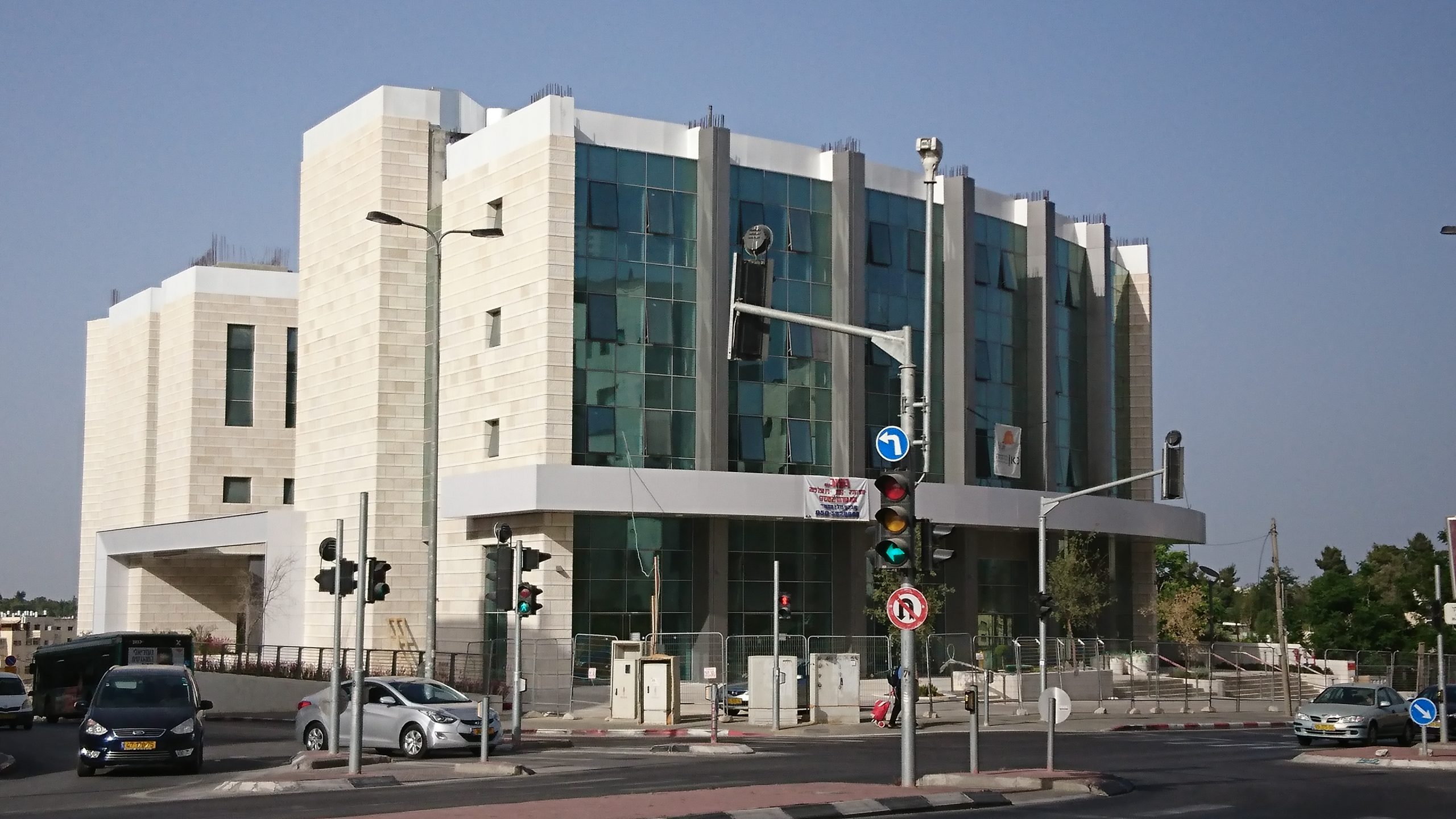
Czech republic: Mass protest over limiting public media funding
Czechs once again took to the streets of Prague to defend public service media threatened by two new laws introduced by the Babiš government.
In addition to the bill setting out the plan to eliminate the licence fee to transfer the funding of Czech Television and Czech Radio to the state budget by 2027, deputies from the ruling party (ANO) submitted new amendments to expand the circle of households and entities exempt from paying the broadcasting fee.
The draft law on public service media prepared by the Ministry of Culture, Oto Klempír has been heavily criticised for failing to consider the public media sector and greatly endangering the stability and sustainability of both public broadcasters. Local channels and stations are not considered in the bill proposal and according to the Ministry of Finance, it fails to clarify from which exact budget those broadcasters should get their funding from.
The demonstrators who marched through the streets of Prague to the Ministry of Culture called for Klempír’s resignation, accusing him of destroying not only the public media but also the culture he is supposed to defend.
Czech Television expressed their disagreement with the draft law, saying that “The proposed parliamentary initiative makes predictable and stable funding for public media impossible and is completely unacceptable to Czech Television. The impact of this on the future management of Czech Television cannot be clearly or precisely defined.”

New Zealand: RNZ CEO to step down, board announces
RNZ’s long-serving CEO, Paul Thompson, is to step down from his role at the end of the year, the public broadcaster’s board chair has announced. The announcement, initially intended for the second half of the year, was brought forward after the deputy prime minister, David Seymour, made public comments about Thompson. In an interview, Seymour said, “Look, that guy’s got an awful lot to answer for, and I suspect that he won’t be answering the call at RNZ for much longer.”
In its statement, RNZ board chair Dr Jim Mather said the announcement was made due to “recent unhelpful external commentary about his future,” but sought to quell any inferences that his departure might be a result of political pressure, indicating that the decision was “Paul’s alone”. Thompson, who is currently on PMA’s board and was up until this year the president of PMA, has been CEO and editor-in-chief of RNZ for 13 years.
Following the announcement, Seymour said he had no prior knowledge of Thompson’s plans to resign, but added that, “I just make the observation, if your numbers are going in the wrong direction and your board is changing, then I wouldn’t be surprised if other changes came with that. … I didn’t need to be Nostradamus to predict it.” Seymour also said there has been a decline in both listenership and trust. RNZ’s audience has declined since 2021, although it recently bounced up from historic lows last year. RNZ remains the most trusted news outlet in New Zealand.
While Thompson’s decision to resign was not due to political pressure, Peter Thompson of the University of Wellington pointed out that there has been a troubling trend of “increasingly brazen political hostility” towards independent public media. He urged “ministers to respect the boundaries of their political office and avoid inviting such speculation.”
Australia: Public broadcasters use own editorial policies on antisemitism, rather than IHRA definition
Both of Australia’s public broadcasters have refused to adopt the definition of antisemitism which will be used in the Royal Commission on Antisemitism and Social Cohesion, opting instead for their own independent editorial policies.
The royal commission, launched in the aftermath of the Bondi terrorist attacks in December, will use the International Holocaust Remembrance Alliance (IHRA) definition. That definition describes antisemitism as “a certain perception of Jews, which may be expressed as hatred toward Jews.” However, it is controversial, as critics say it is used to prohibit fair criticism of the state of Israel, or categorise such criticism as antisemitism. Others have pointed out it restricts free speech.
Explaining why it would not be using the IHRA definition, the ABC said it develops “its own editorial policies and guidance to ensure independence and maintain public trust”. However, the ABC also added that “the IHRA’s core definition … is not inconsistent with the ABC’s understanding or practical application of antisemitism.” SBS, meanwhile, said “it is an independent public broadcaster with a charter focused on strengthening social cohesion, supported by robust editorial standards which are set out in the SBS code of practice.”
The decision has not been without criticism, with the Australia/Israel & Jewish Council of Affairs saying it was “deeply concerning”, and rejecting the perception that the IHRA definition “somehow stifles free speech or legitimate criticism of Israel.” However, in an opinion piece on the ABC’s religion and ethics webpage, Sarah Schwartz, a human rights lawyer and executive director of the Jewish Council of Australia, and Shahram Akbarzadeh, Professor of Middle East and Central Asian Politics at Deakin University, said it was the right not to accept the IHRA definition. “The ABC and SBS did not refuse to adopt IHRA because they are soft on antisemitism,” they said. “They refused it because their existing editorial standards already prohibit antisemitism without importing the illustrative examples that have caused so much trouble to freedom of expression.”

Kenya: KBC urges digital broadcasting transformation to reflect African realities
KBC has stressed the importance of supporting AI technologies and processes in broadcasting systems that reflect African realities, languages and challenges, amid the industry’s wider digital transformation. Speaking at this year’s African Broadcasters Conference in Nairobi, KBC Managing Director Agnes Kalekye emphasised the importance of regional collaboration to ensure AI development and adoption responds to Africa’s diverse contexts and needs.
Describing the digital shift as unavoidable for African broadcasters, Kalekye pointed to the “opportunity to lead” the process, while tackling operational challenges including monetisation, cloud migration, and long-term digital sustainability. She also highlighted the success of local media companies that have built large audiences by remaining authentically African.

Featured Image: Melbourne, Australia- October 25,2015: Night scene at SBS in Federation Square in Melbourne. Federation Square, designed in 1997, with the distinctive architecture. Credit: Nokuro / Shutterstock.com
Related Posts
Funding boost, layoffs and crisis | The PMA Briefing
SABC gets temporary relief, the BBC…

Boycotts, blocks & closures | The PMA Briefing
Eurovision is set for its biggest…

National inquiries, using AI & a new tax on digital platforms | The PMA Briefing
After France’s inquiry report, RTVE…

Energy crisis, funding uncertainty & bias accusations | The PMA Briefing
Thai PBS launches an energy saving…